The International at 15: How Dota 2's Aegis Became Esports' Richest Prize
From a $1.6 million showcase at gamescom to a $40 million crowdfunded peak and back again. The story of Dota 2's world championship, every champion, and the shield everyone wants to lift.

In August 2011, Valve rented a hall at gamescom in Cologne and invited sixteen teams to play a game most of the public could not yet download. Dota 2 was still in closed beta. The prize pool was $1.6 million, with $1 million for the winner, and every dollar came from Valve itself. It was an absurd amount for a tournament at the time, and that was exactly the point.
Fifteen editions later, The International (TI) is the most famous trophy in PC esports. It crowned Team Spirit as the first three-time champion on August 23, 2026, in Shanghai. Along the way it set a record that still stands: the $40 million prize pool of 2021, the largest of any single esports event. This is how the tournament grew, peaked and reinvented itself.
A $1 million gamble in Cologne
The first TI ran from August 17 to 21, 2011. Valve used it as a launch party for Dota 2, giving fans their first long look at the sequel to the Warcraft III mod that had shaped a genre. Ukraine's Natus Vincere beat China's EHOME 3-1 in the final. One of Na'Vi's players, Clement "Puppey" Ivanov, would go on to become one of the most familiar faces in the tournament's history.
TI moved to Seattle the next year, to the classical-music venue Benaroya Hall, and kept the same $1.6 million pool. China's Invictus Gaming beat Na'Vi 3-1. In 2013 Sweden's Alliance beat Na'Vi again, this time 3-2 in a final that many fans still rank among the best ever played. Na'Vi had reached three finals in three years and won only the first.
The Compendium changes everything
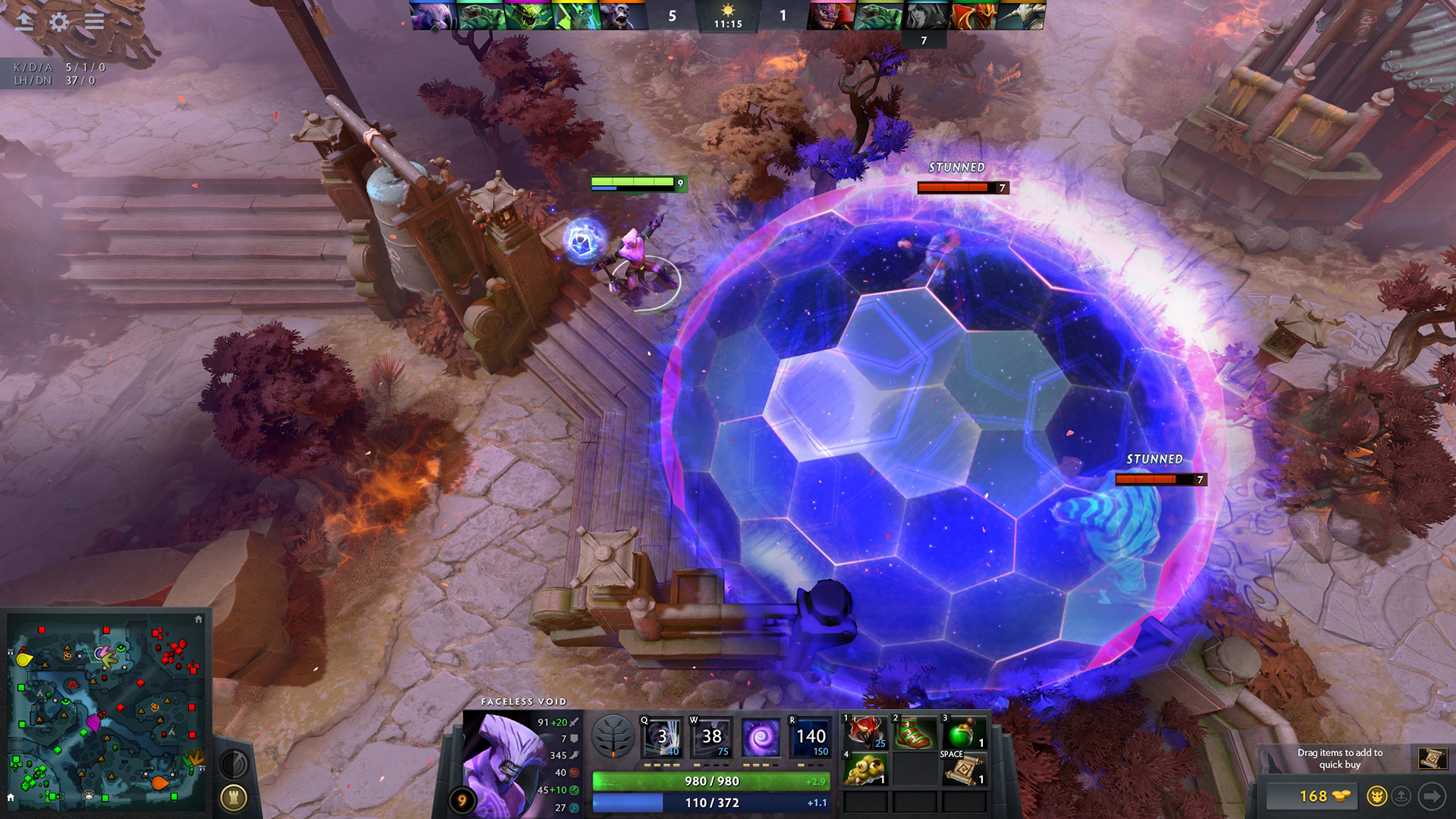
2013 also brought the idea that would turn TI into a money machine. Valve sold a digital item called the Compendium, a guide to the event packed with in-game rewards, and added 25% of its revenue to the prize pool. Fans who bought it were paying for cosmetics and, at the same time, funding the players they watched. The 2013 pool climbed to $2,874,380, a record for the time.
The effect snowballed. The pool reached $10.9 million in 2014, when China's Newbee beat Vici Gaming 3-1 at KeyArena. It hit $18.4 million in 2015 (Evil Geniuses over CDEC Gaming, 3-1), $20.8 million in 2016 (Wings Gaming over Digital Chaos, 3-1) and $24.8 million in 2017, when Team Liquid swept Newbee 3-0. Each summer the running total became a story of its own, refreshed daily by fans.
The same mechanism later spread across the industry as the "battle pass", a paid track of seasonal rewards that games from shooters to mobile hits now use. Dota fans like to point out that theirs came first.
OG, Spirit and the $40 million peak
The next three tournaments produced the most famous runs in Dota history. In 2018, in Vancouver, OG beat PSG.LGD 3-2 in a tournament worth $25.5 million. A year later, in Shanghai's Mercedes-Benz Arena, OG beat Team Liquid 3-1 and became the first team to win TI twice, and the first to do it back to back. That pool was $34.3 million.
Then the pandemic hit. TI 2020, planned for Stockholm, was cancelled. When the tournament returned in October 2021 in Bucharest, the Compendium had kept collecting money for two years, and the pool stood at $40,018,195.
The winner was a team few had picked. Team Spirit, a young Eastern European roster that fans nicknamed the "Yellow Submarine", came through the regional qualifier, dropped to the lower bracket early, and then beat OG, Virtus.pro, Invictus Gaming and Team Secret in turn. In the final it trailed PSG.LGD 0-2 and won three straight games. The prize was about $18.2 million, at the time the biggest single payday in esports.
A smaller pool, a different TI
The record could not last. The 2022 event in Singapore raised $18.9 million, and Tundra Esports swept Team Secret 3-0 (Puppey, by now Secret's captain, lost his third final). In 2023 Valve ended the Dota Pro Circuit, its points league, and changed how the Compendium worked. The pool fell to $3.1 million. Team Spirit won its second title in Seattle by sweeping Gaimin Gladiators 3-0.
The 2024 event in Copenhagen's Royal Arena had a pool of $2.6 million, the smallest since crowdfunding began, and Team Liquid swept Gaimin Gladiators 3-0 for its second Aegis. In 2025, at Hamburg's Barclays Arena, Saudi Arabia's Team Falcons beat China's Xtreme Gaming 3-2 in a final that went the distance.
Smaller money did not mean a smaller event. Valve trimmed the field back to 16 teams, moved the event around Europe, and leaned on the arena show rather than the running counter. For players, the Aegis itself became the prize.
2026: the third Aegis
TI 2026 returned to Shanghai. A Swiss-style road stage began on August 13, and the main event ran from August 20 to 23 at the Oriental Sports Center, with Valve organising and Perfect World, Dota's operator in mainland China, supporting it. The pool started from a $1.6 million base and was crowdfunded past $3.3 million by the final.
TEAM VISION, coached by Puppey, arrived as favourites and went unbeaten into the playoffs. Team Spirit, meanwhile, lost to them twice and had to fight through the lower bracket. In the final, the two teams traded games until a 64-minute fifth game decided it. Spirit won 3-2 and took about $1.4 million.
That made Spirit the first organisation with three Aegis titles, and carry Yatoro and offlaner Collapse the first players to win TI three times. Their coach, Miposhka, captained the 2021 and 2023 teams as a player. We tell the full story of the final in our TI 2026 report.
By the numbers
- 15 editions held from 2011 to 2026 (2020 was cancelled)
- $1.6 million: the 2011 prize pool, all of it from Valve
- $40,018,195: the 2021 pool in Bucharest, still the largest of any esports event
- 25%: the share of Compendium revenue Valve added to the pool from 2013
- 3: titles for Team Spirit (2021, 2023, 2026), the most of any team
- 2: titles each for OG (2018, 2019) and Team Liquid (2017, 2024)
- 4: finals lost by Puppey, as a player or coach, after his 2011 win (2012, 2013, 2022, 2026)
What to watch next
When the next International comes around, the questions will be familiar. Can Spirit's core of Yatoro and Collapse defend a title, something only OG has ever done? Will TEAM VISION, the favourites in Shanghai, finally turn form into an Aegis for Puppey from the coach's chair? And can a Chinese team, absent from the winner's list since Wings in 2016, end the drought?
If you want to see why fans care so much, start with the 2021 final: Spirit's comeback from 0-2 down is the clearest argument for Dota as the sport of the impossible. Then watch the 2026 decider and its 64 minutes. Dota 2 itself is free to play on Steam, and the tournament remains, at heart, a celebration of a game that refuses to get simpler.