Stardew Valley at 50 Million: The Solo-Developer Blueprint Everyone Still Copies
A computer science graduate who couldn't get a games job spent years ushering at a Seattle theatre and making a farming game alone at night. Ten years later it has sold over 50 million copies. How Eric Barone did it, and why nobody has quite repeated it.
In 2011, Eric Barone graduated from the University of Washington Tacoma with a computer science degree and could not find a job in games. So he took one at the Paramount Theatre in Seattle, showing people to their seats, and in his spare time started making the game he wished existed.
That game was Stardew Valley. It came out on 26 February 2016, sold around 425,000 copies in its first two weeks, and by February 2026 had passed 50 million copies across all platforms, about 26 million of them on PC and 7.9 million on Nintendo Switch. It is one of the best-selling games ever made, and every line of code, every pixel and every note of music in the original release came from one person.
The fan game that fixed Harvest Moon
Barone made Stardew Valley because he loved Harvest Moon and felt the series had lost its way after Harvest Moon: Back to Nature. His goal was a modern take that fixed the problems he saw. One deliberate change was freedom: older Harvest Moon games ended after two in-game years, while Stardew Valley lets you keep farming, fishing, mining and making friends as long as you like.
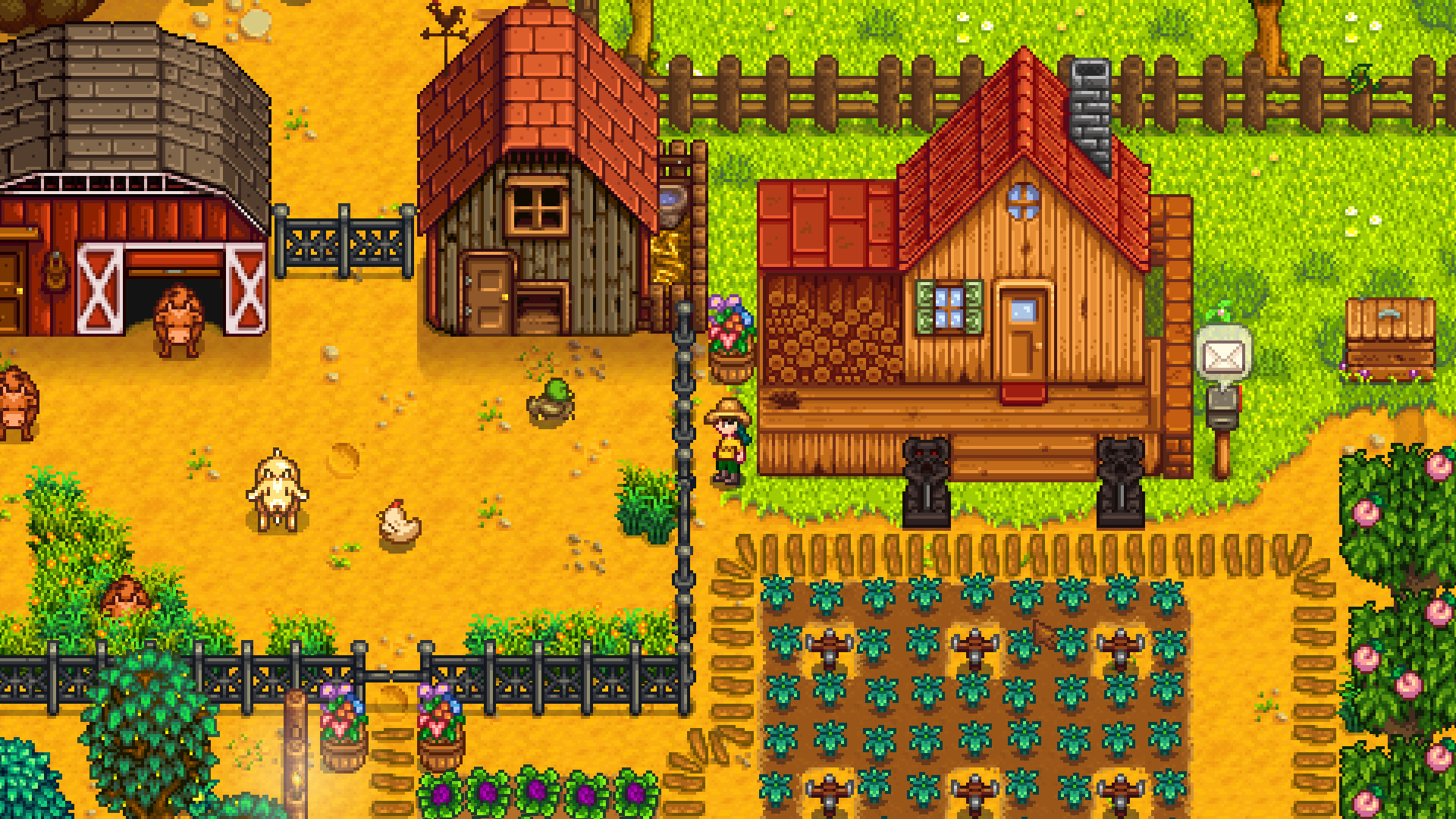
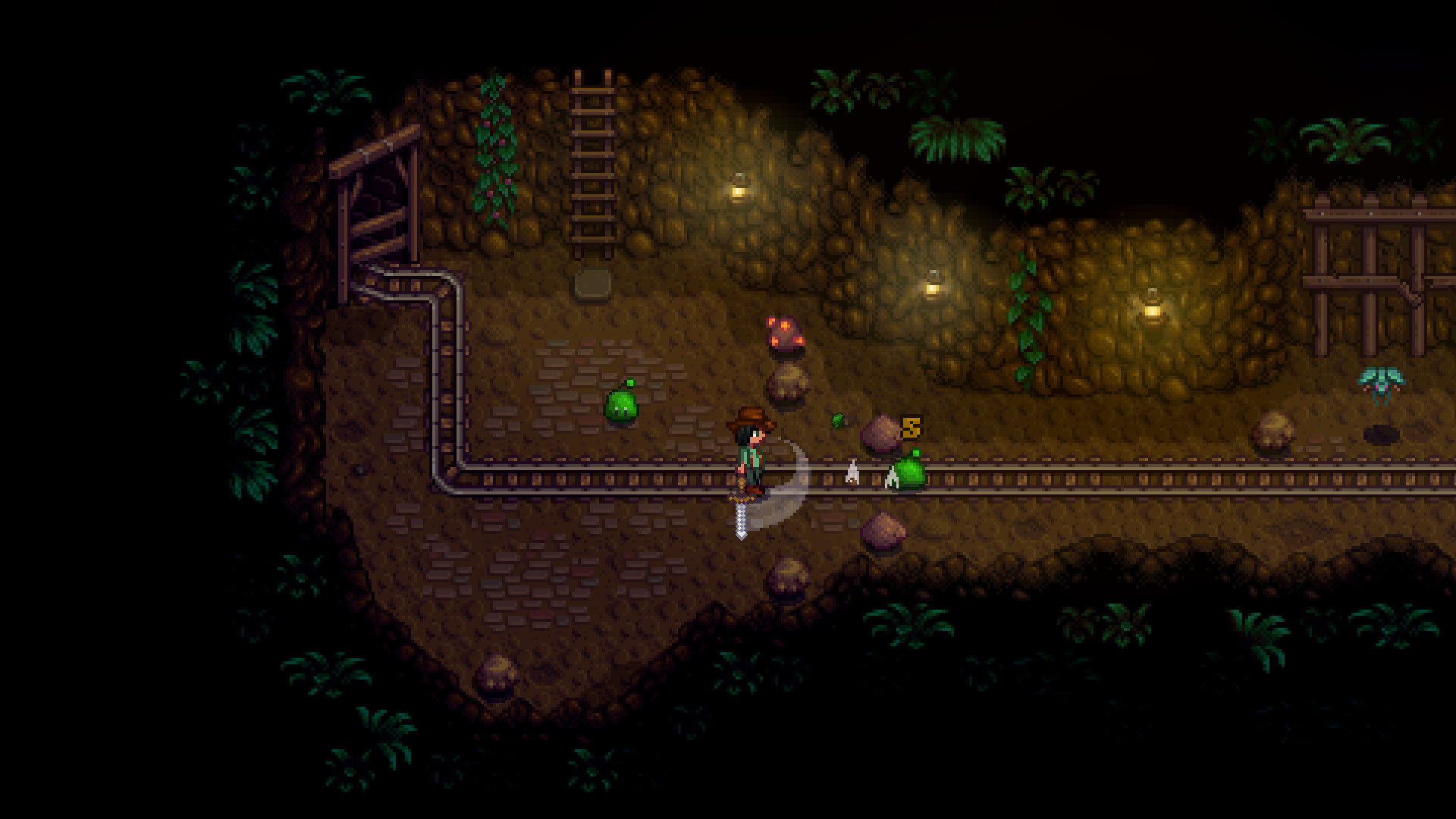
The premise is simple. You inherit your grandfather's overgrown farm outside Pelican Town, leave a grey office job behind, and slowly build a life. There are crops to plant, caves to explore, a community centre to restore and dozens of villagers with their own schedules, secrets and storylines. It is a game about routine, and it is very hard to stop. One more day always seems reasonable, right up until it is 2 a.m.
One person, every job
For roughly five years, Barone did everything himself: programming, pixel art, music and sound. He used Paint.NET, a free image editor, for the art and Reason for audio. He did not use Steam Early Access, preferring to release a finished game. Note the tools: a free paint program and a music app, not an expensive studio suite. Stardew Valley is a reminder that the limiting factor for a solo developer is rarely software. It is time, stamina and the stubbornness to finish.
The workload was enormous, and he has been open about how hard those years were. But being alone gave the game a coherence that is hard to fake. The music, the characters' dialogue, the way a parsnip pops out of the ground: it all sounds and looks like one person's idea of a good life.
Around 2013, roughly halfway through, the British studio Chucklefish offered to help with publishing, handling tasks such as website hosting and the game's wiki. Over the following years Barone took the reins back: most platforms in late 2018, the wiki in February 2021, iOS in December 2021 and Android in March 2022, which ended Chucklefish's involvement. Today, ConcernedApe (Barone's studio name) publishes the game itself.
A decade of free updates, and a brand
Most games peak at launch. Stardew Valley kept growing, and Barone kept giving the new content away. New areas, new characters, new events and endless quality-of-life touches arrived over the years without extra charge. The biggest recent one, update 1.6, arrived on PC in March 2024 and reached consoles and mobile in November 2024.
It also spread to nearly every screen:
- Windows: 26 February 2016
- macOS and Linux: 29 July 2016
- PlayStation 4 and Xbox One: 14 December 2016
- Nintendo Switch: 5 October 2017
- PlayStation Vita: 22 May 2018
- iOS: 24 October 2018
- Android: 14 March 2019
- Nintendo Switch 2 edition: 25 December 2025
Modders became part of the story too. The fan-made Stardew Valley Expanded was downloaded more than 4 million times, and its creator, Devin Hedegaard, later joined the game's development team. In 2022, a crossover with Terraria added that game's famous Meowmere sword.
Few indie games have become lifestyle brands. Stardew Valley has:
- Stardew Valley: The Board Game, a co-operative adaptation, released in February 2021.
- The Official Stardew Valley Cookbook, with more than 50 in-game recipes adapted for real kitchens, released on 14 May 2024.
- Festival of Seasons, a touring orchestra concert announced in October 2023, followed by Symphony of Seasons in November 2024, and an instrumental album in August 2025.
The awards, and the ones it didn't need
Stardew Valley's awards list is respectable rather than overwhelming. It won the Breakthrough Award at the Golden Joystick Awards 2016, and was nominated for Best Game at the BAFTA Games Awards, Best Independent Game at The Game Awards 2016, and the Seumas McNally Grand Prize at the IGF. In 2024, PC Gamer named it the best ongoing game of the year, eight years after release.
That gap is telling. Stardew Valley was never a critics' darling in the way some indies are. It was something more durable: a game players recommended to their friends, then to their parents, then to their friends' parents.
By the numbers
- ~5 years: solo development time before release.
- 425,000: copies sold in the first two weeks.
- 3.5 million: copies by the end of 2017.
- 50 million+: copies by February 2026.
- 4 million+: downloads of the Stardew Valley Expanded mod.
Why nobody has quite repeated it
Plenty of developers have tried to make "the next Stardew Valley", and many cosy farming games have succeeded. But Barone's model is hard to copy, because it is less a formula than a set of choices most businesses would not make:
- Finish first. No early access, no crowdfunding, a complete game on day one.
- Keep giving. A decade of major free updates built trust that no marketing budget could buy.
- Own your game. Reclaiming publishing rights let Barone decide where and how Stardew Valley lives.
- Stay personal. Even as the team grew, the game still feels like one person's handwriting.
There is also the matter of timing, which nobody can copy. Stardew Valley arrived in 2016, when the farming-sim genre had few modern options on PC and Harvest Moon fans were hungry for one. Today a new cosy farming game launches almost every month, and a newcomer has to compete with Stardew Valley itself, still updated and still cheap.
Still, the deeper lesson travels. Barone did not chase trends or monetisation. He made a game that felt generous, then kept being generous for ten years. Players noticed, and they never stopped telling each other about it. In an industry obsessed with launch weeks, that may be the most radical strategy of all, and it is one that any solo developer, however small, can choose.
What to play next
If Stardew Valley is your comfort game, two other one-person success stories are worth your time: Balatro, built as a hobby by an anonymous Canadian (read more), and Undertale and Deltarune, Toby Fox's genre-bending RPGs (read more). Stardew Valley is on PC, Mac, PlayStation, Xbox, Nintendo Switch and Switch 2, iOS and Android.