Dreamcast: Sega's Brilliant Last Console Lived Fast and Died Young
It had a modem in every box, a memory card with a screen and the first online console RPG. It also lasted less than two and a half years. The Dreamcast story is gaming's great 'what if'.
On September 9, 1999, Sega launched the Dreamcast in North America at $199. In its first 24 hours it sold 225,132 consoles and took $98.4 million, one of the biggest launches in entertainment at the time. The date, 9/9/99, was printed on the marketing everywhere.
Eighteen months later, Sega announced it was giving up on the console business altogether. The Dreamcast, which launched in Japan on November 27, 1998, 28 years ago this month, was Sega's last home console. It sold 9.13 million units. Here is how a machine so far ahead of its time ran out of time.
A console built for the internet
The Dreamcast had a Hitachi SH-4 processor at 200 MHz and an NEC PowerVR2 graphics chip, and it looked noticeably better than anything on the PlayStation or Nintendo 64. But its most important feature was a built-in modem. Every console could go online out of the box, years before Xbox Live and the PlayStation Network.
Games came on GD-ROM discs, a format Sega developed with Yamaha partly to avoid paying for DVD licensing. And Microsoft built a custom version of Windows CE that developers could use, an early sign of the company's interest in consoles.
The games
The library was small but remarkable. Sonic Adventure brought Sonic into full 3D and became the best-selling Dreamcast game at 2.5 million copies. Phantasy Star Online was the first online console RPG, letting players around the world team up through that modem. Seaman, a game in which you talk through a microphone to a grumpy fish with a human face, was the first big hit in Japan.
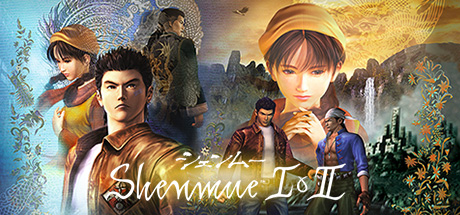
And then there was Shenmue, Yu Suzuki's enormously ambitious open-world adventure set in 1980s Japan. It was rumoured to have cost Sega more than $50 million, an astonishing figure at the time. Sega executive Peter Moore later said it sold extremely well but could never turn a profit because there were not enough Dreamcasts to sell it to.
The PS2 problem
The Dreamcast's biggest enemy arrived before it reached the West. On March 2, 1999, Sony revealed the PlayStation 2, and its specifications made the Dreamcast look outdated overnight. Many players decided to wait. Sega's American leadership was also in turmoil: Bernie Stolar, the former Sony executive who ran Sega of America, was fired on August 11, 1999, less than a month before the US launch. Europe got the console on October 14, 1999 at £200. Even when PS2 shortages in late 2000 left shops empty, Dreamcast sales did not pick up much.
The cost of running a console business was crushing for a company of Sega's size. It posted a consolidated net loss of 42.88 billion yen for fiscal 2000 and 51.7 billion yen (about $417.5 million) for the year to March 2001.
On January 31, 2001, Sega announced it would stop making the Dreamcast, effective March 31, 2001, and become a third-party publisher, making games for other companies' consoles.
Why it matters
The Dreamcast got a lot right too early. Online play, downloadable content and a second screen in your hand all became standard features a decade later. Its library still has a devoted following, and a homebrew community keeps building new software and private servers for it today.
WGC's take: the Dreamcast is proof that being first is not the same as winning. But Sega's switch to third-party publishing worked out, and you can still play many of its ideas. Shenmue's first two games are available on modern platforms, including PC, as Shenmue I & II.