Royal Kingdom Hits $750 Million: How Istanbul's Dream Games Beat Its Own Megahit
Sequels to mobile hits usually flop. Dream Games tested Royal Kingdom for 19 months, then watched it out-earn Royal Match at every early milestone. The story of a puzzle studio that keeps winning.
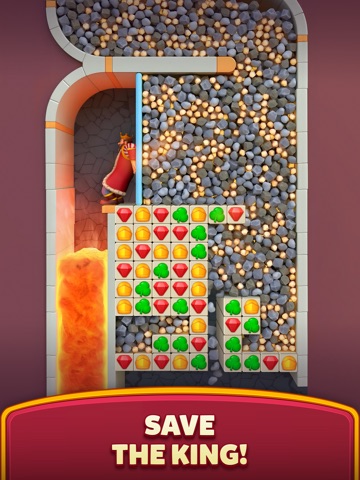
In mobile gaming, the sequel curse is real. Studios that strike gold with one game routinely spend years and fortunes trying to do it again, and most fail. Players do not want a second version of the puzzle game they already play every night. So when Istanbul's Dream Games followed its giant hit Royal Match with a sister game, many in the industry expected a modest result.
Instead, Royal Kingdom passed $750 million in mobile player spending on 3 July 2026, according to AppMagic estimates, roughly 20 months after its worldwide launch in November 2024. By mid-July its lifetime total was about $766 million, and 42% of all that money had arrived in the first half of 2026 alone. At every early milestone, it has out-earned Royal Match over the same period.
The studio behind the crown
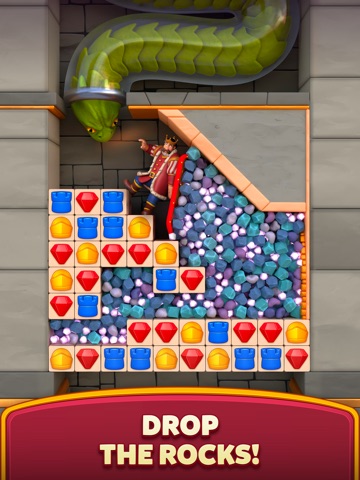
Dream Games was founded in 2019 by veterans of Peak Games, another Istanbul studio, which was later bought by Zynga. Their first game, Royal Match, launched in 2021. It is a match-3 puzzle game: swap tiles to make lines of three, clear obstacles, and use the coins you earn to restore a castle for the cheerful King Robert.
That simple recipe became one of the biggest mobile games in the world. Royal Match has earned more than $7 billion since 2021. Together, Dream Games and Peak Games are reported to account for more than 80% of Türkiye's games revenue, which makes Istanbul one of the most important puzzle-game cities on the planet.
Istanbul, puzzle capital
How did a city better known for its bazaars and the Bosphorus become a puzzle-game superpower? The story starts with Peak Games, founded in Istanbul in 2010. Peak made hit puzzle games such as Toon Blast and Toy Blast, and in 2020 it was bought by Zynga for about $1.8 billion, one of the largest deals in Turkish tech history at the time. Zynga itself was later acquired by Take-Two Interactive.
That deal created a generation of experienced puzzle developers in one city, and some of them went on to found Dream Games. The new studio took the lessons it had learned at Peak and pushed them further, with sharper production values, carefully tuned difficulty and a relentless focus on a single genre.
The result is an unusual cluster. Istanbul is not a big console or PC development hub, yet it is home to two of the world's most successful casual game studios. For young developers in the region, the message is clear: you do not need to be in California, Helsinki or Seoul to build a global hit.
Nineteen months of testing
Dream Games did not rush. Royal Kingdom entered soft launch (a limited release in a few countries to test and tune a game) in 2023 in markets such as the UK and Canada. It stayed there for about 19 months. During that time its best day brought about $71,000. That is a lot for a test, but small by Dream Games' standards.
The studio used that time to polish the levels, tune the difficulty curve and test its monetisation. By the time it set a worldwide release date of 21 November 2024, the game had already made more than $20 million in soft launch.
By the numbers
- 2023: soft launch begins in the UK, Canada and other markets
- ~19 months: time spent in soft launch
- Nov 2024: worldwide release
- $24 million: first 14 days, more than triple Royal Match's early earnings
- $300 million+: first year, ahead of Royal Match's first year
- $58.9 million: best month (January 2026)
- $2.7 million: best single day (31 January 2026)
- $750 million: passed on 3 July 2026
A launch that kept climbing
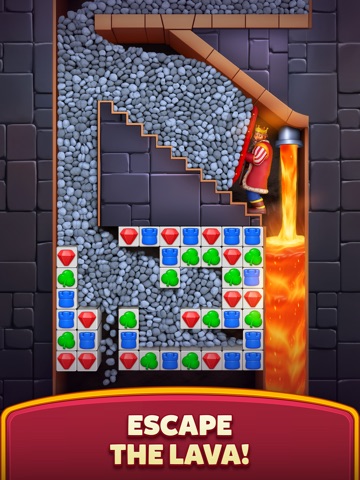
The global launch was strong from day one. Royal Kingdom made about $450,000 in its first four days, beating Royal Match's debut, and around $24 million in its first two weeks, more than triple what its older sibling made in the same window. Its 2024 peak came on 21 December, when players spent about $353,000 in a day.
Then the curve kept rising. By March 2025 it was approaching $500,000 a day. Its first $1 million day came on 18 May 2025. It passed $300 million within its first year. And in January 2026, it had its biggest month yet: $58.9 million, up 421% year on year. Monthly spending stayed above $50 million in every month of the first half of 2026, and the best single day so far came on 31 January 2026, at about $2.7 million.
Where the money comes from
Royal Kingdom leans even harder on America than its older sibling. The United States makes up 61% of its earnings, against 53% for Royal Match. The UK is second at 7%, and Japan sits at 5%. Royal Match, by contrast, has Japan in second place with 9%.
The split between platforms is also telling. App Store users account for 63% of lifetime spending and Google Play for 37%. That pattern is typical of puzzle games in wealthy Western markets, where iPhone ownership is high and players spend more per head. These figures leave out alternative app stores and web shops, so the real total is likely higher.
Why it works
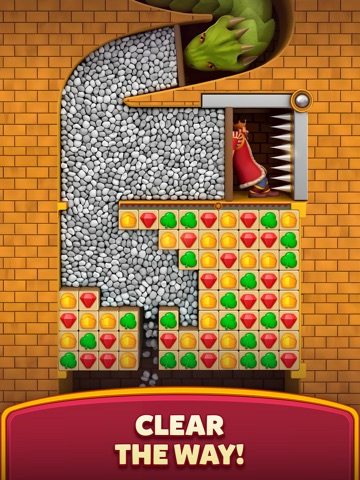
It is built by specialists. Dream Games makes only one kind of game, and it makes it extremely well. Level design, pacing and difficulty are tuned to keep players feeling clever rather than stuck.
It does not cannibalise; it adds. Instead of pulling players away from Royal Match, Royal Kingdom gives fans a second game with a different flavour. The studio grows its audience rather than splitting it, and players who enjoy both simply have more puzzles to solve each evening.
It earned patience. Nineteen months of soft launch is unusual. It let Dream Games launch a game that was already proven, not a game still finding its feet.
What to watch next
- The $1 billion mark: at its 2026 pace, Royal Kingdom is on track to approach the milestone, though nothing is guaranteed.
- Japan: the market made Royal Match a global giant and is still small for Royal Kingdom.
- A third game: Dream Games has not announced one, but the studio's patient approach means any new project will likely spend a long time in testing first.
WGC's take: Royal Kingdom is the rare mobile sequel that worked, and it worked for unglamorous reasons: patience, polish and focus. Dream Games did not chase a new genre or a famous licence. It made another excellent puzzle game, tested it until it was ready and let it grow. In an industry obsessed with the next big thing, that is quietly radical. It also offers a blueprint for any studio sitting on one big hit: build the second game for the same players, give it its own flavour, and do not launch until the numbers say it is ready. Few studios have the patience to follow that advice. Dream Games has now done it twice.