Ten Years of Rainbow Six Esports: From a Montreal Studio to Brazil's Golden Era
A slow-burning shooter that became an esports giant, a $3 million Invitational, a Major moved after a fan backlash, and Brazilian teams that now rule the game. The story of competitive Siege, and FaZe's back-to-back hammers.
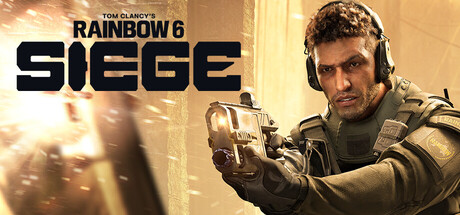
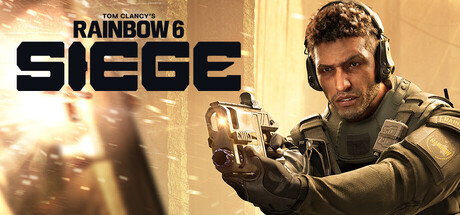
When Rainbow Six Siege launched on December 1, 2015, it was not obviously an esports game. It was slow, tactical and unforgiving, with destructible walls and one life per round, and its first months were rocky. A decade later it has one of the most loyal competitive scenes in the world, a world championship called the Six Invitational that sells out arenas on three continents, and a Brazilian team that has just won that event twice in a row.
In February 2026, FaZe Clan beat Team Secret 3-1 at Paris's Adidas Arena to become the first team to win back-to-back Six Invitationals. In August it added the Rainbow Six title at the Esports World Cup. Here is how competitive Siege got here.
The Pro League years (2016-2019)
Ubisoft built Siege's esports with ESL. The first Rainbow Six Pro League event was held at Intel Extreme Masters on March 4, 2016, and in May 2016 Germany's PENTA Sports won the first Pro League season.
The game was growing fast. By summer 2016, after the Skull Rain update, it had more than 10 million registered players; by August 2017, more than 20 million, with 2.3 million playing every day. By February 2019 the total had reached 45 million, and by December 2020 it passed 70 million.
The Six Invitational began in 2017 in Montreal, home of the Ubisoft studio that makes the game. That first year had separate PC and Xbox One events: Continuum won on PC, and Elevate won the Xbox tournament, worth $100,000. A year later, in 2018, PENTA Sports beat Evil Geniuses for a $500,000 prize pool, and the event drew 321,000 viewers on Twitch.
Why Siege works as an esport
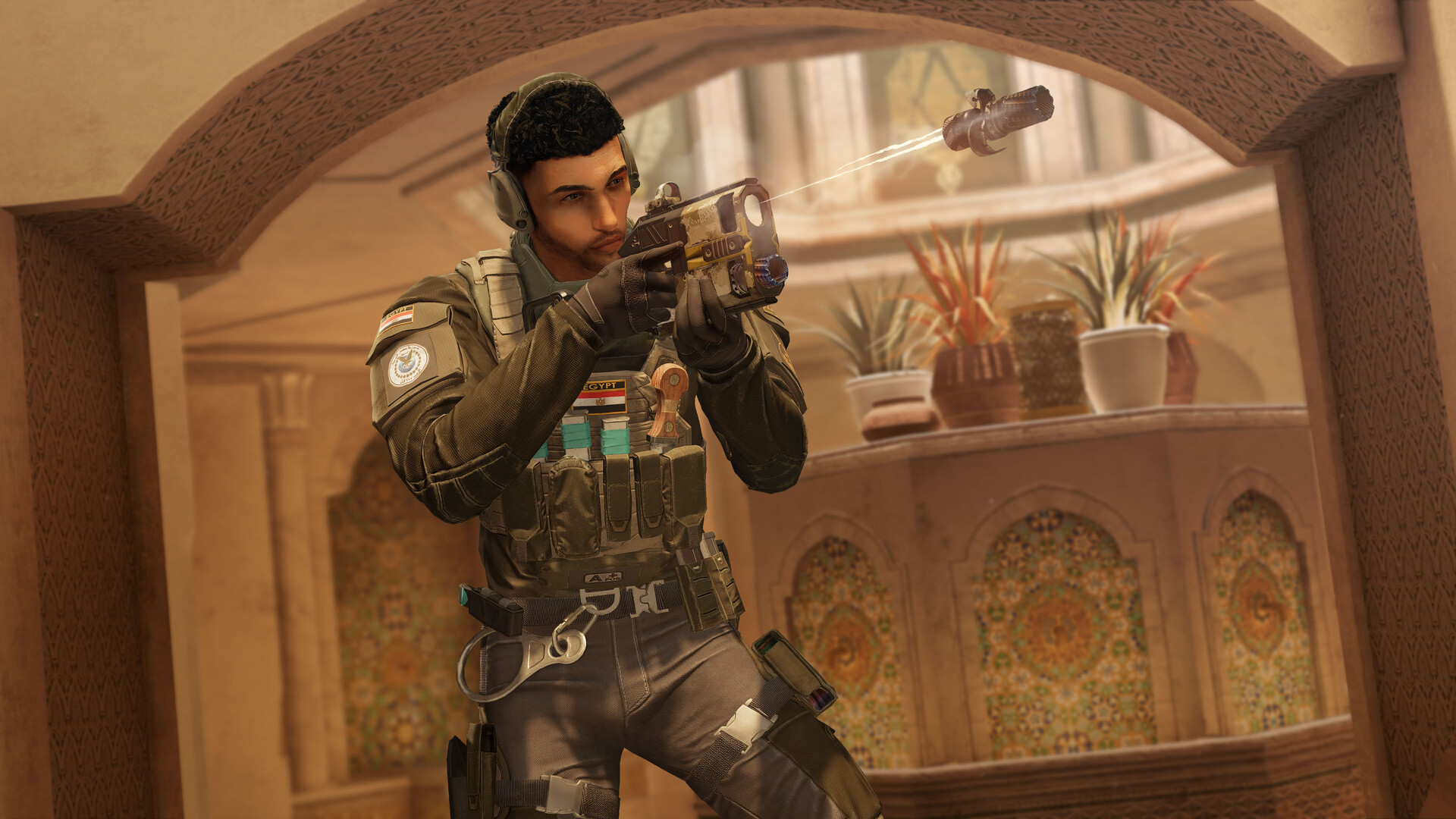
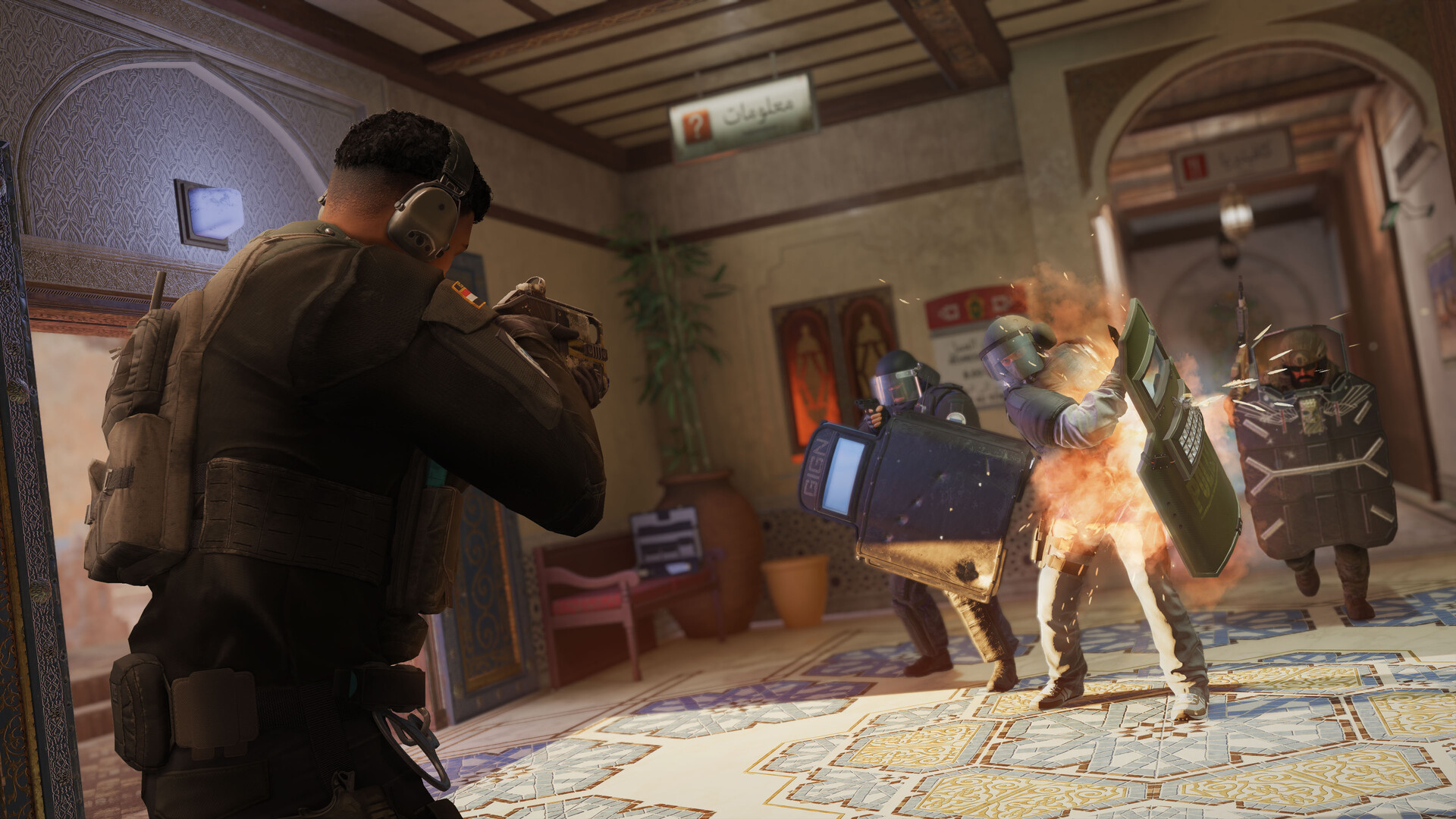
Siege's competitive format is simple to explain and hard to master. Two teams of five take turns attacking and defending, and in professional play every round is played on Bomb: the attackers try to plant a defuser at one of two sites, and the defenders try to stop them. Each round opens with a short preparation phase. Defenders reinforce walls and set traps, while attackers drive small remote-controlled drones through the building to find out where the enemy is hiding.
Then the walls start breaking. Many surfaces can be shot through, blown open or breached, so a defence that looks solid can fall apart in seconds. With one life per round and no respawns, every mistake counts, and a single surviving player can still win a round alone. Those clutch moments fill the scene's highlight reels.
Operator choice adds another layer. Each player picks a character with a unique gadget, and pro teams ban operators before each map, so the draft becomes a strategic battle before the first shot. Fans who know the maps can follow a team's plan almost like a chess match, while newcomers still get the thrill of a last-second defuse.
Bigger prize pools and the $3 million peak
The Invitational's prize pool grew quickly. It reached $2 million for 2019, when G2 Esports beat Team Empire at Montreal's Place Bell, and $3 million for 2020, the highest in the event's history. Spacestation Gaming won that one, taking $1 million, and became the first North American team to lift the hammer.
2020 also brought a big structural change. Ubisoft ended the Pro League and replaced it with regional leagues and a points system that decides who qualifies for international events. The idea was to reward a team's results across a whole season, not just a single qualifier.
Going global (2021-2024)
From 2021, the Invitational left Montreal. That year it went to Paris and the Palais Brongniart, the old stock exchange, where Ninjas in Pyjamas, then a Brazilian roster, beat Team Liquid. TSM won in Stockholm in 2022, and G2 became the first two-time champion back in Montreal in 2023, beating Brazil's w7m esports.
Not every move went smoothly. A Six Major planned for the UAE in August 2022 was moved to another region after a backlash from fans, an early example of how the scene's community could push back against organisers' choices.
In 2024, the Invitational went to São Paulo and the Ginásio do Ibirapuera, and Brazil got the result it wanted: w7m esports beat FaZe Clan in front of a home crowd. Brazilian teams had become the strongest force in the game.
Siege X and the FaZe dynasty (2025-2026)
On June 10, 2025, Ubisoft launched Siege X, the biggest update in the game's history. It added Dual Front, a permanent 6v6 mode for PC and current consoles, and Free Access: Quick Match, Unranked and Dual Front became free to play, while Ranked, the Siege Cup and extra operators still require a purchase.
On the competitive side, FaZe Clan's Brazilian roster had lost the 2024 final, and came back to win SI 2025 at Boston's MGM Music Hall at Fenway, beating Team BDS. Over Siege's tenth year it also finished third at the BLAST R6 Major Munich, won by M80, and won the South America League regional finals and the Copa Sul-Americana.
Then came Paris. At SI 2026 in the Adidas Arena, FaZe lost only one match all tournament, a group game to G2, and went through the playoffs without dropping into the lower bracket, beating Fluxo W7M, Wildcard and Team Falcons. In the final on February 15, it took Consulate and Bank, lost a marathon Fortress that tied the 2019 record for rounds on a grand-final map, and closed out Border 10-8 to beat Team Secret 3-1. Our SI 2026 report has the details.
By the numbers
- December 1, 2015: Siege's launch date
- March 4, 2016: the first Pro League event, at IEM
- 70 million+: registered players by December 2020
- $3 million: the 2020 Six Invitational prize pool, the event's record
- 10: Six Invitationals since 2017 (11 champions, counting the separate 2017 PC and Xbox events)
- 2: titles each for G2 Esports and FaZe Clan
- 6: host venues since 2021, in Paris, Stockholm, Montreal, São Paulo, Boston and Paris again
What to watch next
Siege's competitive year starts again with the next Six Invitational in early 2027, where FaZe will try to do what no team has ever done: win three in a row. Brazil's other giants, FURIA, which lost the Esports World Cup final to FaZe in Paris, and w7m, will be waiting.
If you are curious, Siege X's Free Access makes it easy to try: Quick Match and Dual Front cost nothing. Then watch the 2024 São Paulo final for the atmosphere and the 2026 Paris final for the level. Both show why a slow, careful shooter became one of the most watched games in esports.
For a history lesson, go back to the 2019 grand final between G2 and Team Empire and its 12-10 Coastline, then compare it with Fortress in the 2026 final, which matched that round count. Watching the two side by side shows how much the game, the maps and the teams have changed in seven years, and how much the core of Siege, one life, breakable walls and careful planning, has stayed the same. When you play, start by learning one map well: that is how the pros began too.