Thresh's Ferrari and Fatal1ty's Tour: How Quake Made the First Pro Gamers
In 1997 a 20-year-old won John Carmack's red Ferrari at E3, and he could not drive it home. The story of Quake, the CPL and the American roots of esports.
In May 1997, a red Ferrari 328 GTS convertible sat on the show floor of E3 in Atlanta. It belonged to John Carmack, the programmer behind Doom and Quake, and it was first prize in a Quake tournament. The winner was Dennis "Thresh" Fong. When Carmack handed him the keys and asked how he planned to get the car back to California, Fong admitted he had no idea. He could not drive a stick shift.
Guinness World Records now lists Fong as the first professional video gamer. His Ferrari is the most famous prize in the prehistory of esports, and the story behind it shows that before Korea's StarCraft boom, American PC gaming had already invented the pro player.
Red Annihilation: the tournament
The event was called Red Annihilation. A planned Microsoft-run tournament had been cancelled, so graphics company Intergraph organised its own with id Software, chipmaker Rendition and Mpath Interactive. The first rounds were played online on Mpath's MPlayer service, with around 2,000 players fighting one-on-one. The top 16 were flown to Atlanta to finish on a stage Intergraph built on the E3 floor.
E3 was a trade show closed to the public, so most fans watched online through in-game spectator cameras. That did not stop mainstream media from noticing: NBC's Today show and The Wall Street Journal both covered the final morning from the floor.
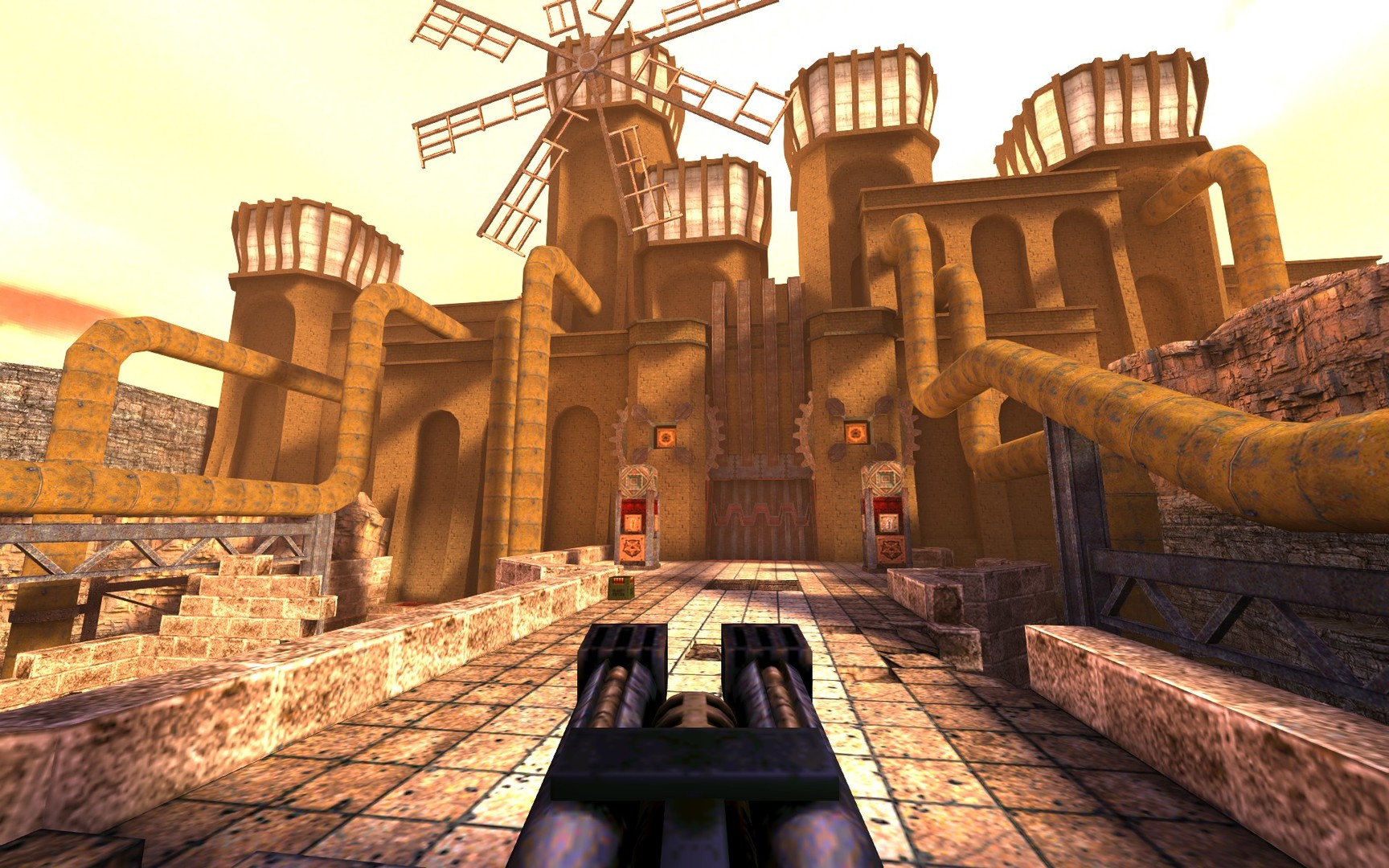
In the final, Thresh played Tom "Entropy" Kimzey on the map Castle of the Damned and won by a famously lopsided score, 13 to -1. Entropy finished with a negative score because he had killed himself more often than he had killed Thresh.
The Michael Jordan of gaming
Thresh was not a one-hit wonder. He was reportedly undefeated in tournaments from 1995 to 2001 and was world champion in Doom, Doom II, Quake and Quake II, earning him the nickname "the Michael Jordan of gaming." His first big win, at a Microsoft event run on the DWANGO online service, was worth between $10,000 and $15,000.
He retired from competition around the time of Quake III and moved into business, founding companies including Gamers.com, the gaming chat tool Xfire and the social network Raptr. That pattern, star player turned entrepreneur, is still common in esports.
The CPL: Dallas becomes esports' capital
One month after Red Annihilation, on 27 June 1997, a Dallas businessman named Angel Munoz founded the Cyberathlete Professional League (CPL). For the next decade the CPL was the closest thing Western esports had to a major league. It ran big LAN events in Dallas, with prize pools such as $250,000 at CPL Summer 2004, and its games included Quake III, Quake 4, Counter-Strike, Painkiller and Warcraft III.
The CPL became a proving ground for Counter-Strike in particular. A young London organisation called Fnatic, for example, won the Counter-Strike event at CPL Winter 2006, years before it became a household name in League of Legends.
Fatal1ty's $150,000 night
The 2005 tour ended in New York City from 20 to 22 November 2005, with the top 32 players meeting in one-versus-one matches, and the finals were televised by MTV. The winner was American Johnathan "Fatal1ty" Wendel, who took the $150,000 first prize. Runner-up Sander "Vo0" Kaasjager from the Netherlands earned $100,000 and was named tour MVP.
Fatal1ty became the most marketable Western gamer of his generation, lending his name to hardware such as motherboards and headsets. For many Americans in the mid-2000s, he was what a pro gamer looked like.
The CPL could not last. In March 2008 it stopped operating, citing a "crowded field of competing leagues." An Abu Dhabi investment group announced a takeover later that year, and the brand eventually resurfaced under Singapore's WoLong Ventures with events in Shenyang, China. By then, Counter-Strike had moved on to ESL and MLG, and Korea's StarCraft TV leagues had shown a different, broadcast-first model; see our history of OnGameNet and MBCGame.
Quake itself never disappeared. QuakeCon, id Software's community festival, was held in August 2026 at the Gaylord Texan Resort in Grapevine, Texas, where all four of id's founders, Adrian Carmack, John Carmack, Tom Hall and John Romero, appeared together. The show also released a free 19-map Quake episode, Dawn of the Machine, made by MachineGames with id.
Why it matters
Red Annihilation and the CPL proved three things early: that people would watch others play, that sponsors would pay for it and that a few players could make a living. Korea later scaled the idea up with television, and publishers took it global. But the template, a pro, a prize and a crowd, was there in Atlanta in 1997.
WGC's take: Esports has bigger prizes now, but none better than a programmer's own Ferrari. If you have never played Quake, the 2021 enhanced edition on Steam is the easiest way to see why it made champions.