Pokemon at 30: The Bug Collector's Game That Outsold Almost Everything
Satoshi Tajiri missed the insects of his childhood, so he put creatures in a Game Boy and let kids trade them through a cable. Thirty years and 515 million games later, here is the story of every Pokemon generation.
As a boy, Satoshi Tajiri loved collecting insects. As the towns around him grew and the fields disappeared, so did the bugs. Years later, as the head of a small studio called Game Freak, he imagined a game where you could still go out and find creatures, and he saw how to make it social: the Game Boy link cable, which could connect two handhelds so players could swap what they had caught.
The result, Pocket Monsters Red and Green, launched in Japan on February 27, 1996. This year the series turned 30, and the main games have now sold more than 515 million copies. On the anniversary itself, the Pokemon Company announced the tenth generation, Pokemon Winds and Waves, for Switch 2 in 2027. Here is how a bug collector's dream became the biggest media franchise on Earth.
A long, messy birth
Red and Green were not easy to make. Game Freak was small and inexperienced with a project of this scope, and the game took years to finish. Development was complete by October 1995, but the release slipped from December 21, 1995 to February 1996 because related products were not ready.
The creatures were designed by a team of fewer than ten people led by Ken Sugimori, who finalised all 151 designs and drew each one from several angles for the graphics team. Atsuko Nishida designed some of the most famous, including Pikachu, Bulbasaur, Charmander and Squirtle.
The long development left its mark. The code was so fragile that the English versions could not simply be translated; they had to be reprogrammed from scratch. The games were also full of glitches, the most famous being MissingNo., a scrambled "Pokemon" that appeared when players performed certain tricks and became a playground legend.
Pokemania
The games were a slow-burning hit in Japan, where Red, Green and a later Blue version sold 10.23 million copies. Blue first appeared on October 15, 1996 as a mail-order edition for readers of the children's magazine CoroCoro Comic, with updated art and dialogue, and its code became the basis for the international releases.
Red and Blue reached North America on September 28, 1998, more than two and a half years after the Japanese debut. They became the fastest-selling Game Boy games in the US, with 200,000 copies in two weeks and 4 million by the end of 1998. Together with the anime and the trading card game, they set off a worldwide craze.
Pokemon Yellow followed in Japan on September 12, 1998, modelled on the anime: Pikachu was your only starter, and it followed you around the world. Worldwide, the first-generation games have sold 31.38 million copies, still the best-selling entry in the series.
A new generation every few years
The main series settled into a pattern: a pair of games, a new region, new creatures, and a new Nintendo handheld to play them on.
- Gold and Silver (1999, Game Boy Color): a day-night cycle, a second region to return to, and 100 new Pokemon for 251 in total. They sold 23.70 million.
- Ruby and Sapphire (2002, Game Boy Advance): brought the total to 386.
- Diamond and Pearl (2006, Nintendo DS): took it to 493.
- Black and White (2010, DS) and X and Y (2013, 3DS), the latter the first fully 3D main games.
- Sun and Moon (2016, 3DS), set in a tropical region inspired by Hawaii.
Each new region gave the series a fresh map, but the core loop barely changed: pick a starter, collect badges from eight gyms, fill the Pokedex, beat the Elite Four. That consistency was a feature, not a bug. A child who started with Red could pick up any later game and feel at home within minutes, while the new creatures and mechanics, from breeding to Mega Evolution, kept long-time fans digging deeper.
The console era
For most of its history, the main series lived on handhelds. That changed with the Nintendo Switch, which was both a handheld and a home console. Sword and Shield (2019) were the first main-series games built for it and sold 27.08 million. Scarlet and Violet (2022), which began the ninth generation with a fully open world, sold 28.08 million, the second-best result in the series.
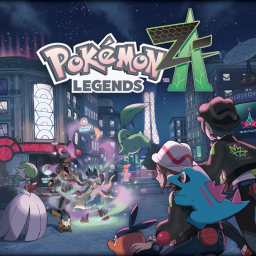
Not everything was smooth. The Switch games were often criticised for technical problems, and fans have long debated whether Game Freak's yearly schedule leaves enough time for polish. But the sales never stopped growing, and the Legends spin-off line has given the team room to experiment. Pokemon Legends: Z-A, set in a reimagined Lumiose City, launched on October 16, 2025 for Switch and Switch 2. It swapped the classic turn-based battles for real-time fights, one more sign that the series is more willing to experiment than its reputation suggests.
By the numbers
- 515 million+: main-series Pokemon games sold (as of March 2026)
- 31.38 million: Red, Green, Blue and their international versions, the best-selling generation
- 1,025: Pokemon species as of generation nine
- 10: generations, counting Winds and Waves in 2027
- 200,000: US copies of Red and Blue sold in their first two weeks in 1998
Why Pokemon still works
Pokemon's genius is that it turned a solitary handheld game into something you did with friends. You could not catch every creature alone; some appeared only in the other version, so you had to trade. That idea, built into the very first game, is why playgrounds in the 1990s were full of children holding Game Boys together with a cable between them, and why later games kept leaning into online trading and battles.
It also built a ladder that very few games have. A seven-year-old can finish the story by choosing the moves with the biggest numbers, while competitive players spend years studying hidden statistics, team building and turn order. The same cartridge serves both, which is a large part of why so many players never really leave.
WGC's take: the series has been criticised for playing it safe, and some of that criticism is fair. But it is worth remembering how strange the original idea was: a role-playing game about collecting, designed around a cable that many Game Boy owners had never even plugged in. The insects of Tajiri's childhood fields are long gone. His idea is everywhere.
What to play next
- Pokemon Legends: Z-A on Switch and Switch 2 is the most recent main-line adventure.
- Scarlet and Violet remain the best way to see the series in an open world.
- For a taste of 1996, the original games are part of the history every fan should try once, glitches and all.
- And keep an eye on 2027, when Winds and Waves start the tenth generation on Switch 2.