GameCube at 25: The Purple Lunchbox That Lost the War and Won Hearts
It had a handle, tiny discs and no Mario at launch. The GameCube sold fewer than 22 million units, but its controller, its games and its fans have outlasted almost everything from its generation.
Most consoles try to look serious. The Nintendo GameCube came with a handle. It was small, cube-shaped, available in a striking purple called Indigo, and looked a little like a lunchbox. In a generation where Sony and Microsoft pitched their machines as entertainment centres, Nintendo built a toy box for games, and was proud of it.
The GameCube launched in Japan on September 14, 2001, and in North America on November 18, 2001, 25 years ago next week. It sold only about 21.74 million units, behind both the PlayStation 2 and the Xbox. But few consoles have a more devoted following. Here is why.
Dolphin, miniDVDs and a $199 price
Nintendo first revealed the console under the codename "Dolphin" at a press conference in May 1999. Its hardware came from two partners: an IBM-designed "Gekko" processor at 486 MHz and an ATI "Flipper" graphics chip at 162 MHz, designed by a company called ArtX.
After years of criticism for sticking with cartridges on the Nintendo 64, Nintendo finally moved to discs. But they were not standard DVDs. The GameCube used its own miniDVD-based format, about 8 cm across, holding up to 1.5 GB. Most models could not play DVD films or music CDs, which kept costs down and made piracy harder.
Then there was the price. On May 21, 2001, Nintendo announced the GameCube would cost $199 in the US, $100 less than both the PS2 and the Xbox. It was also the first Nintendo home console with a proper system menu.
No Mario, but a scared Luigi
Unusually for Nintendo, the GameCube launched without a Mario game. Instead, the star of the launch lineup was Luigi's Mansion, in which Mario's nervous younger brother explores a haunted house with a vacuum cleaner. It was charming but short, and some fans were disappointed.
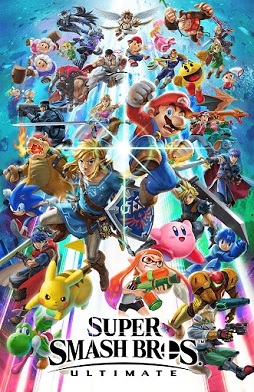
The library that followed was full of surprises. Super Smash Bros. Melee became the console's best-seller with about 7.09 million copies. The Wind Waker gave Zelda a cartoon look. Metroid Prime moved Samus into first person. Capcom brought a remake of the original Resident Evil as part of a three-game exclusivity deal with Nintendo. And the Game Boy Player, an add-on that sat underneath the console, let you play Game Boy, Game Boy Color and Game Boy Advance games on a television.
The controller that refused to die
The GameCube controller is the most unusual thing about the console, and the most lasting. It has a big green A button in the middle, a small red B, kidney-shaped X and Y buttons, and staggered sticks. It looked strange in 2001. It turned out to be perfect for Smash Bros.
Competitive Melee players kept using it for decades, and Nintendo kept supporting it. Every later Nintendo home console has had some way to use a GameCube controller, from the Wii's built-in ports to adapters for the Wii U and Switch.
Why it matters
Commercially, the GameCube was a setback. It finished behind both rivals, and Nintendo ended first-party support in February 2007. The last official game, Madden NFL 08, came out on August 14, 2007.
But its failure taught Nintendo something important. Its next console, the Wii, abandoned the power race entirely and sold more than 100 million units. In that sense, the little purple box with a handle was the turning point that made modern Nintendo.
WGC's take: the GameCube's library is small but exceptionally strong, and its controller is one of the best ever designed for one specific game. Twenty-five years on, the people who loved it still do.