NetEase on Your Phone: From Westward Journey to Identity V
A portal company that became a pig farmer, a game giant and the studio Japan's teenagers secretly love. How NetEase built a mobile empire on Chinese myth, Japanese ghosts and a jelly-bean party game.

In 2009, the founder of one of China's biggest internet companies made an announcement nobody saw coming: he was going into pig farming. Ding Lei, better known as William Ding, wanted to show that Chinese agriculture could be modernised, and in 2011 his Weiyang farm opened in Zhejiang province. The pork became a minor celebrity. The real money, though, was coming from somewhere else: games.
NetEase, founded by Ding in June 1997 as a web portal, is today one of the two giants of Chinese gaming alongside Tencent. In 2025 it reported revenue of 112.6 billion yuan and net income of 33.75 billion yuan, and most of that came from games, many of them on phones. Westerners know NetEase for Marvel Rivals; Chinese and Japanese players know it for a long run of mobile hits that started with a monkey king.
Journey to the West, again and again
NetEase's gaming story begins with China's most famous novel. In December 2001, it launched Westward Journey Online, an MMORPG based on Journey to the West, the classic tale of the monk Tang Sanzang and the Monkey King Sun Wukong. By 2006 it had 22 million registered users. Its follow-up, Fantasy Westward Journey, became one of China's longest-running and best-loved PC online games.
When smartphones arrived, NetEase did not invent a new hit from scratch. It moved its old ones. The mobile version of Fantasy Westward Journey launched in March 2015 and reached the top of China's free charts within two hours. It has stayed among the country's top earners for years, played by people who grew up with the PC original and now log in on the train.
Onmyoji, Identity V and the Japan surprise
NetEase's first big original mobile hit was Onmyoji, released in 2016. It is a turn-based RPG set in Heian-era Japan, built around the legend of the court magician Abe no Seimei and the spirits, or shikigami, he commands. The game had full Japanese voice acting and an art style that looked like a lavish anime, and it became a sensation in China before arriving in Japan.
Onmyoji showed NetEase something important: Chinese players loved Japanese culture, and Japanese players would accept a Chinese-made game if it respected that culture. The series later grew into a family of spin-offs, including Onmyoji Arena, a MOBA.
NetEase's success in Japan is one of the great surprises of mobile gaming. Knives Out, a battle royale launched in 2017, found its biggest audience in Japan, where it became a top-grossing hit and beat many Western rivals to the punch on phones.
Then came Identity V in 2018. It is an asymmetric game: one player is a Hunter, four are Survivors, and the Survivors must decode cipher machines and escape before the Hunter catches them. The idea came from Dead by Daylight on PC, but Identity V wrapped it in a gothic, Tim Burton-like art style and a mystery story about a detective investigating a strange manor.
In Japan, Identity V became a teen phenomenon, with big tournaments, anime collaborations and a pro league. It is one of the few Chinese-made games to be a genuine part of Japanese youth culture.
The partner years
NetEase also became the studio that Western companies called when they wanted a mobile game in China, or a game for China.
- Diablo Immortal, made with Blizzard, launched worldwide in June 2022 and in China in July 2022.
- Harry Potter: Magic Awakened, a card-based adventure set at Hogwarts, launched in China in 2021.
- NetEase was Blizzard's partner in China for years, running World of Warcraft and other games there until the licence ended in January 2023. The two companies made up in April 2024 with a new deal, and Blizzard's games returned to China.
Eggy Party and the casual turn
NetEase's newest mega-hit at home is Eggy Party, released in 2022: a colourful party game in which jelly-bean-shaped eggs race through obstacle courses, a little like Fall Guys on phones. It also lets players build their own levels and share them, turning it into a social platform for younger Chinese players. During Chinese school holidays it regularly tops the download charts.
Eggy Party shows how NetEase thinks about mobile today: not only deep RPGs for adults, but also friendly social games that a whole class can play together. Its cartoon look, short rounds and simple controls also suit a country where minors may play online games for only a few hours a week, so every session has to be fun from the first second.
The global push, and the pullback
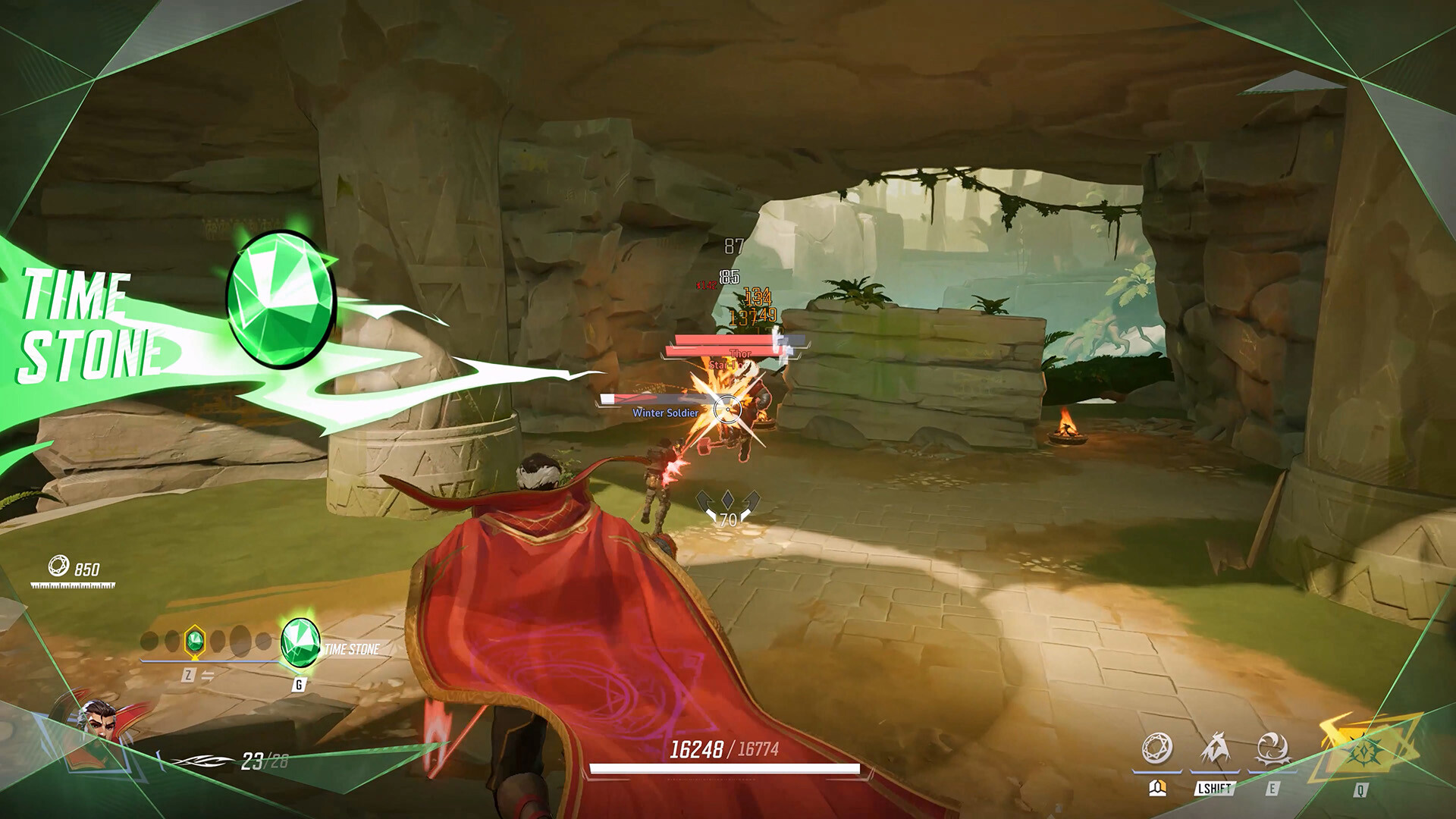
From around 2019, NetEase spent heavily outside China, funding or buying studios in Japan, Europe and North America and launching big PC and console games. Marvel Rivals, a hero shooter released in December 2024, was the headline success: it reached 40 million players by February 2025. The open-world wuxia game Where Winds Meet and the mobile shooter Destiny: Rising also carry NetEase's name beyond China. Its 2025 slate alone included the shooter FragPunk, the Marvel strategy game Marvel Mystic Mayhem and the global release of the MMORPG Sword of Justice.
But the bill was large. Since 2024, NetEase has cut funding to more than a dozen overseas studios and closed several of them, including Japan's Ouka Studios and America's Jar of Sparks, while focusing on fewer, bigger bets. In 2026, reports said it had stopped funding Nagoshi Studio, led by Yakuza creator Toshihiro Nagoshi.
Why it matters
NetEase proved that a Chinese studio can make games that cross cultures: Japanese ghost stories for Chinese players, gothic horror for Japanese teens, and Marvel heroes for the whole world. Its mobile strategy is a lesson in patience: it moved its PC classics to phones, invested in original ideas, and treated Japan as a serious market long before many rivals did.
It is also a lesson in limits. The overseas cutbacks show that even a company with 112.6 billion yuan in yearly revenue has to choose its battles.
By the numbers
- June 1997: NetEase founded by Ding Lei
- December 2001: Westward Journey Online launches
- 22 million: Westward Journey registered users by 2006
- 2 hours: how long Fantasy Westward Journey mobile took to top China's free chart in 2015
- 40 million: Marvel Rivals players by February 2025
- 112.6 billion yuan: NetEase's 2025 revenue
What to play next
Start with Identity V if you like tense, short multiplayer matches and gothic mysteries; it is free on mobile and PC. Onmyoji is the pick for fans of Japanese folklore and turn-based strategy. On PC or console, Marvel Rivals is NetEase's most polished global hit, and the mobile shooter Destiny: Rising shows its newer, Western-facing side.