Mobile Legends: How a Shanghai MOBA Became Southeast Asia's Game
It launched in 2016 to lawsuits and copycat accusations. A decade later it fills arenas in Jakarta and Manila, wins SEA Games medals and puts local folk heroes on millions of screens.
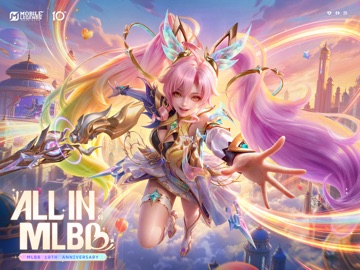
In 1521, a chieftain named Lapu-Lapu defeated the Portuguese explorer Ferdinand Magellan on the island of Mactan, in what is now the Philippines. Five centuries later, he is a playable hero in a mobile game played across Southeast Asia. That one detail explains a lot about Mobile Legends: Bang Bang, the MOBA that a Shanghai studio built for phones and that Indonesia, the Philippines and Malaysia made their own.
Developed by Moonton, Mobile Legends: Bang Bang (MLBB) launched on Android on 14 July 2016, with iOS following that November. In the decade since, it has become the region's dominant mobile esport, a SEA Games medal event since 2019, and in 2021 the reason ByteDance, TikTok's parent company, bought Moonton in a deal widely reported at around $4 billion. In 2026 it changed hands again, to Saudi Arabia's Savvy Games Group.
A rocky start
Moonton was founded in Shanghai in 2014. Its first hit, Magic Rush: Heroes, was a tower-defence RPG. MLBB came next: a five-versus-five battle arena with three lanes, a jungle and a base to destroy, built for touch screens and matches of around 10 to 15 minutes.
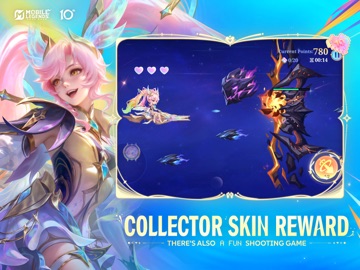
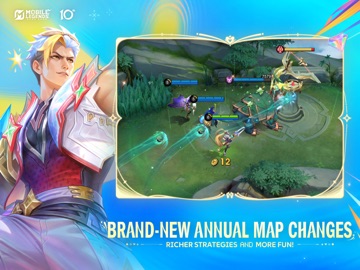
A team usually splits into familiar roles: a tank to soak up damage, a fighter, an assassin who roams the jungle, a mage and a marksman who grows into the team's main damage dealer late in the game. Two big neutral monsters shape every match. The Turtle appears early and rewards the team that kills it with gold and experience, while the Lord arrives later and, once slain, marches down a lane for the team that defeated it. Fights around those two objectives are where most games are won and lost, and where most highlight clips come from.
The resemblance to PC games was obvious, and not everyone found it flattering. In 2017, Riot Games, maker of League of Legends, sued Moonton in a California court, claiming the game copied its work. The US case was dismissed on jurisdiction grounds, as the court felt it belonged elsewhere. Riot's owner Tencent pursued the dispute in China, and in 2018 a Shanghai court ruled in Tencent's favour in a case against Moonton's chief executive over a non-compete agreement, awarding about 19.4 million yuan (roughly $2.9 million). Moonton kept updating the game and grew anyway, and in 2024 Riot and Moonton finally settled their intellectual property disputes.
Built for the phones people actually had
MLBB's timing was perfect. In 2016 and 2017, tens of millions of people across Southeast Asia were getting their first smartphones: affordable Android phones with modest memory, often on prepaid data. Big PC MOBAs were out of reach for many of them.
Moonton designed for that reality. The game runs on inexpensive hardware, downloads in a manageable size, matches quickly over unstable mobile networks and finishes a full game in the time it takes to ride a bus. Heroes are bought with in-game currency earned through play or with diamonds, and most spending goes on skins, which change a hero's look without changing its power.
Just as important, Moonton treated the region as its home market rather than an afterthought. The game has local servers, local-language voice and text, local events during Ramadan and national holidays, and, most famously, local heroes.
Heroes from home
MLBB's roster passed 130 heroes in 2026, and a number of them come straight from Southeast Asian history and folklore:
- Gatotkaca, the iron-boned warrior from Javanese wayang puppet theatre, for Indonesia. Moonton worked with Indonesian comic artist Is Yuniarto on bringing him into the game in 2017.
- Lapu-Lapu, the Mactan chieftain, for the Philippines.
- Badang, the legendary strongman of Malay folk tales, for Malaysia.
- Minsitthar, a prince from the Bagan period, for Myanmar.
- Kadita, a sea goddess inspired by the Javanese legend of the Queen of the Southern Sea.
For a player in Jakarta or Cebu, picking a hero from their own stories is a small but powerful thing. It turned MLBB from an imported product into a local one.
From net cafés to medal podiums
Esports turned MLBB from a popular game into a national pastime. Moonton launched regional pro leagues, the MPL, starting with Indonesia and the Philippines, and the M-series world championship from 2019. The first, M1 in Kuala Lumpur, was won by Indonesia's EVOS Legends.
MLBB then reached the Olympics' regional cousin. At the 2019 SEA Games, hosted by the Philippines, MLBB was one of the first esports to award official medals, and the home team, Sibol, took gold in front of a home crowd. The game has returned to the SEA Games programme since, and MPL finals in Manila and Jakarta now fill arenas that usually host basketball games or concerts.
From ByteDance to Savvy
In March 2021, ByteDance completed its purchase of Moonton. The deal made sense on both sides: ByteDance wanted a foothold in games, where its short-video empire already drove huge audiences, and Moonton gained resources for expansion. ByteDance later scaled back much of its own game business, and in 2026 Moonton moved to Savvy Games Group, the Saudi-backed company that also owns Monopoly GO! maker Scopely and the esports organiser ESL FACEIT Group. For MLBB, whose biggest tournaments already sit on the Esports World Cup calendar in Riyadh, the new owner has obvious esports ambitions.
The game has kept growing sideways. Spin-offs such as the idle RPG Mobile Legends: Adventure and the auto-battler Magic Chess: Go Go build on its heroes, and crossovers with brands such as The King of Fighters and Transformers bring in skins that fans queue for. Competition is tougher now: Tencent launched the original Honor of Kings worldwide in 2024, aiming straight at MLBB's markets. Our Honor of Kings feature tells that side of the story.
Why it matters
MLBB is a reminder that "global" gaming has more than one centre. A game made in Shanghai, ignored in the West and barely known in Korea became a cultural force across a region of more than 650 million people by listening to them: their phones, their data plans, their heroes and their holidays.
It also showed how esports can grow from the bottom up. MLBB's scene did not need expensive PCs or gaming cafés; it needed a phone, a data plan and five friends. That model now shapes how every publisher thinks about emerging markets. For Korean studios, which have usually aimed at Korea, China and Japan first, MLBB is a case study worth reading closely: Southeast Asia rewards games that run well on cheap phones, speak the local language and put local stories on screen, and it punishes games that treat the region as an afterthought.
By the numbers
- 2014: Moonton founded in Shanghai
- July 2016: Mobile Legends: Bang Bang launches
- 130+: heroes in the roster (2026)
- 2019: first SEA Games medal event, gold for the Philippines
- 2019: first M-series world championship, won by EVOS Legends
- 2021: ByteDance completes its purchase of Moonton
- 2026: Moonton moves to Savvy Games Group
What to play next
If you have never tried a MOBA, MLBB is a forgiving start: matches are short, the controls are simple and there is a hero for every play style. Try Lapu-Lapu or Gatotkaca to see the local heroes in action. If you want a comparison, Honor of Kings is the closest rival; if you enjoy the strategy more than the speed, the auto-battler Magic Chess: Go Go uses the same heroes at a slower pace.