Thirty Years of Korean MMORPGs: From Baram's One Lonely Player to AION 2
On its first day in 1996, Korea's first graphical online RPG had exactly one user. Three decades later, Korean MMOs top Steam charts worldwide. How a comic book, dial-up networks and PC bangs built an industry.
On the day Korea's first graphical online role-playing game opened in April 1996, its server had exactly one user. The game was Baram (known abroad as Nexus: The Kingdom of the Winds), made by a two-year-old company called Nexon. Thirty years later, Baram is still running, and Korean MMORPGs regularly sit at the top of Steam's global charts.
This is the story of how that happened: a comic book, an online network you dialled into, a little over 100 million won of start-up money and a new kind of shop called the PC bang.
A comic book and a dial-up network
Nexon was founded in 1994 by Kim Jung-ju and Song Jae-kyung. Song had already made Korea's first commercial text-based online game, a MUD called "Jurassic Park", and in about March 1995 he proposed turning a comic into a graphical game. The comic was Baram, by the artist Kim Jin, serialised from 1992 in the magazine Daengi and set in the ancient kingdom of Goguryeo. Nexon signed a licence with Kim Jin before development started.
The early company ran on very little. Its first funding was 60 million won from Kim Jung-ju's father and 50 million won from IBM Korea, and its office measured about 13 pyeong, roughly 43 square metres.
Baram opened in beta in February 1996, launched on the Chollian PC network in April 1996, and introduced a flat monthly fee of about 40,000 won in November 1996. In early 1996 it made about 1 million won a month. By July 1998, an English version called Nexus: The Kingdom of the Winds was running commercially in the United States, and Nexon's annual revenue passed 10 billion won for the first time that same year.
Nexon still credits the game with everything that followed. "Baram's growth became Nexon's growth," the company said at the 30th anniversary. By 2021, Baram had passed 26 million registered users.
The PC bang revolution
Two things turned a niche hobby into a national pastime. The first was the PC bang, Korea's internet café, which began to appear around 1997 as internet billing arrived on Chollian. The second was the government's huge investment in broadband under the Kim Dae-jung administration. Cheap, fast connections in thousands of neighbourhood cafés made online games a social activity, especially for students. StarCraft and Diablo rode the same wave.
Song Jae-kyung left Nexon and led development of Lineage at NCSOFT. Launched in 1998, Lineage turned castle sieges and blood pledges (guilds) into a national obsession and built NCSOFT into one of Korea's largest game companies. Baram, meanwhile, peaked at 130,000 concurrent users in 2005, the year it went free-to-play.
The 2000s: cute, cosy and global
The next wave showed that Korean MMOs did not have to be grim medieval wars. MapleStory, launched by Nexon on April 29, 2003, was a bright side-scrolling world full of mushrooms and snails. It passed 39 million accounts worldwide by 2006, reached North America in 2005, and in August 2011 its "Legend" update drew 626,000 simultaneous users in Korea.
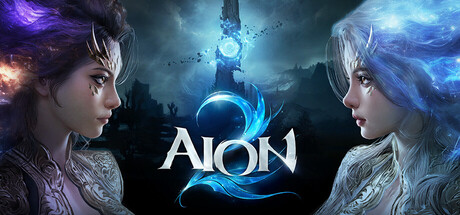
NCSOFT kept raising the bar on production values. AION: The Tower of Eternity arrived in 2008 with free flight and a war between two winged races. ArcheAge, from Song Jae-kyung's new studio XLGAMES, launched in January 2013 with player-owned land, farms and naval trade, and quickly spread to Japan, Russia, North America, Europe and China. Its first overseas deal, signed with Russia's Mail.ru in January 2013, covered 14 countries.
This was also the decade when Korean MMOs learned to travel. Rather than simply translating games, publishers began running separate global versions with their own servers, events and balance, a model MapleStory's global team still uses today.
Action, open worlds and the West
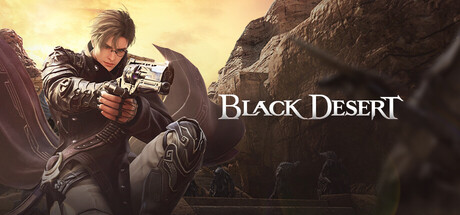
The 2010s brought action combat and Western breakthroughs. Black Desert, from Pearl Abyss, launched in Korea on December 17, 2014, with four classes and an engine built in-house. It went on to more than 55 million players across PC, console and mobile.
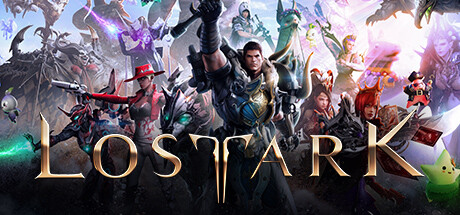
Smilegate's Lost Ark opened in Korea on November 7, 2018, after a development that the press put at seven years and 100 billion won. When it reached the West in February 2022, it peaked at 1.325 million concurrent players on Steam, then the second-highest peak in Steam history.
The mobile earthquake
Then came phones. Netmarble's Lineage II: Revolution made $176 million in its first 30 days in Korea after its December 2016 launch, a record at the time. NCSOFT's own Lineage M, launched in June 2017 after 5.5 million pre-registrations, made $233 million in its first 30 days and more than $1 billion in its first year. At the time PocketGamer.biz analysed the boom, those two mobile Lineages provided about 65% of NCSOFT's sales and 35% of Netmarble's. Korea's games market grew by about 80% between 2015 and 2017. A nearly 20-year-old PC franchise had become the engine of the country's mobile industry.
Mobile changed the business. Auto-battle, paid probability boxes and fierce whale-driven spending became the standard model for Korean MMOs, and later a target for regulators. Since March 22, 2024, Korean law has required games to disclose the odds of paid random items.
The 2020s: back to PC, back to the world
The latest chapter has an unexpected twist: a return to PC and to global players. NCSOFT's Throne and Liberty launched in Korea on December 7, 2023, and reached a Steam peak of 336,300 players in the West in October 2024. AION 2 launched in Korea and Taiwan on November 19, 2025, then globally in autumn 2026, peaking at 171,530 concurrent players on Steam.
And in February 2026, NC went full circle with Lineage Classic, a recreation of early-2000s Lineage at its old monthly price of 29,700 won. It reached a peak of over 320,000 concurrent players and became one of the most played games in Korea's PC bangs, 28 years after the original.
By the numbers
- 1: Baram's user count on launch day in 1996.
- 30 years: Baram's age in April 2026, still in service.
- 130,000: Baram's peak concurrent users, in 2005.
- 626,000: MapleStory's peak concurrent users in Korea, August 2011.
- $1 billion+: Lineage M's first-year revenue.
- 1.325 million: Lost Ark's Steam peak in February 2022.
- 171,530: AION 2's first-day Steam peak in 2026.
What to play next
- For the history: Baram is still running in Korea after 30 years, and its anniversary update added a whole new Silla region to explore.
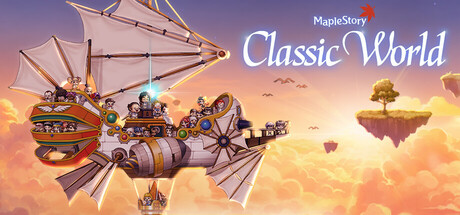
- For nostalgia: Lineage Classic (Korea and Taiwan) or the global MapleStory Classic World.
- For modern action: Lost Ark or Black Desert, both on Steam.
- For the newest: AION 2, free on Steam and NC's PURPLE.
WGC's take: Korea did not invent the MMORPG, but it built the world's most intense MMO culture, one PC bang at a time. Thirty years after a single player logged into Baram, the industry is in a fascinating place: going global on Steam, returning to subscriptions with Lineage Classic and moving away from the hidden-odds gacha that once defined it. The next 30 years will be just as interesting.