Honor of Kings: Inside the Most-Played Phone Game on Earth
More than 100 million people a day, a nickname that means 'pesticide', and a world of heroes drawn from 3,000 years of Chinese history. How Tencent's MOBA became the biggest game most Westerners have never played.
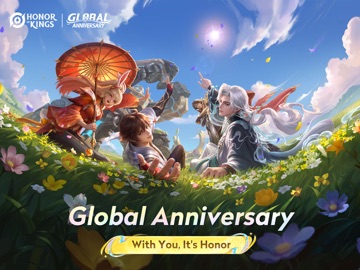
Ride any subway in Shanghai or Chengdu at rush hour and count the screens. A good share of them will show the same thing: a top-down map with three lanes, ten tiny heroes and a crystal at each end. That is Honor of Kings, and for most of the past decade it has been one of the most played and highest-earning games in the world.
Made by TiMi Studio Group, part of Tencent, Honor of Kings launched in China on 26 November 2015. Tencent said in 2020 that it had passed 100 million daily active players, a number almost no other game has claimed. After years of being known abroad mainly through its international cousin Arena of Valor, the original finally rolled out worldwide on 20 June 2024.
A MOBA built for the thumb
Honor of Kings is a MOBA, a multiplayer online battle arena: two teams of five pick heroes, push down three lanes and try to destroy the enemy base. The genre was born on PC with Defense of the Ancients and League of Legends, where a single match can run 40 minutes and needs a mouse, a keyboard and a lot of patience.
TiMi's key decision was to rebuild that formula for phones rather than copy it. Matches usually finish in 15 to 20 minutes. Movement uses a virtual joystick on the left, skills sit under the right thumb, and the game helps with targeting. You can play a full ranked game on a lunch break, which is exactly how millions of people do.
The ranked ladder gives the game its name. Players climb from bronze through platinum, diamond and "starlight" tiers until they reach the King tiers at the top, where the very best earn the title of Glorious King. Reaching King is a badge of honour in Chinese schools and offices, and much of the game's social life, from friends' leaderboards to livestreams, revolves around that climb. The game also leans on social features from Tencent's messaging apps WeChat and QQ, so inviting friends takes a single tap.
The game did not start with its famous name. Early test versions in 2015 were called Hero Battle and then League of Kings before Tencent settled on Wangzhe Rongyao, "Glory of Kings", which became Honor of Kings in English.
Heroes from history
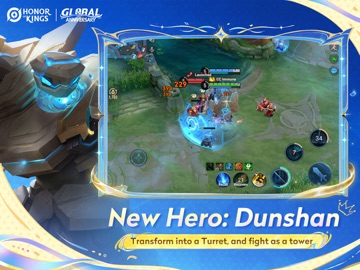
Most MOBAs invent their heroes from scratch. Honor of Kings borrows many of its roster from Chinese history, literature and myth. You can play the poet Li Bai, the strategist Zhuge Liang, the warrior Lü Bu and the Monkey King Sun Wukong, alongside characters from other cultures and Tencent's own creations. The roster now runs to more than 100 heroes.
That approach made the game feel familiar to Chinese players from the first match, but it also caused trouble. In 2017, the state newspaper People's Daily criticised the game for distorting history, pointing to changes such as turning the famous assassin Jing Ke into a female character. Tencent later added more background material to its hero stories.
It also became a showcase for traditional culture. The game has worked with cultural institutions such as the Dunhuang Academy on skins inspired by ancient Buddhist cave murals, and it regularly releases outfits based on Chinese opera and festivals.
The game that changed China's rules
A game this popular inevitably became a social issue. In July 2017, after the People's Daily commentary and public worry about children's screen time, Tencent introduced its own limits: players under 12 could play only one hour a day, and those aged 12 to 18 two hours, with real-name checks to enforce it.
Those company rules became a template. China's national rules, tightened in 2021, now limit minors to one hour of online games on Fridays, weekends and public holidays across every game. Our China regulation explainer has the full story. Honor of Kings, which once had to defend itself in the national press, ended up shaping how a whole country regulates play.
How it made its money
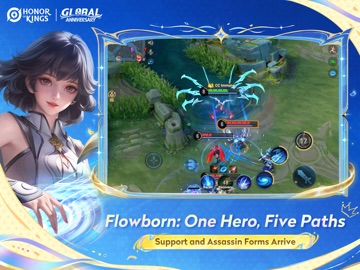
Honor of Kings is free to play. Heroes can be unlocked through play, and power is never sold directly. The money comes from skins, cosmetic outfits that change how a hero looks and sounds, plus battle passes and events. Skins tied to famous heroes or holidays can sell enormously.
Analytics firms that track app store spending have estimated that the game passed $10 billion in lifetime player spending years ago, with almost all of it coming from China. It is regularly near the top of global mobile revenue rankings even though, until 2024, it was barely available outside China.
Going global, twice
Tencent's first attempt to take the game abroad was Arena of Valor, a heavily adapted version launched across Asia from 2016 and in the West in 2017, with new heroes, including a set licensed from DC Comics, and a different art style. It became a giant in Thailand, Vietnam and Taiwan, published there by Garena, but never caught on in North America or Europe. Our Arena of Valor story follows that branch of the family.
The second attempt was more direct. In June 2024, Tencent's international label Level Infinite launched the original Honor of Kings globally, keeping its Chinese heroes and adding regional heroes and events. It competes head-on with Mobile Legends: Bang Bang (our story), which dominates the MOBA scene in Southeast Asia. The game also has a large international esports programme, including a World Cup at the Esports World Cup in Riyadh.

Why it matters
Honor of Kings proved that the deepest PC genres could be rebuilt for phones without losing what made them competitive. It also showed how far a single mobile game can reach: into school rules, national regulation, museums, the Asian Games and the daily commute of more people than live in most countries.
For Western and Korean players, it is a reminder that the biggest games are not always the ones that dominate our own charts. The most successful MOBA on Earth is not on PC at all.
By the numbers
- 26 November 2015: launch in China
- 100 million+: daily active players, as Tencent stated in 2020
- 100+: playable heroes
- 15 to 20 minutes: a typical match
- 20 June 2024: worldwide launch by Level Infinite
- 2023: medal event at the Hangzhou Asian Games
What to play next
New to MOBAs? Honor of Kings is one of the friendliest ways in, thanks to short matches and strong aim assistance: start in the training modes and pick a sturdy tank hero. If you want the Southeast Asian alternative, try Mobile Legends: Bang Bang; if you prefer PC depth, League of Legends is still the original. And keep an eye on Honor of Kings World, an open-world spin-off TiMi first revealed in 2022, which could take these heroes far beyond three lanes.