Halo at 25: The Mac Game That Became Xbox's Reason to Exist
On November 15, 2001, a shooter that began life as a strategy game launched alongside a brand-new console. A quarter of a century later, Master Chief has played on PlayStation and is moving to his third family of developers.

On July 21, 1999, Steve Jobs walked onto the stage at Macworld in New York and introduced a game from a small Chicago studio called Bungie. It was called Halo, and Jobs promised it would come out on the Mac and Windows at the same time. Neither happened on schedule. Less than a year later, Microsoft bought Bungie, and Halo became the reason people bought an Xbox.
That launch day, November 15, 2001, turns 25 this week. In those 25 years the series has sold more than 81 million copies, broken entertainment records, spawned a TV show and, this summer, done the unthinkable: launched on a PlayStation. Here is how a strategy prototype became the face of a console.
A strategy game, a monkey and a cyborg
Halo did not start as a shooter. Development began in 1997 as a real-time strategy game, with the camera high above the battlefield. By mid-1998 it had become a third-person action game, and only later did Bungie move the camera behind the visor and make it a first-person shooter.
The name took a while too. Early working titles included Armor and, briefly, Monkey Nuts, before the team settled on Blam!. Rejected candidates for the final title included The Santa Machine and Solipsis. The hero, now one of the most famous faces in games without ever showing his face, was known internally simply as "the cyborg".
Microsoft announced the purchase on June 19, 2000. Bungie then had roughly nine months to turn its ambitious project into a finished launch game for a console that did not exist yet. Open-world plans were cut, and the multiplayer mode was rebuilt only about four months before release.
Launch day, and the LAN party era
Halo: Combat Evolved arrived with the Xbox in North America on November 15, 2001, and reached PAL regions on March 14, 2002. Critics were stunned. It scored 97 on Metacritic, and the British magazine Edge gave it a perfect 10, calling it the most important launch game for any console ever.
The odd thing is that this famous multiplayer game had no online play on Xbox. Xbox Live was not ready yet. Four players could share one screen, and up to four consoles could be linked with cables through System Link, for 16 players in total. That meant carrying televisions and consoles to a friend's house, and a whole generation of players learned the word "LAN party" because of it.
It took about five months to sell its first million copies and passed six million by November 2005. A Windows version followed on September 30, 2003, adding online play for up to 16 players, and a Mac version later that year, four years after Jobs had first promised one.
Record-breaking sequels
If the first game made the Xbox, the sequels made Halo a pop-culture event.
Halo 2 launched on November 9, 2004, with full Xbox Live support. It sold 2.38 million units and took $125 million on its first day, at the time the highest-grossing release in entertainment history, beating any film opening. It became the best-selling Xbox game, with about 8 million copies, and its soundtrack was the first video game soundtrack to enter the Billboard 200.
Halo 3 arrived on the Xbox 360 on September 25, 2007 and made $170 million in the US in its first 24 hours. It was the best-selling game in America that year. Bungie then made two more: Halo 3: ODST in 2009 and Halo: Reach on September 14, 2010, which made $200 million on its first day.
By then, the studio had already left. Bungie became independent again in October 2007, and Microsoft kept the Halo name.
The Bungie years left a remarkable record: five shooters in nine years, each one a bigger event than the last, and a generation of players who measured their teenage years in Halo releases.

The 343 years
To look after its biggest series, Microsoft created 343 Industries, named after 343 Guilty Spark, the floating robot from the first game. Its first big project was Halo: Combat Evolved Anniversary on November 15, 2011, exactly ten years after the original. Halo 4 followed on November 6, 2012, with record first-day sales for the series, then Halo 5: Guardians in 2015 and Halo Infinite in December 2021.
The 343 era was never as dominant as Bungie's. Each game sold well and had passionate fans, but the shooter market had changed, with Call of Duty and then free-to-play battle royales taking much of Halo's old audience. The Master Chief Collection in 2014 gathered the classic games together, and a live-action series premiered on Paramount+ on March 24, 2022. The studio was renamed Halo Studios on October 6, 2024, as it began moving development to Unreal Engine 5.
2026: Halo on PlayStation
This year, the series crossed a line its fans once thought was permanent. Halo: Campaign Evolved, a remake of the first game's story by Halo Studios, launched on July 28, 2026 for PS5, Xbox Series X|S and PC. It is the first Halo game on a Sony console.
The remake runs on Unreal Engine 5 for its visuals, with simulation code descended from Bungie's original Blam engine underneath. It adds three prequel missions with Sergeant Johnson and Master Chief, more Flood variants and new weapons, plus four-player online co-op, two-player split-screen on consoles, and cross-play. There is no competitive multiplayer. Critics liked it: it holds 82 on OpenCritic, with 90% of critics recommending it.
Then, in September 2026, Microsoft announced that the next Halo game will be made by a new team at Activision, with a small Halo Studios group staying on to support current games. After Bungie and 343, Master Chief is heading to his third family of developers.
By the numbers
- 81 million+: Halo games sold (as of February 2021)
- $125 million: Halo 2's first-day takings in 2004
- 97: Halo: Combat Evolved's Metacritic score on Xbox
- 16: players in a full System Link match in 2001
- $2.5 million: prize pool of the 2015 Halo World Championship
- 82: Halo: Campaign Evolved on OpenCritic

Why it still matters
Halo's real legacy is not one game but an idea: that a shooter could work beautifully with a controller. Its two-weapon limit, recharging shield and grenade button became the template for console shooters for a decade. It also proved that a console could be sold on the strength of one exclusive game, something Microsoft has now moved away from as its games arrive on PlayStation and PC.
WGC's take: the move to Activision is a gamble, but so was a strategy game that turned into a first-person shooter nine months before launch. The best Halo moments have always come when the series was under pressure.
What to play next
- New to Halo: Halo: Campaign Evolved is the most approachable way into the story, and it is the only way to play it on PS5.
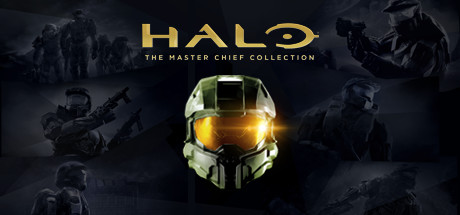
- Want the full saga: Halo: The Master Chief Collection on PC and Xbox bundles the classic games, including Halo 2 and Halo 3.
- Want history: play the first level of the remake, then the 2001 original in the collection, and compare how much the Pillar of Autumn has changed.
For more of 2026's big releases, see our 2026 AAA year so far.