Before GTA VI: How a Dull Police Game in Dundee Became Grand Theft Auto
The biggest entertainment series of the century started as a cops-and-robbers prototype nobody liked, made by the studio behind Lemmings. With GTA VI days away, here is the whole story from 1995 to Los Santos.
In April 1995, a small team in Dundee, Scotland, started work on a game called Race'n'Chase. The player was a police officer chasing criminals through a top-down city. It was, by the team's own judgement, dull. So they flipped it around: what if you played the criminal instead?
That decision created Grand Theft Auto, a series that has now shipped more than 470 million units. Its fifth numbered game alone has sold over 230 million. And on November 19, 2026, next Thursday, Grand Theft Auto VI finally arrives on PS5 and Xbox Series X|S. Before the biggest launch of the decade, here is how a Scottish side project grew into the most successful entertainment franchise of its era.
The studio that made Lemmings
The team behind it was DMA Design, founded by David Jones in his hometown of Dundee in 1988. DMA was already famous for Lemmings, the 1991 puzzle game in which you guide tiny green-haired creatures away from cliffs. Lemmings sold 55,000 copies on its first day and around 20 million in total across 21 platforms.
Race'n'Chase was something else entirely. Development stretched on and missed its early deadlines, and the police concept did not work. Once the player became the criminal, everything clicked: stealing any car, outrunning the police and causing chaos in a living city was simply more fun than enforcing the law.
The original Grand Theft Auto came out on November 28, 1997 for MS-DOS and Windows, published in Europe by BMG Interactive, with a PlayStation version on December 12. It was viewed from directly above, and its cars looked like little toys. It still sold over 1 million copies by November 1998 and 6 million by March 2001, and stayed in the UK top 20 for at least 76 weeks.
Controversy as a marketing plan
GTA's reputation for outrage started on purpose. The publisher hired Max Clifford, Britain's most famous tabloid publicist, who encouraged sensational newspaper stories about the game's violence. Every angry headline was free advertising.
It worked almost too well. Brazil's Justice Ministry banned the game. Planned versions for the Sega Saturn and Nintendo 64 never came out. But the formula was set: the more adults complained, the more teenagers wanted to play.
Grand Theft Auto 2 followed in 1999. That same year, the American publisher Take-Two bought DMA Design for a nominal £1, taking on about $12.3 million of debt. The Dundee office closed in March 2000, staff moved to Edinburgh, and in May 2002 the studio got the name it still has today: Rockstar North.
By the end of the 1990s, then, GTA was a cult hit with a bad reputation, a new owner in New York and a team in Edinburgh about to get access to far more powerful hardware.
2001: the jump to 3D
The moment GTA became GTA, as most players know it, was 2001. Grand Theft Auto III moved the camera down from the sky and put you on the streets of Liberty City in full 3D on the PlayStation 2. You could walk anywhere, steal anything, switch radio stations and ignore the story completely. Critics called it a landmark, and it showed the whole industry what an "open world" could be.
Rockstar then released three huge games in four years:
- Vice City (2002): a neon-soaked 1980s Miami tribute and the first game with a speaking protagonist, Tommy Vercetti, voiced by Ray Liotta.
- San Andreas (2004): an entire state with three cities, character customisation and a huge map. It sold 17.33 million copies on PS2, the best-selling game on the best-selling console ever.
- A string of handheld spin-offs that kept the series on PSP and Nintendo DS.
GTA IV: the serious turn
Grand Theft Auto IV in 2008 went in a different direction. It returned to a far more realistic Liberty City, inspired by New York, and told the story of Niko Bellic, an Eastern European immigrant chasing the American dream. Rockstar removed much of San Andreas' customisation, focused on realistic driving and physics, and added online multiplayer for the first time.
It was one of the most acclaimed games of its generation, but some fans missed the silliness of the PS2 era. Rockstar's answer, five years later, was to do both at once.
GTA V: the record breaker
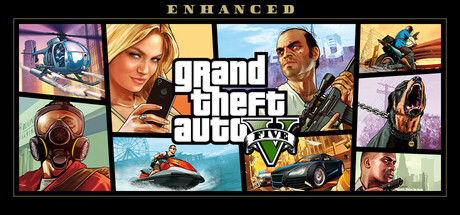
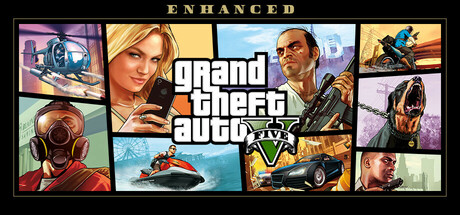
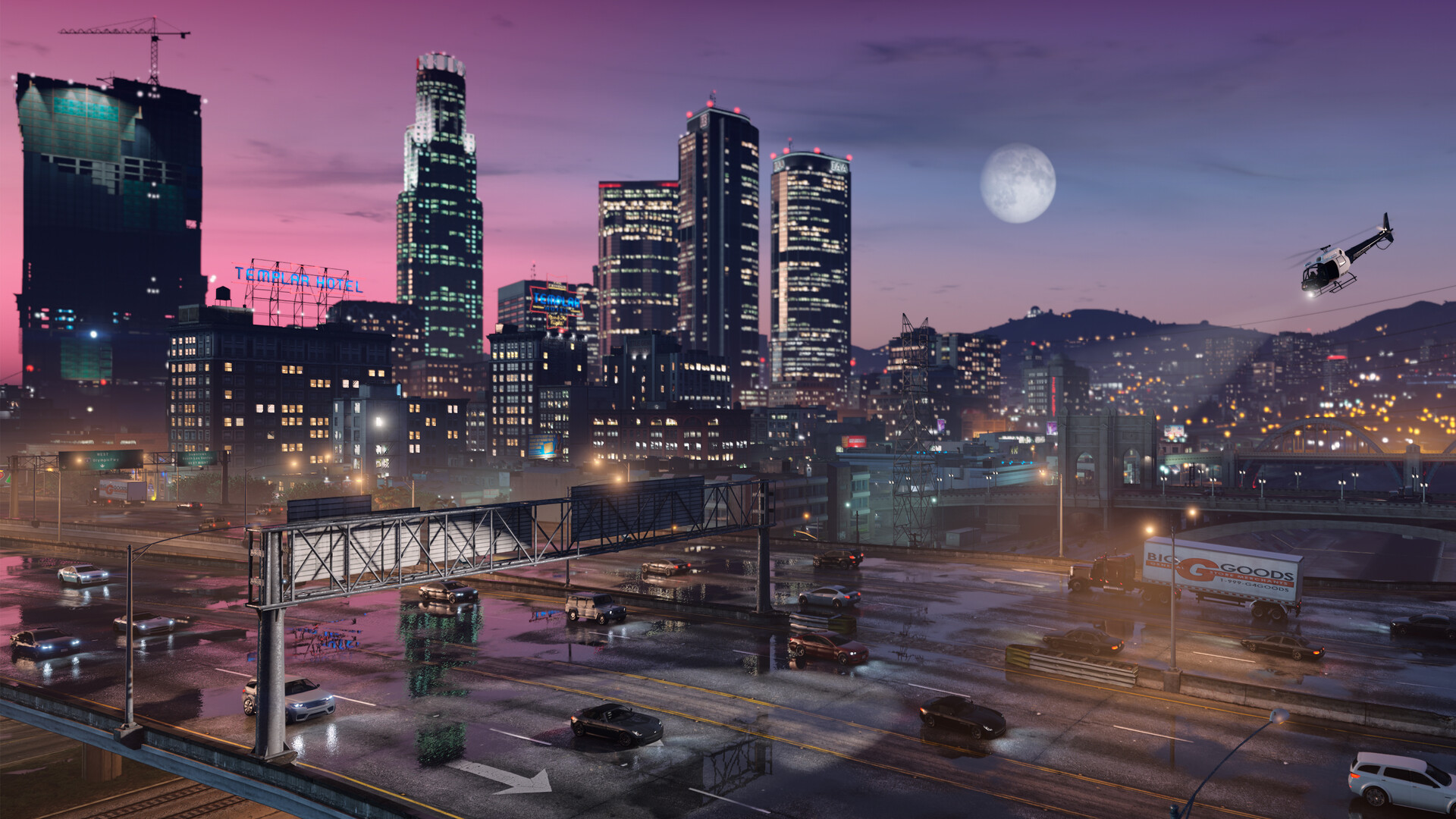
Grand Theft Auto V launched on PS3 and Xbox 360 on September 17, 2013. It had three playable leads, Michael De Santa, Franklin Clinton and Trevor Philips, and you could switch between them almost instantly. Its city, Los Santos, was a satire of Los Angeles, and it scored 97 on Metacritic.
The numbers are still hard to believe. Analysts estimated its development and marketing budget at more than $265 million, and more than 1,000 people worked on it. It made more than $815 million in its first 24 hours, roughly 11.21 million copies, and passed $1 billion in just three days, the fastest of any entertainment product at the time. Guinness World Records awarded it seven records.
Then there was GTA Online, which launched alongside it in 2013. It kept growing with free updates such as The Cayo Perico Heist in 2020, turning a single-player game into a decade-long online platform. That is a big reason why GTA V has kept selling: it passed 230 million copies by June 2026, almost 13 years after release.
By the numbers
- 470 million+: Grand Theft Auto units shipped across the series
- 230 million+: copies of Grand Theft Auto V (June 2026)
- $815 million+: GTA V's revenue in its first 24 hours
- 17.33 million: copies of San Andreas sold on PS2
- £1: what Take-Two paid for DMA Design in 1999, plus its debts
- 10: Guinness World Records the series received in the 2008 Gamer's Edition
Why GTA matters
No series has shaped open-world games more. The idea that a city can be a playground, that the radio is part of the world, that side activities can be as memorable as the story: much of it was popularised by GTA III and refined by every game since. Its controversies also shaped the debate about violence and age ratings in games for two decades.
WGC's take: the most remarkable thing about GTA's history is how rarely it repeated itself. Top-down chaos, 3D freedom, 1980s satire, a whole state, serious drama, three leads at once. Each big jump came after years of silence. GTA VI has had the longest wait of all, and if history is any guide, it will try something the series has never done before.
What to play next
- Grand Theft Auto V on PS5, Xbox Series X|S or PC is the easy choice before GTA VI, and its story still holds up.
- If you never played the PS2 era, the 3D trilogy of GTA III, Vice City and San Andreas shows where modern open worlds came from.
- And on November 19, the next chapter begins. Our AAA release calendar has everything else that is coming after it.