Fruit Ninja: The Swipe That Taught the World What a Touchscreen Was For
In April 2010 an Australian studio asked a simple question: what feels good under a finger? The answer was a flying watermelon, and a billion downloads followed.
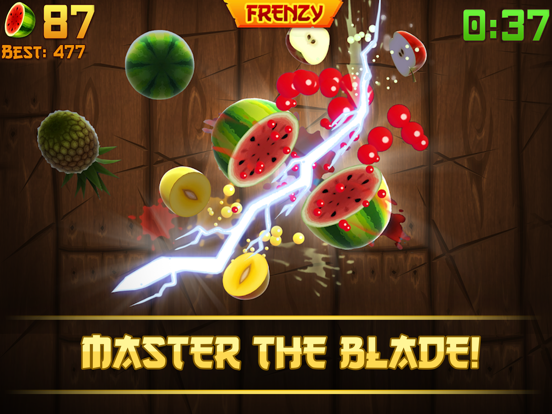
Swipe. A watermelon bursts in a shower of red juice. Swipe again, and a pineapple splits clean in two, the halves tumbling off screen. Swipe one more time and you hit a bomb, and the game is over. You immediately start again.
That loop is Fruit Ninja, released by Australian developer Halfbrick Studios on 20 April 2010 for iPhone and iPod Touch. It arrived on Android in May 2010, reached 20 million downloads by March 2011, and passed one billion downloads in 2015. Few games have ever explained a new piece of technology as well as this one explained the touchscreen.
Built for a finger
In 2010 most games on phones were still borrowing ideas from consoles: virtual buttons, on-screen joysticks, menus. Halfbrick's team, led by designer Luke Muscat, wanted the opposite: a game that could only exist on a touchscreen. They were also working on a short development cycle, which pushed them toward a very simple idea.
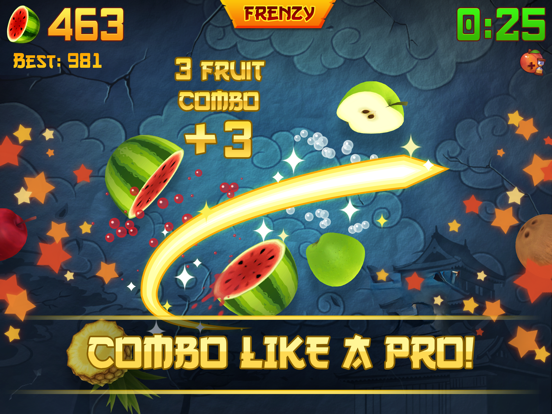
The result needed no tutorial at all. Fruit is thrown into the air; you swipe to slice it. Slice several in one swipe for a combo. Miss three fruit, or hit a bomb, and you lose. The game also gave every slice weight, with a satisfying sound, a splash of juice on the "wall" behind the fruit and a tiny moment of slow motion on big combos.
From an app to a phenomenon
Sales came fast. The iOS version sold more than 200,000 copies in its first month, passed one million in its third month, and reached four million by December 2010. It then spread to almost every platform imaginable: Windows Phone, Symbian, Windows 8 and, years later, the keypad phones of KaiOS in 2021.
Download numbers kept climbing as the game moved to free-to-play with optional purchases: 300 million by May 2012, 700 million by August 2013, and one billion in 2015.
Halfbrick followed with more hits of its own, including the endless runner Jetpack Joyride (2011), but Fruit Ninja remained its signature.
The Kinect surprise
In August 2011, Fruit Ninja made a leap no one expected. Fruit Ninja Kinect for Xbox 360 turned your whole arm into the blade, using Microsoft's motion camera. It was the first Xbox Live Arcade game to use Kinect, it sold more than 739,000 copies in its first year, and it won Casual Game of the Year at the Interactive Achievement Awards.
Not every leap landed. A live-action Fruit Ninja film was in development with New Line Cinema for a time but never happened, and the YouTube series Fruit Ninja: Frenzy Force ended after 13 episodes. The fruit, it turns out, is best on a screen you can touch.
Why it matters
Fruit Ninja, alongside Angry Birds, defined the first golden age of smartphone gaming. It showed that the most satisfying mobile games weren't shrunken console games but ideas built around what a phone does best. Swipe gestures, short rounds and instant restarts are now so common that it's easy to forget someone had to invent them.
Time magazine named it one of the 50 best iPhone apps of 2011. It also put Brisbane, Halfbrick's home city, and Australian game development, on the mobile map at a time when much of the world thought of the App Store as a place for American and European studios.
Where to play
Fruit Ninja is free on iOS and Android, and the paid Fruit Ninja Classic keeps the original version alive. Both run beautifully on older phones; see our budget phone guide. For the other giant of 2009-2010, read our Angry Birds history.