The 'Final' Fantasy That Never Ended: 39 Years of Square's Big Gamble
Hironobu Sakaguchi said he would quit games if his 1987 RPG failed. Instead it became a 200-million-selling series. From Famicom sprites to the Remake trilogy's 2027 finale, here is how Final Fantasy kept reinventing itself.
In 1987, a young designer at a struggling Tokyo company called Square made a decision. If his next game failed, he would leave the video game industry. Hironobu Sakaguchi later described the project as his personal last-ditch effort.
The game was Final Fantasy, released in Japan on December 18, 1987. It did not fail. By March 2025 the series had passed 200 million units sold worldwide, and in June 2026 Square Enix announced Final Fantasy VII Revelation, the last part of its FFVII Remake trilogy, for spring 2027. Thirty-nine years after the "final" one, here is how the most restless series in role-playing games got here.
Why "Final"?
For years the popular story was simple: Square was close to bankruptcy, so this would be its final game. Sakaguchi's own explanation, given in 2015, is more practical. The team wanted a title that would abbreviate to "FF". Their first choice, Fighting Fantasy, was dropped over trademark concerns. "Final" was a word that was well known in Japan and kept the initials, so it stuck.
Both stories contain some truth. The company's finances were shaky and Sakaguchi really did see it as a last chance. But the name itself came from wanting two Fs.
The Nintendo years: crystals, airships and ATB
The early games built the series' vocabulary. There were crystals, airships, black mages, and the big yellow riding birds called Chocobos. Nobuo Uematsu's music gave every game a memorable sound, and illustrator Yoshitaka Amano designed the logo of every main entry.
Final Fantasy IV (1991, Super Famicom) introduced the Active Time Battle system designed by Hiroyuki Ito. Instead of waiting politely for your turn, enemies kept acting while you chose your commands, which added urgency to a genre that had been purely turn-based. Final Fantasy VI (1994) told a sprawling ensemble story and is still considered by many to be the peak of the 2D era. In North America it was released as Final Fantasy III, because earlier entries had been skipped there, a numbering mess that confused fans for years.
Final Fantasy VII and the PlayStation leap
The series' biggest turn came in 1997. Final Fantasy VII left Nintendo and launched on Sony's PlayStation, with 3D characters on pre-rendered backgrounds and cinematic cutscenes that looked like nothing else at the time. It became the best-selling game in the series, with over 14.4 million copies.
The reason it was on PlayStation at all was storage. The Nintendo 64 used cartridges that held at most 64 MB, while a CD held about 650 MB. Square, and Enix with Dragon Warrior VII, moved their next big games to Sony's console partly because of that limit.
Final Fantasy X (2001, PS2) brought voice acting to most of the game and replaced ATB with a turn-based system that showed upcoming turn order. Final Fantasy XI (2002) went online as the series' first MMORPG, a massively multiplayer online role-playing game.
Crashes, films and a company merger
The series did not always succeed. In 2001, Square's first film, Final Fantasy: The Spirits Within, was a box-office bomb. Its losses were part of the backdrop to the company's 2003 merger with its old rival Enix, maker of Dragon Quest, which created Square Enix.
Then came Final Fantasy XIV. Its 2010 launch was heavily criticised, so badly that the company did something rare: it rebuilt the game almost from scratch and relaunched it in 2013 as A Realm Reborn. The new version became one of the most successful online role-playing games in the world, and one of the great comeback stories in games.
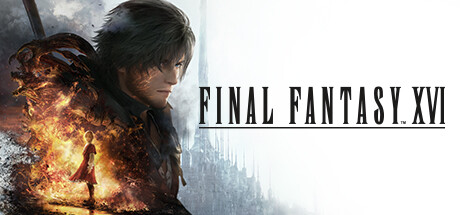
Final Fantasy XV arrived on PS4 and Xbox One in 2016 after a famously long development, and Final Fantasy XVI in 2023 on PS5 turned the series towards real-time action combat. Both later came to PC.
The Remake trilogy, and what comes next
The most ambitious project in the series' history is not a new numbered game but a retelling. Final Fantasy VII Remake (2020, PS4) rebuilt the first part of the 1997 story, just the city of Midgar, as a full game. Final Fantasy VII Rebirth (2024, PS5) opened up the world map.
Splitting one game into three was controversial when it was announced, and it remains a bold bet: a trilogy that takes more than a decade to finish asks a lot of players' patience. But it also allowed the team to expand side characters, towns and events that took only a few minutes in 1997, and the Remake games have been some of the best-received entries in years.
The final chapter, Final Fantasy VII Revelation, was revealed at Summer Game Fest 2026. It is due in spring 2027 for PS5, Switch 2, Xbox Series X|S and PC, directed by Naoki Hamaguchi with Yoshinori Kitase producing and Tetsuya Nomura as creative director. The reveal included Vincent Valentine and Cid Highwind, and save data from earlier parts will unlock bonus Summon Materia. Launching on every major platform at once is itself a sign of how much Square Enix has changed its strategy.
Older games are also finding new audiences. Final Fantasy Tactics: The Ivalice Chronicles, a remaster of the 1997 strategy classic released in 2025, had passed one million in shipments and digital sales by January 2026.
By the numbers
- 200 million+: Final Fantasy units sold (as of March 2025)
- 14.4 million+: copies of Final Fantasy VII, the series' best-seller
- 64 MB vs 650 MB: N64 cartridge maximum vs a CD, the gap that sent FFVII to PlayStation
- 3: years between XIV's troubled launch and its relaunch
- 1 million+: Final Fantasy Tactics: The Ivalice Chronicles (January 2026)
Why it matters
Final Fantasy's great strength is that it has no fixed formula. Every numbered game has a new world, new characters and often a new battle system, which means every entry is a risk. Sometimes, as with XIV's first launch, that risk blows up. More often it produces games that define their console generation.
It is also a series that keeps teaching the rest of the industry. ATB brought real-time pressure to menus, VII showed that cinematic storytelling could sell a console, and XIV proved that a broken online game could be rescued if a publisher was willing to admit the problem and start again.
WGC's take: the funny thing about the "final" fantasy is that it is one of the few game series that has been willing to end itself every few years. That willingness to start over is exactly why it is still here.
What to play next
- Final Fantasy VII Remake Intergrade and Rebirth on PS5 and PC are the best way to get ready for Revelation in 2027.
- Final Fantasy XVI on PS5 and PC is the series at its most action-heavy and cinematic.
- Final Fantasy XIV shows the series' comeback, with a large free trial.
- Final Fantasy Tactics: The Ivalice Chronicles is a superb way to play one of the deepest stories the series ever told.