Europe's App Store Experiment: What the DMA Changed for Mobile Games
Since March 2024, iPhone owners in the EU can install games from stores Apple does not run. Two and a half years on, here is what the Digital Markets Act actually delivered: rival stores, a 500 million euro fine, a maze of new fees, and a Fortnite comeback.

For sixteen years, there was exactly one way to put a game on an iPhone. Then, in March 2024, a European law changed that for some 450 million people. With iOS 17.4, Apple began allowing alternative app marketplaces in the European Union, and within months iPhone owners in Paris or Warsaw could download Fortnite from a store Apple did not own.
The law is the Digital Markets Act (DMA), and two and a half years in, it has become the world's biggest live test of what happens when a regulator forces open a mobile platform. The verdict so far is mixed: rival stores exist and real games ship through them, but Apple's fees and rules have made the new road slower and more complicated than its champions hoped.
A law aimed at "gatekeepers"
The DMA was adopted by the EU in 2022 to rein in the largest digital platforms, which it calls gatekeepers. In September 2023 the European Commission named six of them, including Apple and Alphabet (Google's parent). Their obligations applied from 7 March 2024.
For mobile games, three rules matter most. Gatekeepers must allow apps to be installed from other stores and websites; they must let developers steer customers to offers outside the store without penalty; and they cannot force developers to use their own payment systems. Android already allowed other stores, so the real earthquake was on iOS.

The first rival stores arrive
The first notable store was AltStore PAL, which launched in the EU in April 2024. AltStore was created by developer Riley Testut, the maker of the Delta game emulator, and had previously relied on complicated workarounds to sideload apps. It became the first home for emulators and small indie apps that would never have passed App Store review.
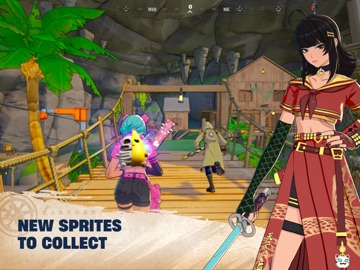
The heavyweight arrived on 16 August 2024, when the Epic Games Store launched on iOS in the EU and on Android worldwide. Its opening line-up was Epic's own: Fortnite, Rocket League Sideswipe and Fall Guys. For European players it was the first time in four years that Fortnite could be installed on an iPhone. Epic also made the game available through AltStore PAL.
The fees that slowed everything down
The catch was money. Apple's first EU terms gave developers a choice. They could stay on the old model, or move to new terms with a lower App Store commission plus a Core Technology Fee of 50 euro cents for each first annual install above one million a year, even for apps distributed outside the App Store. For a free-to-play game with millions of non-paying players, that fee could be ruinous, and many developers stayed put.
Rival stores also had to be approved by Apple, and apps distributed through them still went through Apple's notarisation checks. Epic publicly complained of delays to its store's approval. Installing a third-party marketplace meant several confirmation screens, which critics argued scared users away.
The relationship between Apple and Epic was tense from the start. In March 2024, days after the DMA took effect, Apple terminated the developer account Epic had set up in Sweden to build its European store. After the European Commission asked Apple to explain, Apple reinstated the account within days.
Android under the DMA
Google faced the DMA too, but Android already allowed rival stores, so the impact on games was smaller. The main changes concerned payments and steering: Google introduced new terms for developers in Europe who wanted to point users to offers outside Google Play, and the Commission has continued to examine whether those terms go far enough. For a mobile game publisher, the practical result is that Europe now has two different rulebooks to manage, one for each platform, on top of everything else.
Brussels pushes back
On 23 April 2025 the European Commission issued its first DMA fines: 500 million euros for Apple and 200 million euros for Meta. Apple's fine was for anti-steering, preventing developers from telling users about cheaper offers outside the App Store. Apple said it would appeal.
In June 2025 Apple announced revised EU terms to avoid daily penalties. It allowed far more freedom to link out to web offers, and replaced the old structure with new layers: an initial acquisition fee, a store services fee at two levels, and a Core Technology Commission of 5% on sales, which was designed to replace the per-install Core Technology Fee under a single business model from January 2026. Whether those terms fully satisfy the DMA is still being argued in Brussels.
By the numbers
- 6: gatekeepers designated in September 2023, including Apple and Alphabet.
- 7 March 2024: the date DMA obligations began to apply.
- 16 August 2024: Epic Games Store launches on iOS in the EU.
- €0.50: Apple's original Core Technology Fee per first annual install beyond one million.
- €500 million: Apple's DMA fine for anti-steering, April 2025.
- 10% / 20%: maximum DMA fines as a share of global turnover, first offence and repeat.

What players actually notice
If you live in the EU, the changes are quiet but real. You can install Fortnite on iPhone through the Epic Games Store. Some games now show web offers with bonus currency. Emulators and niche apps that Apple once rejected are a download away. Outside Europe, little of this applies: alternative stores on iOS remain mostly an EU-only (and, since December 2025, Japan-only) feature. We explain Japan's version in our story on its smartphone act.
What players have not seen is a flood of big publishers leaving the App Store. Most large mobile studios still ship primarily through Apple's store, because that is where the customers, the payment trust and the discovery are.
WGC's take, and what to watch
The DMA proved that an iPhone with rival app stores does not fall apart. It has not yet proved that rival stores can thrive when the platform owner still sets the fees around them. The biggest effect so far may be indirect: the steering rules and the April 2025 fine pushed Apple to allow web-shop links in Europe, the same direction a US court forced it in the same month (see our Epic v. Apple explainer).
What to watch next:
- The Commission's verdict on Apple's 2025 terms, and whether fresh penalties follow.
- Apple's court challenge to the 500 million euro fine.
- Big publishers: if a top-grossing mobile game ever launches in Europe outside the App Store first, the experiment has truly succeeded.
There is a lesson here for Korea and Japan, too. Opening a platform by law is only the first step; the fees, warnings and approval processes that come with it decide whether anyone actually walks through the door. Europe has shown both the promise and the friction.
For now, Europe's iPhone is a little more open, a lot more complicated, and still mostly Apple's.