$24 Million in 35 Seconds: The Decentraland Founders and Their Second Act
Two Argentine entrepreneurs sold a virtual world's token in 2017 faster than most people can read this paragraph. Four years later it was a metaverse headline. Then both stepped back, and one built a new game. The money story of Ari Meilich and Esteban Ordano.
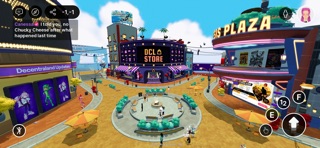
In August 2017, a project promising a virtual world owned by its users opened its token sale. Packages sold out in 35 seconds. When the dust settled, it had raised more than $24 million, paid as 86,260 ETH, and many small buyers who had planned to join were left out entirely.
The project was Decentraland, and its founders, Ari Meilich and Esteban Ordano, became early examples of a new kind of games-adjacent fortune: one built on a token sale before there was anything to play.
Two founders from Buenos Aires
Both founders are Argentine. Esteban Ordano studied software engineering at the Technological Institute of Buenos Aires, interned at Google, and joined the Bitcoin payments company BitPay in 2014, where he worked on the Bitcore and Copay wallet software. He then founded Smart Contract Solutions.
Ari Meilich started out studying philosophy in Buenos Aires, moved to New York, earned a science degree at Hunter College and did neuroscience and neuroeconomics research at NYU. In 2015 he was a market analyst at the venture firm Charles River Ventures.
Development of Decentraland began in 2015. Ordano became its technology chief and Meilich its project lead.

From ICO to land rush
The sale was only the start. On 15 December 2017, the "Terraform Event" auctioned 90,000 parcels of virtual LAND for 1,000 MANA each, about $20 at the time. The marketplace opened in March 2018, a closed beta followed in June 2019, and the world opened to everyone in February 2020.
Then came the boom. In late 2021, as Facebook renamed itself Meta and "metaverse" became the industry's favourite word, MANA soared and Decentraland land became a headline. Tokens bought for a few cents in 2017 changed hands for several dollars at the November 2021 peak, more than a hundredfold gain for anyone who held on.
The founders' exact holdings and wealth have not been published by Forbes or Bloomberg. What is documented is the structure: the Decentraland Foundation held 20% of MANA's supply, about 561 million tokens, to fund development.
Stepping back
Both founders stepped away from running Decentraland in 2020, before the peak, becoming consultants as the project moved towards being governed by a DAO of token holders. Ordano also consulted for the network then called Matic, now Polygon, until 2021.
The timing matters. They had already handed over day-to-day control when Decentraland drew the most money and the most criticism, including reports in 2022 that relatively few people were in the world at any one time (the land boom and bust story).

Meilich's second act: Big Time
Meilich went on to co-found Big Time Studios with game designer Thor Alexander. Its action RPG Big Time took a different approach to the money: it gave out its token and NFTs through play rather than selling land upfront. The game and its token are covered in detail elsewhere in our blockchain section; for this story, what matters is that one of the founders of the original token-sale metaverse came back to build a game first.
WGC's take
Meilich and Ordano made their mark the way many 2017 founders did: by selling a token for a world that did not yet exist, at a moment when that was legal and largely unregulated. They stepped back early, and the DAO they handed over to has had to answer for the boom. Meilich's return with a play-first game is, in a way, an admission that the token should come after the fun.
Token prices are highly volatile. Nothing in this article is investment advice.