Clash Royale's Second Wind: How a Nine-Year-Old Game Had Its Best Summer in Years
Chests gone, timers gone, a new auto-battler mode and a Twitch streamer screaming at his screen. How Supercell turned a fading classic into 2025's most surprising comeback.
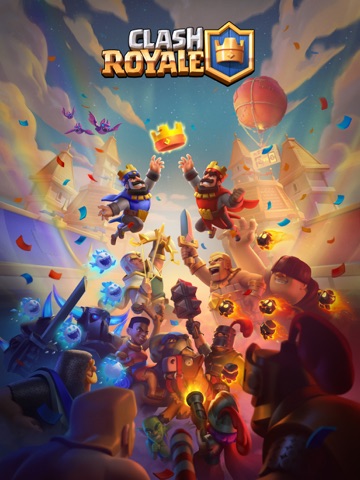
For years, opening a Clash Royale chest meant waiting. A silver chest took three hours. A gold one took eight. A Magical Chest could lock up a slot for half a day, and you only had four slots. An entire generation of phone players learned patience, or learned to pay to skip it.
On 7 April 2025, Supercell deleted all of it. Chest queues, timers and keys vanished from Clash Royale, the battle pass grew from 60 to 90 tiers, and a pile of confusing currencies went in the bin. What followed was the most surprising comeback in mobile gaming that year. By June 2025, players spent about $51.4 million in the game, its biggest month since December 2021, according to AppMagic estimates. In July a new mode, Merge Tactics, pushed daily spending to $3.8 million, the highest since late 2021.
A classic that had gone quiet
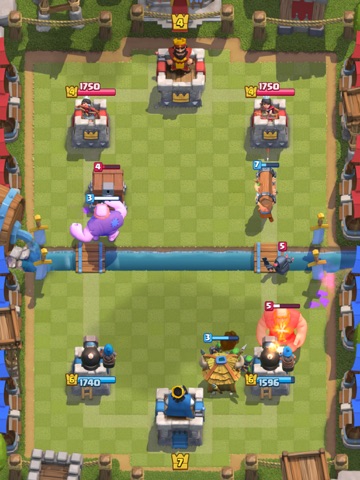
Clash Royale launched worldwide on 2 March 2016. It took the characters of Clash of Clans and dropped them into a fast, real-time duel: two players, three towers each, eight cards per deck and three minutes on the clock. It was a sensation, and it helped create an entire wave of mobile esports.
By the early 2020s, though, it had settled into a comfortable plateau. Over the two years before the revival, monthly player spending usually sat between $20 million and $29 million. That is a lot of money for most games, but a long way from the glory days, and the game's core fans were openly frustrated with slow progression and cluttered menus.
The April reset
The April update was not flashy. It was a clean-up. Besides killing timers and keys, it removed the Banner Box, Banner Tokens and Season Tokens, closed the old Season Shop and refunded players in gold. Rewards were rebuilt around simple daily goals: bonus crowns for your first three battles each day and extra rewards for your first wins.
Players noticed immediately. On 7 April, daily spending jumped to about $1.4 million, almost double the day before. Monthly spending rose to $23.7 million in April, then nearly $40 million in May, up 67% on the month.
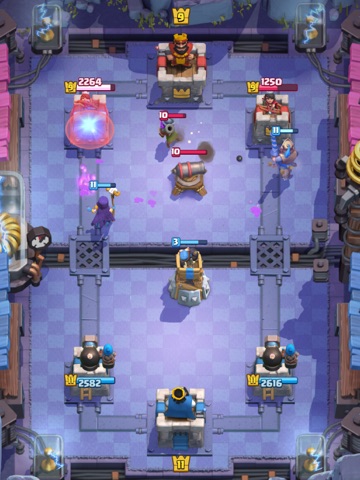
The seasons kept the momentum. Undead March, from 5 May, gave the Witch her evolution. How to Evolve Your Dragon, from 2 June, let players evolve the Inferno Dragon, a card that had been in the game for nine years. On 2 June daily spending reached $2.9 million, the first day above $2.5 million in more than three years.
By the numbers
- 2 Mar 2016: worldwide launch
- $20-29 million: typical monthly spending in the two years before the revival
- 60 to 90: battle pass tiers after the April 2025 update
- ~$40 million: May 2025 spending, up 67% month on month
- $51.4 million: June 2025, the best month since December 2021
- $3.8 million: peak daily spending in July 2025, after Merge Tactics
Merge Tactics: an auto-battler in the arena
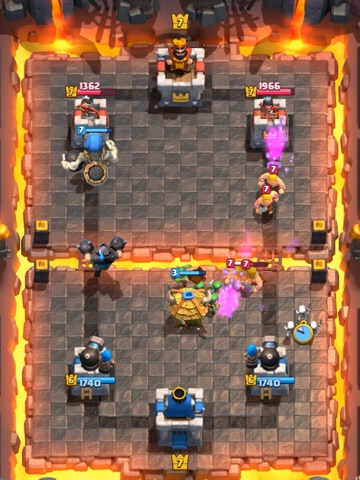
Then came the twist. Merge Tactics, which rolled out in late June and went fully live on 4 July 2025, is a completely different way to play. Four players draft troops from a shared pool, place them on a small board, and merge copies to power them up while the fights play out automatically. If you know Teamfight Tactics or Auto Chess, you know the shape of it.
Bolting an auto-battler (a game where you build a team and watch it fight on its own) onto a nine-year-old duel game sounds risky. Instead, it gave lapsed players a fresh reason to open the app and gave streamers something new to react to. Four days after launch, daily spending hit $3.8 million.
The streamer factor
No account of the revival is complete without Jynxzi. The Twitch streamer, best known for his Rainbow Six Siege streams, turned to Clash Royale and brought a huge new audience with him. His loud, emotional reactions to losing matches became a meme machine, and clips spread far beyond the usual mobile crowd.
That also created friction. At one point Jynxzi publicly called out Supercell for not giving creators enough credit for the comeback. It was a reminder that in 2025 a mobile hit can be as much a streaming story as a design one. Industry analysts later asked the obvious question: how much of the second wind was paid marketing, and how much was organic? The honest answer is probably both. The design changes made the game worth returning to, and creators gave people a reason to look.
A strange year at Supercell
The timing made the comeback even more striking. Elsewhere in 2025, Supercell was struggling to find its next hit. Its monster-hunting game mo.co launched in March as an invite-only experiment and never became a chart-topper. Squad Busters, its 2024 crossover game, was stripped back in a big 2.0 update that removed several modes.
So while the newest projects wobbled, one of the oldest games in the portfolio was setting records. Some industry analysts openly asked whether the studio needed a radical rethink of how it builds new games. The awkward truth for any publisher is that improving what players already love can be worth more than inventing something new. Supercell has the rare luxury of several evergreen hits, and 2025 showed how much value was still locked inside them.
Why it worked
It removed friction rather than adding content. The biggest change of the year was deleting things. Waiting and confusion were taken out, and players instantly felt richer.
It respected veterans. Evolving nine-year-old cards such as Inferno Dragon spoke directly to players who had been there since 2016.
It offered a new door. Merge Tactics let people who never liked real-time duels play Clash Royale their own way.
Industry watchers asked whether Clash Royale was having its "Brawl Stars moment", a reference to Brawl Stars' own dramatic revival. The pattern is similar: an older Supercell game, a bold reset and a sudden flood of returning players.
What to watch next
- Staying power: spending spikes after big updates; the question is the new baseline.
- Merge Tactics' future: whether it gets its own ranked ladder, esports or even a standalone spin-off.
- Creator relations: how Supercell works with the streamers who drove the hype.
- New games: whether the studio's next releases learn from this revival, or keep chasing brand-new hits.
WGC's take: The most important lesson from Clash Royale's 2025 is that an old game is not a dead game. Supercell did not need a sequel. It needed to stop making players wait, give long-time fans something to be excited about and open the door to new styles of play. A nine-year-old card battler having its best summer in years is a rare happy ending in live service, and other publishers with ageing hits of their own should be taking careful notes.