The Steam Edition: Why Blockchain Games Now Hide Their Crypto to Find Players
Off The Grid, Shrapnel and Parallel all reached Steam with no mention of blockchain on their store pages. It is the clearest sign yet that web3 gaming has changed its pitch, and it raises awkward questions about what 'ownership' was for.
For years, the pitch of blockchain gaming was ownership. Buy the sword, keep the sword, sell the sword. In 2025 and 2026, three of the best-funded blockchain games reached the world's biggest PC store, and none of their Steam pages mentions a blockchain at all.
Off The Grid arrived on Steam on 17 July 2025. Shrapnel entered Steam early access on 12 March 2026. Parallel followed on 29 April 2026. Each one is free to play, each one was built by a studio that raised tens of millions of dollars on the promise of player-owned items, and each one now presents itself to Steam players as a normal game. At the same time, Primal Tactica, a game built on licensed Illuvium characters, opened a free Steam demo on 5 October 2026 with no web3 features and no mention of Illuvium on its store page.
This is not a coincidence. It is a new strategy, and it tells us a lot about where blockchain gaming is heading.
Why Steam matters so much
Steam is where PC players are, and Valve's rules do not allow games built on cryptocurrency or NFTs. For years that meant blockchain games went elsewhere: their own launchers, browsers, or the Epic Games Store, which accepted them. Epic was not a frictionless home either. In December 2023, after the US ratings board, the ESRB, gave Gods Unchained an "Adults Only" rating over its crypto features, Epic removed the game, then changed its policy and let it back in.
Studios now face a choice: keep the tokens and stay away from the biggest audience, or build a version that can live on Steam. Three of the most prominent launches of the past eighteen months all chose the second.
Three games, three approaches
The studios have not all done the same thing.
Off The Grid: one game, quietly split. Gunzilla's cyberpunk battle royale kept its blockchain marketplace on Epic and consoles, and its developers have always called the NFT layer optional. On Steam it launched unannounced, without the crypto language, and players argued about whether the Steam build was separated from the token economy at all. The launch was decent: about 11,800 concurrent players on Steam the day after release and a split 65% positive early review score, with complaints about performance, bots and wallet pop-ups.
Shrapnel: a clean break. Neon Machine went furthest. Its Steam version contains no blockchain elements, which the studio attributes to platform restrictions; the NFTs from its Avalanche era are not connected, and neither are stats from earlier tests. Web3 features are promised later on GalaChain, with a focus on China through a long-term agreement with Trusted Copyright Chain. Players seem to like the result: 72% of 739 Steam reviews are positive.
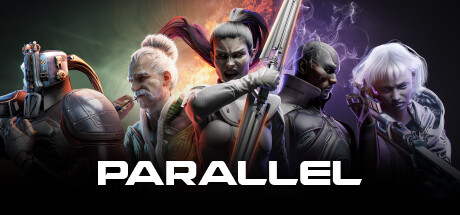
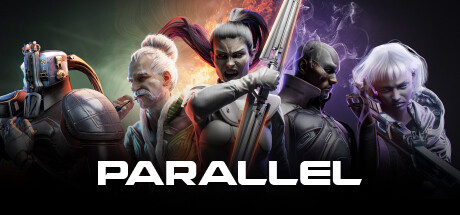
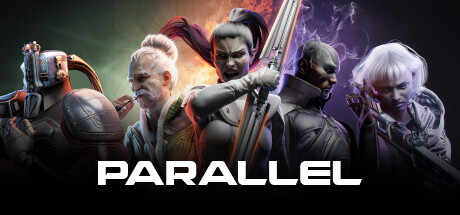
Parallel: crypto as an optional extra. Parallel Studios kept NFTs as an optional layer for collectors elsewhere and launched on Steam as a straightforward sci-fi card game. Its Steam page talks about factions, 40-card decks and skill, nothing more. Early reviews are Mixed, 66% positive across its first 54.
The philosophy behind it
The clearest statement of the new thinking came from Luke Barwikowski, CEO of the farming game Pixels. At the end of 2025 he argued that the only way to save crypto gaming is not to build for crypto gamers: crypto should be the back end, while players simply earn, spend and own without thinking about it.
Pixels learned that the hard way. In 2024, its rewards outran its revenue, and bots made up an estimated 40% of its daily wallets at the peak. The Steam editions are the PC-shooter version of the same lesson: if a game cannot hold players without tokens, tokens will not save it.
Other studios are now designing in this order from day one. World War II: TCG begins a beta on 28 November 2026, with web3 features to follow later. Illuvium, short of money and focused on an MMO, has licensed its world to Primal Tactica, a crypto-free single-player game whose revenue mostly flows back to Illuvium.
For Illuvium, this is less a philosophy than survival. By mid-2026 its protocol was earning under $10,000 a month, its team had taken two rounds of pay cuts, and almost everyone left was working on a single MMO. A licensed, crypto-free Steam game gives the brand a way to reach players, and to earn money, without asking any of them to touch the ILV token.
The awkward questions
This strategy has real costs, and they fall on two groups.
The first is early backers. People who bought NFTs or tokens did so because they were promised that ownership would matter. When the most popular version of a game ignores those assets, as Shrapnel's Steam build does, the promise looks hollow. The market has noticed: as of 12 November 2026, CoinGecko listed Off The Grid's GUN token 98.5% below its all-time high and Parallel's PRIME 99.4% below its peak.
The second is players. A crypto-free Steam edition makes a game easier to try, but it can also blur what you are actually playing. Is the Steam version a separate economy? Will it be connected later? Will items earned there ever be tradeable? Studios have not always explained this clearly, and Off The Grid's Steam launch showed how quickly confusion becomes criticism in reviews.
By the numbers
- 17 Jul 2025: Off The Grid on Steam; about 11,800 concurrent players the next day.
- 12 Mar 2026: Shrapnel enters Steam early access; 72% positive from 739 reviews.
- 29 Apr 2026: Parallel on Steam; 66% positive from its first 54 reviews.
- 5 Oct 2026: Primal Tactica's free Steam demo, built on licensed Illuvium IP.
- 0: mentions of blockchain on the three Steam store pages.
Token prices quoted here are volatile and dated to 12 November 2026.
WGC's take
We think the Steam editions are good for players and overdue for the industry. They force blockchain games to compete on the only thing that keeps people playing: whether the game is fun. Shrapnel's positive reviews suggest that some of these teams can do it. But studios owe their earliest supporters honesty. If the Steam version is the real game now, say so plainly, and say what happens to the assets people paid for.
What to watch
- Off The Grid 1.0, due between 27 December 2026 and 15 January 2027, and whether its mainnet migration touches Steam players at all.
- Shrapnel's GalaChain plans for China, and whether a web3 version ever reconnects with old NFT holders.
- Parallel's Steam reviews once more players find it.
- Primal Tactica's early access, due later in Q4 2026, as a test of whether a blockchain IP can succeed with no blockchain in it.
If you want to judge for yourself, all three are free on Steam, and none of them asks for a wallet.