Azur Lane: The Chinese Shipgirl Game That Sailed Into Japan's Heart
Six college friends, a fleet of anime warships and a bullet-hell twist. How Azur Lane beat the odds in Japan, threw parties on real battleships and is still afloat nine years later.
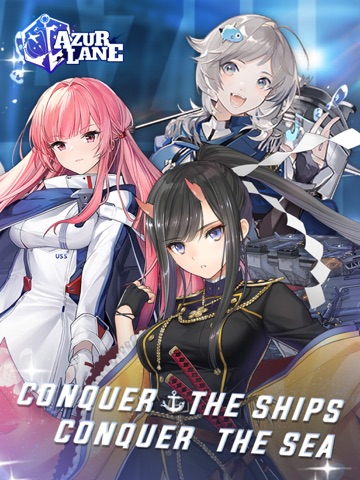
In 2023, fans of a mobile game gathered on the flight deck of the USS Hornet, a Second World War aircraft carrier turned museum in California, to celebrate their favourite characters. Two years later, another celebration took place aboard the battleship USS New Jersey. The game was Azur Lane, and its characters are those very ships, reimagined as anime girls.
Azur Lane launched in China in May 2017, reached Japan that September and arrived worldwide in English in 2019. It became one of the most successful Chinese-made games in Japan, a market long known as the hardest in the world for foreign mobile games to crack.
Six friends and a fleet
The game was started by a producer known as Yuwan and five college friends. It is made jointly by two studios: Shanghai Manjuu, which handles art, sound and writing, and Xiamen Yongshi, which handles programming and game data. In China it is published by Bilibili, the video platform, and in Japan and worldwide by Yostar.
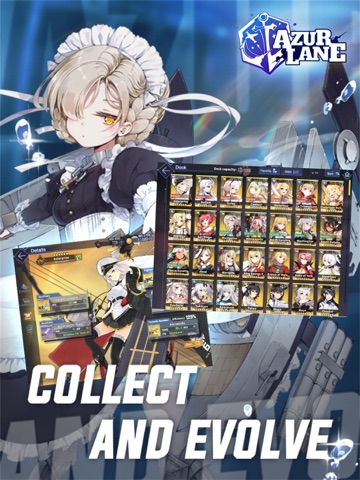
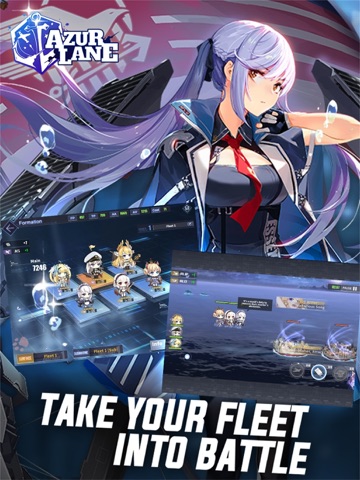
Players collect shipgirls, characters based on real warships of the Second World War, from Britain's HMS Belfast to America's USS Enterprise and Japan's Akagi. You build fleets of six, with destroyers and cruisers in the front row and battleships and carriers behind, and send them across sea maps laid out on a grid that looks a lot like the board game Battleship.
The twist that won Japan
Japanese players already knew the shipgirl idea from Kantai Collection (KanColle), a 2013 browser game. At first, some fans dismissed Azur Lane as a clone, and KanColle's publisher DMM objected to Yostar using the trademarked term kanmusu, so Azur Lane renamed its characters KAN-SEN in 2018.
What set Azur Lane apart was its battles. KanColle's fights play out with little player input. Azur Lane turned combat into a side-scrolling shoot 'em up: you steer your front row, dodge torpedoes and bullets, and fire off skills while your back row launches air strikes and cannon barrages. One Japanese critic summed up the difference neatly: KanColle is about managing resources, Azur Lane is about dodging bullets while shooting.
Many players also felt it was more generous than its rivals, since a large share of its ships can be earned through play rather than only through gacha.
The results were dramatic. More than 5 million Japanese players signed up within four months, and analytics estimates showed that, of roughly $170 million the game earned on the iOS App Store from May 2017 to August 2018, around 82% came from Japan.
Anime, spin-offs and controversies
A TV anime by Bibury Animation Studios aired from October 2019, followed by the comedy spin-off Azur Lane: Slow Ahead! in 2021. Azur Lane Crosswave, a 3D action game, launched on PS4 in Japan in 2019 and later on PC and Nintendo Switch.
Not every moment was smooth. In Korea, the publisher drew criticism in 2018 after removing a guest illustrator's artwork over her views. More recently, in 2024, the design of a new ship drew backlash for not matching her sister ships' art, a reminder of how closely the community watches every detail.
Why it matters
Azur Lane proved that a small Chinese team could beat Japan's own studios at a Japanese-style game, by keeping the familiar fantasy and changing the part people actually play. It also helped make Yostar a key bridge between Chinese developers and Japanese players; the same publisher later brought other big Chinese and Korean anime games to Japan.
Our take: if you like light shoot 'em up action and do not mind a lot of fan service, Azur Lane is still one of the more generous gacha games around. For another studio that bet everything on anime fans, read our Cygames profile.