Angry Birds: The 52nd Game That Saved Rovio and Defined the iPhone Era
A Finnish studio with money for one last game drew some angry, eyebrow-heavy birds in 2009. The slingshot that followed launched movies, theme parks and a Hall of Fame place in 2026.
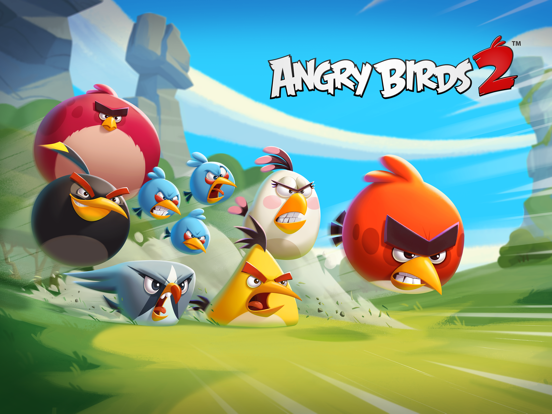
In early 2009, a small studio in Espoo, Finland, was running out of road. Rovio had made 51 games for other companies and none had made it famous. It had enough money, by most accounts, for one more original game. A designer named Jaakko Iisalo showed the team a picture: a group of round, wingless birds with heavy angry eyebrows, glaring at something off the page.
That something became a pig, and the game became Angry Birds, released on iPhone on 11 December 2009. It went on to become the defining mobile game of its era, and in May 2026 it was inducted into the World Video Game Hall of Fame. Here is how a last-chance project changed what people thought a phone game could be.
A studio with one shot left
Rovio began in 2003, when three students from Helsinki University of Technology, Niklas Hed, Jarno Väkeväinen and Kim Dikert, won a mobile game competition and turned their prize into a company. For six years it worked mostly for hire, building games for other publishers.
Development of Angry Birds began in March 2009. The team started with about ten people and finished with four or five. Iisalo's concept art set the tone, programmer Tuomo Lehtinen built the slingshot physics, and the idea of knocking down structures borrowed from a popular web game of the time, Crush the Castle.
Slingshot physics and one perfect idea
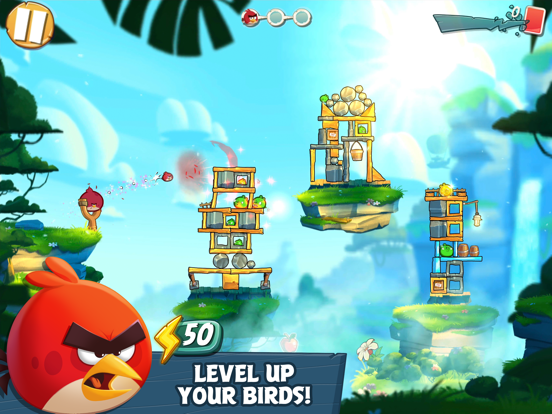
Angry Birds is easy to explain to anyone: pull back the slingshot, aim, let go. Birds fly in an arc, crash into wooden, glass and stone towers, and topple the pigs hiding inside. Each bird has a trick: the yellow one speeds up, the blue one splits into three, the black one explodes.
What made it special was the physics. Every throw is slightly different, so the same level could collapse in a dozen ways. A clumsy shot can still bring a tower down in a satisfying chain reaction, and a perfect shot clears a level in one go. That mix of skill and luck, plus a three-star rating for every level, made it hard to stop.
London publisher Chillingo helped with the final polish, adding touches such as the trajectory line that shows your last shot, pinch-to-zoom, the pigs' grunts and the birds' little somersaults.
The App Store's first megahit
The game soft-launched in Finland on 1 December 2009 and worldwide ten days later, priced at $0.99. Its first episode, Poached Eggs, had three chapters of 21 levels each.
It took a couple of months to catch fire. In February 2010 it became the top paid app on the UK App Store, and a few weeks later it hit No. 1 in the US, where it stayed until October 2010. Its total of 275 days at No. 1 on the paid chart is still an App Store record.
By December 2010 the game had 50 million downloads, and Rovio kept it fresh with free updates, new episodes and a mysterious power-up called the Mighty Eagle, a paid helper that could swoop in and clear a level you were stuck on.
The birds also got personalities. The red leader became Red, the speedy yellow bird Chuck, the explosive black bird Bomb, and the small blue trio the Blues. By the time the films arrived, they had voices, back stories and fan favourites, which is a lot for characters who began as round shapes with eyebrows.
The game also arrived at exactly the right moment. The App Store was barely eighteen months old, the iPad was about to launch, and millions of people were discovering touchscreens for the first time. Angry Birds became the game you showed someone to explain why a smartphone was different from the phones that came before it.
From game to global brand
Angry Birds then did something few games manage: it escaped the screen.
- 2011: Angry Birds Rio, a tie-in with the animated film, joined the earlier holiday-themed Angry Birds Seasons.
- 2012: Angry Birds Space launched with a video filmed aboard the International Space Station, Angry Birds Star Wars followed, and the spin-off Bad Piggies let players play as the pigs.
- 2012: Angry Birds Land opened at Särkänniemi amusement park in Tampere, Finland.
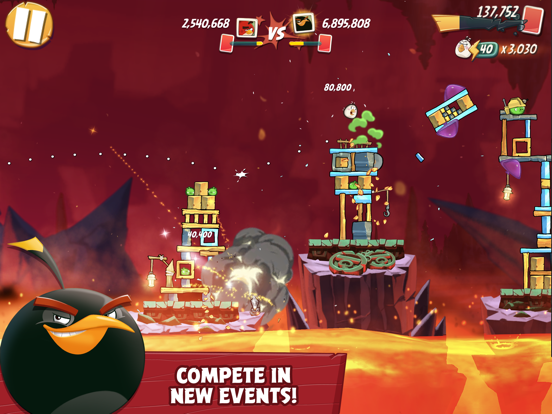
- 2015: Angry Birds 2 brought a new card-based way to pick your bird and became the main game in the series.
- 2016: The Angry Birds Movie, from Sony Pictures, reached cinemas, with a sequel in 2019.
Plush toys, lunchboxes and fizzy drinks followed. For a few years, the birds were as recognisable as Mario.
The original that disappeared
Then came an odd twist. Throughout 2019, the original Angry Birds quietly vanished from the App Store and Google Play. Rovio pointed to old code that no longer ran well on modern devices and to expired licensing deals. Fans launched a campaign called #BringBack2012.
Rovio answered in March 2022 with Rovio Classics: Angry Birds, a faithful remake with no microtransactions or pop-up ads. Less than a year later, in February 2023, the Android version was removed and the iOS version renamed Red's First Flight, with Rovio saying the classic was affecting its wider line-up of free-to-play games. Today the series lives on mainly through Angry Birds 2 and other free spin-offs.
In 2023, Japan's Sega completed its purchase of Rovio for about €706 million, giving the Sonic the Hedgehog company a second famous mascot, this time with feathers.
By the numbers
- 51: games Rovio made before Angry Birds.
- 11 December 2009: worldwide iOS launch.
- $0.99: the original price.
- 275 days: at No. 1 on the US App Store paid chart, a record.
- 50 million: downloads by December 2010.
- About €706 million: Sega's price for Rovio in 2023.
- May 2026: induction into the World Video Game Hall of Fame.
Why it matters
Angry Birds proved that a game made for a phone, by a tiny team, could become a global entertainment brand on the scale of a film studio's characters. It showed that touchscreens were not a compromise but a new kind of controller: pulling back a slingshot with your finger felt better than any button. And its journey, from 99-cent premium hit to free-to-play sequel, mirrored the shift of the entire mobile market. Finland's game industry, already home to Remedy and soon to Supercell, gained a second calling card, and a generation of small studios around the world looked at Rovio and decided that one good idea on a phone might be enough to change their lives.
What to play next
Angry Birds 2 is free on iOS and Android. For other mobile classics from the same golden age, read our histories of Fruit Ninja, Cut the Rope and Infinity Blade.