The Steam Machine Explained: Valve's $1,049 Bet on Your Living Room
Ten years after its first attempt flopped, Valve built its own console-sized PC. It arrived in the middle of a memory crisis, costs more than any console and is sold by lottery. Everything you need to know about what it is, who it's for and whether it can work.
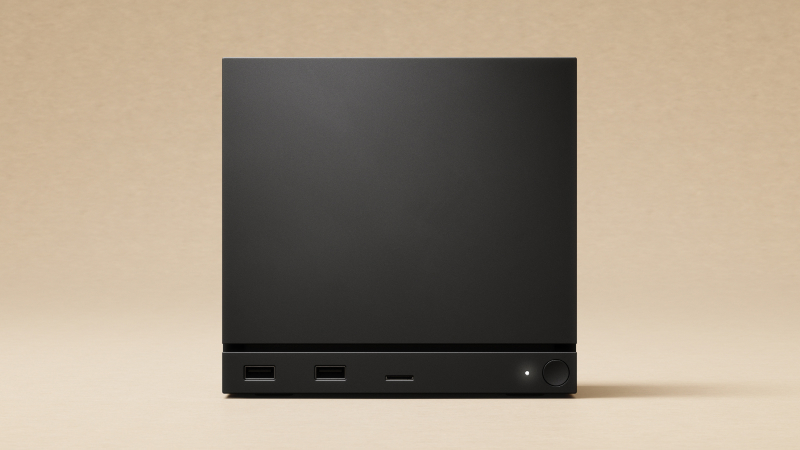
For most of its life, Steam has lived on a desk. You sit close to a monitor, a keyboard under your hands, and play games designed for exactly that. Valve has spent more than a decade trying to move Steam to the sofa, first with Big Picture mode, then with a failed wave of partner-made "Steam Machines," and then, very successfully, with the Steam Deck. In 2026 it finally built the thing it had been circling all along: its own living-room PC.
The Steam Machine, announced on November 12, 2025, went on sale on June 30, 2026. The base 512GB model costs $1,049 without a controller; a 2TB bundle with a Steam Controller costs $1,428. Demand was high enough that Valve sold it through a reservation lottery, and in July it said it expected everyone in the queue to get the chance to buy by the end of 2026.
What it is
The Steam Machine is a small, roughly six-inch cube that plugs into your TV and boots straight into SteamOS, the Linux-based system that runs the Steam Deck. It looks and behaves like a console: you turn it on, pick up a controller and choose a game from your Steam library. Underneath, it's a PC, which means you can drop to a desktop, install other software and tinker if you want.
The idea is simple. Your Steam library, which for many players is hundreds of games deep, plays on the biggest screen in the house without you having to build, wire or maintain a gaming PC.
What's inside
Both models share the same core hardware:
- CPU: semi-custom AMD Zen 4, 6 cores / 12 threads.
- GPU: semi-custom AMD RDNA 3 with 28 compute units.
- Memory: 16GB DDR5 system RAM plus 8GB GDDR6 dedicated video memory.
- Storage: 512GB or 2TB NVMe SSD, plus a microSD slot.
- Connectivity: Wi-Fi 6E, Bluetooth 5.3, gigabit Ethernet and a built-in Steam Controller wireless adapter.
- Software: SteamOS 3.
That's a big step up from the Steam Deck and enough for modern games at TV resolutions with upscaling, though it is not a high-end gaming PC. It's designed to be quiet, small and predictable, the same three things that made the Deck work.
Why it costs $1,049
The price was the first thing everyone talked about, and not in a good way. At $1,049 without a controller, the Steam Machine costs more than any current console. Valve's answer is that it isn't trying to be a console, at least not financially.
Earlier this year Valve said it would not subsidise the hardware, the way console makers often sell machines at a loss and make the money back on games. Instead it priced the Steam Machine against entry-level gaming PCs. That would have been a manageable plan in 2024. In 2026 it collided with the memory crisis, as AI data centres bought up the world's RAM and flash storage and drove component prices sharply higher.
Valve engineer Pierre-Loup Griffais was candid about it before launch: "Things looked really dire at the beginning of the year." At one point Valve wasn't sure it would have any Steam Machines to sell at all. Griffais said the launch supply was "a little bit less" than it would have been without the crisis, but "really good given the circumstances," and Valve said it wished the price could be lower.
How the lottery works
To keep bots and scalpers out, Valve sold the first wave by lottery:
- Sign-ups closed on June 25.
- You needed a Steam account in good standing and a Steam purchase made before April 27, 2026.
- One sign-up per household.
- Entries were randomised into a reservation order. People near the top got reservations; everyone else joined a waitlist.
- When your turn comes, Valve emails you and you have three days to buy.
By late July, Valve said it was "fulfilling orders on a daily basis." Queues are separate for each product and region, so they move at different speeds, and in some regions Valve had already begun inviting people from waitlists. Valve stressed that waitlisted buyers would not leapfrog anyone with a reservation.
By the numbers
- November 12, 2025: Steam Machine announced.
- June 30, 2026: launch day.
- $1,049: 512GB model, no controller.
- $1,428: 2TB bundle with Steam Controller and two faceplates.
- 6 cores, 28 compute units, 16GB + 8GB: the core spec.
- April 27, 2026: the purchase cut-off date for lottery eligibility.
- 3 days: how long you have to buy once your reservation email arrives.
Who it's for
The Steam Machine makes the most sense for three kinds of player:
- Steam owners without a gaming PC in the living room. If your library lives on a laptop or an ageing desktop, this puts it on the TV with almost no setup.
- Steam Deck owners who want a bigger screen. It uses the same SteamOS, the same Verified ratings and the same sleep-and-resume behaviour, and your saves sync through Steam Cloud.
- Families. A console-like box is easier to share than a PC in a bedroom.
It makes less sense if you already own a capable gaming PC, which can run Steam's Big Picture mode on a TV for free, or if you play mainly games that don't run on SteamOS. Some multiplayer games with strict anti-cheat systems still block Linux, and Game Pass titles bought through the Xbox app won't appear in your Steam library.
How it fits Valve's plan
Look at the whole picture and the Steam Machine is one piece of a hardware family: the Steam Deck for handheld play, the Steam Machine for the TV, the Steam Controller for both, and the Steam Frame VR headset. All of them run SteamOS. Together they give Valve something it has never had: a platform that doesn't depend on Microsoft's Windows.
That matters for Steam's future. Linux crossed 5% of Steam's users for the first time in the March 2026 hardware survey, a share that would have seemed impossible five years ago. Every Steam Machine sold nudges that number up and gives developers one more reason to make sure their games run well on SteamOS.
What to watch
- The queue. Valve has promised everyone in the reservation queue a chance to buy by the end of 2026. If it delivers, the Steam Machine moves from lottery prize to normal product in 2027.
- The price. If memory prices fall, Valve could cut the price or release a cheaper configuration. If they keep rising, expect the opposite.
- The games. Watch how many big 2027 releases arrive "Verified" for SteamOS on day one, and whether major anti-cheat holdouts start supporting Linux.
Want the rest of the story? Read about the controller in our Steam Controller review round-up, how the memory squeeze hit Valve's handheld in The $789 Steam Deck, and why Linux gaming finally works in our Proton and SteamOS explainer.