Sorare: The $4.3 Billion Fantasy Football Game That Moved to Solana
Messi invested, the Premier League signed up and the K League was there from the start. Then came a UK gambling prosecution and a chain switch. Inside blockchain gaming's biggest sports bet.
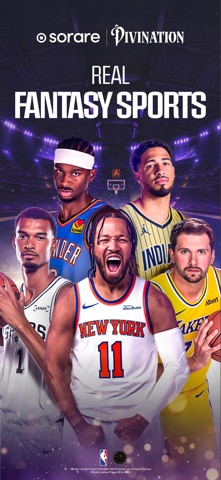
Most fantasy football games give you a spreadsheet of players. Sorare gives you a card. Each footballer comes as a digital trading card, and your team's score depends on what those players actually do on the pitch at the weekend. It is a simple idea that once made a small French start-up worth $4.3 billion.
As of 2026, Sorare runs football, basketball and baseball games on web, iOS and Android. In October 2025 it completed a multichain move: its player cards were bridged to Solana, and users' ETH balances were moved to Base, an Ethereum layer-2 network incubated by Coinbase. Its biggest open question is legal: a UK Gambling Commission prosecution, brought in September 2024, was still ongoing as of March 2026.
How Sorare works
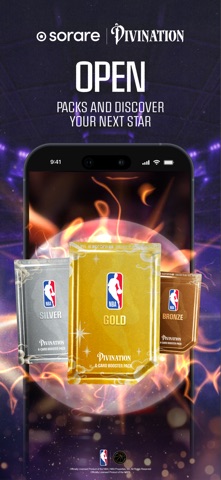
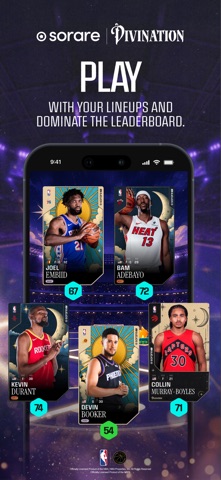
Managers build five-card teams from player cards, then enter them into competitions. Each card scores points based on its real-world player's performance, using match statistics from data providers such as Opta. A great goal, a clean sheet or a string of key passes all count. Rare cards are scarce and tradeable, so a breakout player can turn an early card into a sought-after collectible.
The licence machine
Sorare's edge has always been its official deals, which most blockchain sports projects never get:
- Real Madrid and the K League among its early partners.
- La Liga, in September 2021.
- Major League Baseball, signed on 12 May 2022, with a baseball game launched on 19 July 2022.
- The NBA and NBPA, a multi-year deal in September 2022.
- The English Premier League, on 30 January 2023.
The money followed. After a €550,000 pre-seed in May 2019, backed by French telecoms billionaire Xavier Niel among others, Sorare raised $4 million in July 2020 and €3.5 million in December 2020, with football star Gerard Piqué among the backers. Then, in September 2021, it raised a $680 million Series B at a $4.3 billion valuation.
From Ethereum to Solana
Sorare started on Ethereum, and in July 2021 moved most transactions to StarkEx, a zero-knowledge layer-2 network built by StarkWare, to cut costs and environmental impact. The 2025 move went further: cards became compressed NFTs on Solana, and every user has a non-custodial wallet whose Solana and Base addresses come from the same private key. Unlike most games in this section, Sorare does not run its own game token, so there is no market-cap figure to report.
The gambling question
Fantasy sports with tradeable, valuable cards sit close to the line regulators draw around betting. On 26 September 2024, the UK Gambling Commission charged Sorare, its first prosecution of a major NFT-based platform. Sorare has since introduced stricter 18+ identity checks for UK users, clearer risk warnings and self-exclusion tools.
France took another path. Its gambling regulator said in July 2022 that it was assessing parts of the platform, and the country then created a dedicated legal framework, known as JONUM, for games with monetisable digital objects. A decree signed on 4 February 2026 set out an experimental period to monitor such games.
WGC's take
Sorare is the most "normal" success story in blockchain gaming: real licences, real sports, real investors, and a game that fantasy fans understand in a minute. Its risks are not about tokens but about law. How the UK case ends, and how France's experiment works out, will shape whether games with valuable digital cards are treated as collectibles or as gambling across Europe.