Rust's November Update Kills the Scrap Tech Tree and Adds an Uzi You Can't Craft
Facepunch's monthly update swaps scrap-bought unlocks for blueprint fragments, pages and books, adds a folding-stock Uzi and repairs-first lighthouses. Plus: what Rust's record 2025 says about a 12-year-old game.

Most games celebrate their tenth birthday with a remaster. Rust celebrated its twelfth by having the best year in its history, and then kept changing the rules every month.
Facepunch's November 2026 update for Rust, released on Thursday, November 5 in line with the studio's first-Thursday-of-the-month schedule, makes one of the biggest changes to progression in years: scrap no longer buys you unlocks through tech trees. Instead, every unlock needs a blueprint item. Alongside it come a new Uzi, livestock tweaks, broken lighthouses and offshore patrol boats.
Blueprints replace the tech tree
Under the new system, unlocks use three kinds of blueprint items:
- Blueprint Fragments for Tier 1 and Engineering Workbench unlocks. These are common loot.
- Blueprint Pages for Tier 2 unlocks, from more valuable sources. Ten fragments combine into one page.
- Blueprint Books for Tier 3 unlocks. Pages can't be turned into books, so you'll have to find them.
Scrap still matters for the research table and for crafting workbenches, which now cost 50 (Tier 1), 500 (Tier 2) and 1,250 scrap (Tier 3). Prototype upgrades have a 25% success chance, and salvaging has a 20% chance to keep a blueprint.
The effect is to make progression something you find out in the world rather than something you grind for at a monument. Expect early wipes to feel more like treasure hunts.

The Uzi and the rest
The Uzi 9mm is a compact submachine gun with a folding stock and two modes. Folded, it's fully automatic, works with shields and sprays widely. Extended, it switches to semi-automatic with better accuracy, less recoil and aim-down-sights. It can't be crafted or researched; you find it in elite crates, hackable crates and certain underwater crates.
Other changes:
- Livestock: young animals now reach full potential at 80% happiness, inherited traits affect value, and new shears collect about 25% more wool than a knife without hurting the sheep. Wool armour inserts add cold, melee and projectile protection.
- Lighthouses start each wipe broken, locking the Deep Sea until someone repairs one. Fix one and the others come online.
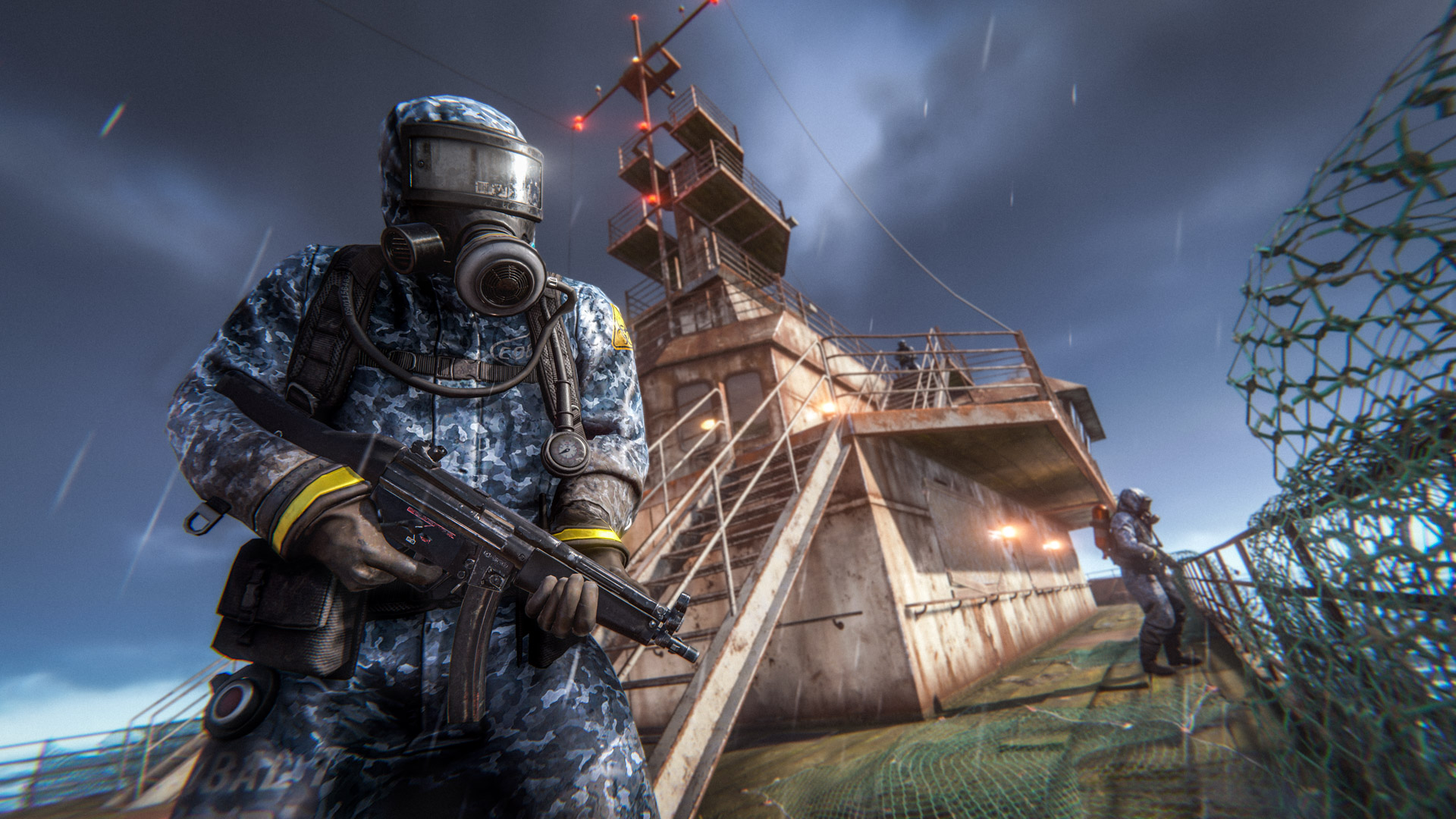
- Scientist patrol boats now roam offshore and target armed players.
- Apples and coconuts on trees, crows and seagulls, mirrored stairs and a long list of building fixes.
- Sprinting now burns more calories and water.
A record year at 12
Facepunch's anniversary post at the start of 2026 laid out how well the game was doing. In 2025, Rust hit an all-time Steam peak of 259,646 concurrent players, hosted more than 450 million game sessions and saw more than 5.8 million unique players log over 700 million hours. Community skin creators have been paid more than $32.7 million to date.
It also fought cheaters at scale: more than 338,000 bans in 2025, including 296,000+ permanent ones, from over 16 million cheat reports. Premium servers, launched in March 2025, require a Rust Steam inventory worth at least $15.
What's next
Facepunch has said it is "actively exploring" a battle pass-style system, with the promise that it has to feel "fair, respectful, and good value", and that Rust Mobile is due to launch globally in 2026. With December's update a few weeks away, the last months of the year will show whether either lands.
Why it matters
Rust is the rare survival game that got more popular in its second decade. Monthly updates, forced wipes and a willingness to tear up core systems keep its servers full. The blueprint rework is the kind of change that would cause a revolt in many games; in Rust, it's just November. For the bigger story of survival games, read our survival-crafting feature.