Zelda at 40: How a Boy's Walks Near Kyoto Became Gaming's Great Adventure
The Legend of Zelda turned 40 in 2026, and celebrated with a 96-rated Ocarina remake and a movie on the way. From a Famicom disk to Breath of the Wild, here is how the series kept reinventing adventure.
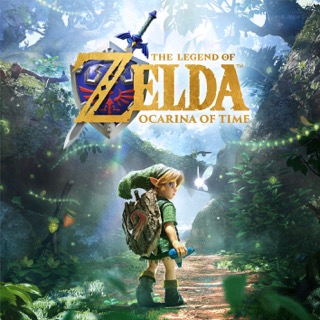
As a boy in Sonobe, a small town near Kyoto, Shigeru Miyamoto spent his days exploring the hills and woods around his home. One day he found a cave and, nervously, went in with a lantern. Decades later he turned that feeling of stepping into the unknown into a video game.
That game, The Legend of Zelda, came out on February 21, 1986, which means the series turned 40 this year. Nintendo celebrated with a 40th Anniversary Direct in September and a remake of Ocarina of Time for Switch 2 that launched on November 5 and opened at 96 on Metacritic. The series has sold more than 150 million copies, and a live-action film is in production. Here is how a disk game about a boy with a sword became the standard every adventure is measured against.
A cave, a lantern and a famous novelist
The first Zelda was designed by Miyamoto and Takashi Tezuka, who wrote the story and setting and drew on fantasy books including The Lord of the Rings. It launched in Japan on the Famicom Disk System, a disk drive add-on for Nintendo's console, because disks could save your progress.
The princess's name came from an unlikely place: the American novelist Zelda Fitzgerald, wife of F. Scott Fitzgerald. Miyamoto said he found the name pleasant and significant.
What made the original special was freedom. There was no clear path. You were dropped into an overworld with a sword (if you found the cave that gave it to you) and left to figure out where to go. That sense of discovery, of a world that does not explain itself, is the thread that runs through the next 40 years.
The 2D golden age
The sequel, Zelda II: The Adventure of Link (January 1987 in Japan), was the odd one out, with side-scrolling combat and experience points. Nintendo returned to the top-down view for A Link to the Past on the Super Nintendo in 1991, and that game set the template: a light world and a dark world, a set of dungeons each with a key item, and a hookshot.
Link's Awakening on the Game Boy in 1993 proved the formula could fit in your pocket, and it was strange and dreamlike in a way the series would return to often. By the mid-1990s, Zelda was one of Nintendo's two pillars alongside Mario.
The 2D games also established the rhythm that fans still recognise: an overworld that slowly opens up as you collect new tools, dungeons that are really giant locks waiting for the right key, and a final confrontation with Ganon. Almost every later Zelda either follows that rhythm or deliberately breaks it, which is why these early games remain the best map of what the series is.
Ocarina and the jump to 3D
Then came 1998 and Ocarina of Time on the Nintendo 64. It solved the problem every 3D action game of the era faced, how to fight one enemy while moving freely, with a lock-on system called Z-targeting. Its story, in which Link travels seven years through time, gave the series an emotional weight it had never had.
It scored 99 on Metacritic, and Guinness World Records cited that score when naming it the highest-rated video game in history. More than a quarter of a century later, nothing has beaten it.
The 3D era that followed was bold and varied. Majora's Mask (2000) put a three-day clock on the end of the world. The Wind Waker (December 2002 in Japan, 2003 elsewhere) swapped realism for a cartoon look that angered fans at first and is now considered timeless. Twilight Princess (November 2006) launched alongside the Wii, and Skyward Sword (November 2011) built its combat around motion controls.
The princess finally takes the lead
For a series named after Zelda, she spent a surprisingly long time waiting to be rescued. That changed gradually. In Spirit Tracks on the Nintendo DS, she became playable for the first time in the main series, by possessing a Phantom Knight.
Then, in September 2024, Echoes of Wisdom on Switch made Zelda the main protagonist, with Link largely absent. Instead of a sword, she solved problems by copying objects and monsters, which turned every room into a puzzle with dozens of solutions.
Breath of the Wild: back to the beginning
The biggest reinvention came in March 2017. Breath of the Wild, a launch game for the Nintendo Switch, threw away decades of Zelda habits. There was no fixed order of dungeons, weapons broke, you could climb almost anything, and the world followed physical rules you could exploit. In a sense, it was the 1986 original again: here is a world, go and explore it.
It became the best-selling Zelda ever, with 34.51 million copies by March 2025. Its sequel, Tears of the Kingdom (May 2023), added sky islands, underground depths and the ability to glue objects together into vehicles and machines, and sold 22.15 million.
Together, the two games changed what players expect from an open world. Instead of a map covered in icons telling you where to go, they offered a horizon and trusted you to be curious. Plenty of big-budget games since have borrowed that idea, and few have pulled it off as gracefully. It is the clearest sign that a 40-year-old series can still set the agenda rather than follow it.
By the numbers
- 40: years since the Famicom Disk System original (February 21, 1986)
- 150 million+: Zelda games sold (as of September 2024)
- 34.51 million: copies of Breath of the Wild, the series best-seller
- 99: Ocarina of Time's Metacritic score, still a record
- 96: the 2026 Ocarina of Time remake's Metacritic score
What comes next
The next big moment is on a cinema screen. A live-action Legend of Zelda film directed by Wes Ball, with Benjamin Evan Ainsworth as Link and Bo Bragason as Zelda, is scheduled for April 30, 2027, after Nintendo moved it a week earlier in May. It will test whether a series built on silent exploration can work as a story told to an audience.
WGC's take: Zelda has survived 40 years by being willing to throw its own rules away. The 2D formula, the 3D formula and the open-air formula were each so successful that Nintendo could have repeated them forever. Every time, it chose to start again.
What to play next
- Ocarina of Time (2026) on Switch 2 is the obvious place to start this year. Read our review round-up.
- Breath of the Wild and Tears of the Kingdom are the modern peak, both available with Switch 2 upgrades.
- Echoes of Wisdom is the best way to see the series from the princess's side.
- A Link to the Past and Link's Awakening are still the best introduction to classic 2D Zelda, and both have aged remarkably well.