Korea's ₩23.9 Trillion Games Market: Phones Pay the Bills, Consoles Get the Dreams
Korea is the world's fourth-biggest games market, built on mobile MMORPGs and PC bangs. The latest white paper shows steady growth, falling downloads and a new hunger for global PC and console hits.

Walk into any Seoul subway carriage and you can see the Korean games market at work: rows of commuters tapping through auto-battling MMORPGs on their phones. Walk up the stairs into a PC bang and you see its other half, rows of glowing monitors running League of Legends and PUBG at three in the morning.
Those two scenes still describe most of the business. But the newest numbers show a market that is changing shape. Korea's domestic games market reached ₩23.85 trillion (about $17.5 billion) in 2024, up 3.9%, according to the 2025 Korea Game White Paper, published by the Korea Creative Content Agency (KOCCA) in March 2026. That keeps Korea in fourth place worldwide with a 7.2% share, behind China, the United States and Japan.
Here is what is inside those numbers, and what 2026 has added.
Where the money comes from
The white paper splits the domestic market like this:
- Mobile: ₩14.07 trillion, 59.0% of the market, up 3.4%.
- PC: ₩6.01 trillion, 25.2%, up 2.0%.
- Console: ₩1.18 trillion, 5.0%, up 4.8%.
- Arcade: ₩275.9 billion, 1.2%.
PC bang revenue grew 12.8%, even as the number of PC bang businesses kept shrinking. Fewer cafes, busier seats: the survivors are bigger and better equipped, and they remain the place where Korea's PC habits are formed.
The PC side has its own momentum. Long-running hits such as League of Legends and PUBG keep PC bang seats full, and new PC MMORPGs such as NCSOFT's AION 2 have shown that Korean players will still turn out in large numbers for a big online launch on PC.
Console is still small, but it was the fastest-growing platform in the white paper, which matters for the story later in this piece.

Korea sells to the world
Korean games earned $8.50 billion abroad in 2024, about ₩11.6 trillion, up 1.3%. Imports were tiny by comparison: $245.6 million, down 3.2%.
Where do the exports go? China took 29.7%, Southeast Asia 20.6%, North America 19.5% and Japan 8.3%. China's share rose too, by 4.2 percentage points, a reminder that the market next door is still Korea's biggest customer even as Chinese games compete hard inside Korea. North America's share rose 4.7 percentage points in a year, the clearest sign yet that Korean studios are reaching Western players directly, not only through Asian partners.
Sensor Tower's State of Gaming in Korea 2026 report, released this month, tells the same story from the mobile side. For Korean publishers, the share of mobile downloads coming from outside Korea rose from 88% in 2021 to 92% in 2026, and the overseas share of in-app revenue rose from 44% to 49%. Korean companies now earn about half of their mobile money abroad.
The mobile paradox: fewer players, more money
Korea's mobile market is shrinking in one way and growing in another. Sensor Tower estimates Korean mobile game downloads fell from about 540 million in 2021 to about 390 million in 2026, a drop of roughly 28%. Yet in-app spending has held at around $5 billion a year, and revenue per download is at a record high.
Its 2025 market report showed what Korean players actually pay for. RPGs still took about 48% of mobile revenue, but strategy (+22%), puzzle (+24%) and simulation (+16%) grew faster. Netmarble's Seven Knights Re:BIRTH was the year's most successful new release, earning about $120 million from its May launch to September. And many of the fastest climbers were foreign: Whiteout Survival and Kingshot from Century Games, and a crowd of merge and casual games from overseas publishers.
Korean studios still produce breakout mobile hits, often by reinventing their own classics. Sensor Tower's 2026 report says Nexon's idle RPG MapleStory: Idle RPG passed $100 million in global in-app revenue in under two months and reached about $430 million over its first eleven months. Devsisters' CookieRun: Crumble earned more than $23 million in the third quarter of 2026 alone.
In other words, Korean players are as willing to spend as ever, but local studios face much more competition for that spending, much of it from China, where companies sent 9.15% of their $20.46 billion of 2025 overseas game revenue to Korea.

The console turn
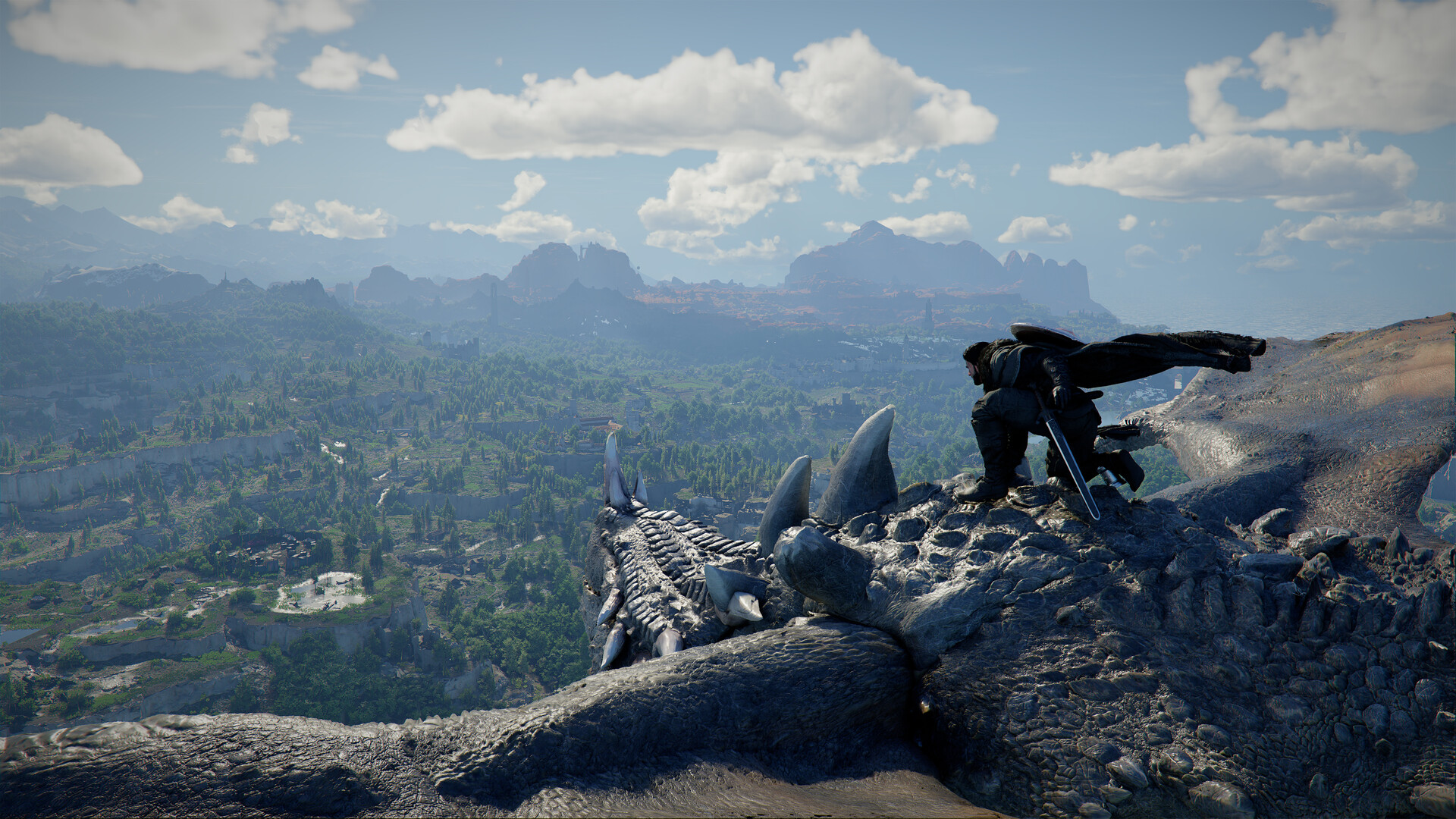
The most interesting change is not in the white paper's totals but in the kind of games Korean companies are now making. A decade ago, almost every big Korean release was a mobile or PC online game. Today, some of the most watched Korean projects are premium games for PC and console: Shift Up's Stellar Blade, which Sensor Tower counted as the top-grossing Korean game on Steam in 2025 with about $100 million in revenue by late September, and Pearl Abyss's open-world Crimson Desert.
The government is following. The Ministry of Culture, Sports and Tourism's budget proposal for 2027, presented in September 2026, includes a new production support programme for large-scale "global frontier" games, alongside funding for indie game discovery and office space for small developers. It is a small sum next to a blockbuster budget, but the message is clear: Seoul wants Korean studios to compete in the global premium market, not only on phones.
At G-STAR 2026 in Busan this month, that shift is on the show floor too, with PC and console demos sitting next to the mobile booths that used to fill BEXCO on their own.
By the numbers
- ₩23.85 trillion: Korea's domestic games market in 2024, up 3.9%.
- 4th: Korea's global rank, with a 7.2% share.
- 59.0%: mobile's share of the domestic market; PC 25.2%, console 5.0%.
- $8.50 billion: game exports in 2024.
- 92%: share of Korean publishers' mobile downloads that come from abroad (2026).
- 87,576: people working in Korea's games industry.
Why it matters
Korea built one of the world's great games industries on a model that suited the 2000s and 2010s: free-to-play online games, PC bangs and, later, mobile MMORPGs with deep monetisation. That model still pays the bills, and the white paper shows it growing slowly.
But the growth is no longer coming from home. Downloads are falling, foreign competitors are taking more of Korean players' wallets, and the biggest new successes for Korean companies are global PC and console games. WGC's take: the next chapter of Korean games will be written as much on Steam and PlayStation as in the App Store, and the companies that learn to make single-purchase games the world wants to buy will lead it.
What to watch
- KOCCA's 2026 white paper, due next spring, will be the first to capture a full year of Korea's console push.
- Crimson Desert and Stellar Blade's long tails on PC and console.
- G-STAR 2026 in Busan, where the mix of mobile, PC and console demos says a lot about where Korean money is heading.
- The 2027 budget, and whether the new support for large-scale games survives the National Assembly.