The Rule That Cancelled a Statue: Korea's Prize Ban, From Lost Ark to Crypto
The same clause that keeps play-to-earn out of Korea also stops publishers from handing out real-world rewards for in-game feats. Why a 2006 anti-gambling rule now shapes events, marketing budgets and the blockchain debate.
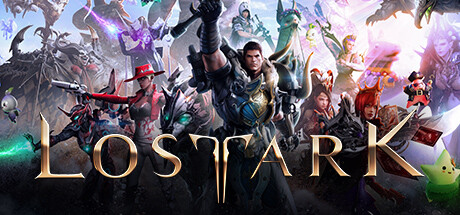
Imagine clearing the hardest raid in your favourite MMORPG before anyone else in the country, and being promised a statue to mark it. Then imagine the statue being cancelled because of a law written to stop slot machines.
That is roughly what happened with a Lost Ark first-clear statue event, which, as Korea Game Users Association chair Lee Cheol-woo recounted at a forum in August 2026, was dropped over gambling concerns. He used it as an example of how Korea's ban on game prizes hurts companies and ordinary players alike. It is the same rule that keeps blockchain play-to-earn games out of the country, and it is now at the centre of the fight over rewriting Korea's game law.
One clause, many targets
The rule is Article 28(3) of the Game Industry Promotion Act, which tells game operators not to encourage gambling by offering prizes. It was shaped in the aftermath of the 2006 Sea Story (Bada Iyagi) scandal, when arcade-style slot games paid out gift vouchers that were swapped for cash next door (that story).
In practice, as critics describe it, the law now effectively stops Korean game companies from giving users real-world prizes at all, apart from some arcade games. That catches far more than gambling:
- Event rewards such as physical prizes for in-game achievements.
- Play-to-earn tokens and NFTs, which Korea's game regulator GRAC and the courts treat as gambling-style prizes (the P2E court cases).
The marketing side effect
Seoul National University professor Yoo Byung-jun argues that the blanket ban has a hidden cost. If publishers cannot run prize events, he said in August 2026, advertising becomes their only promotional tool, which increases reliance on Google and Apple, platforms he criticised for taking a 30% fee. In his view, a 2006 anti-gambling rule is now shaping how Korean games spend their marketing money.
His proposal is to start from risk rather than blanket bans: allow prizes for general and probability-based games under conditions, keep bans for web board games and gambling-style arcade games, and use a negative list that forbids specific acts such as cash conversion. He also suggested a four-tier risk system weighing chance, cash convertibility, addictiveness, investability and opacity.
Where crypto comes in
The 2025 bill to rewrite the game law, proposed by lawmaker Jo Seung-rae, would apply the prize ban only to arcade-style "location-based" games. Digital games, including every online and mobile title, would fall outside it. That would free publishers to run reward events, and it would also remove the main legal tool Korea has used against P2E.
That is why the clause is so contested. The culture ministry called it "unacceptable". Lawyer Hwang Jeong-woo of Yulchon warned at a March 2026 seminar that without a regulatory basis, prizes could become unlimited. Lee Cheol-woo, who supports easing prize rules for events, wrote in December 2025 that the prize ban should be kept for P2E and a separate framework built for token games (the debate).
Why it matters
For players, the prize ban explains two things that seem unrelated: why Korean games rarely run real-world reward events, and why Korean-made blockchain games are often unavailable in Korea. Fixing the first without accidentally opening the second is the problem lawmakers now face.
WGC's take: A statue for a raid clear is not gambling, and a law that cannot tell the difference needs updating. But the same clause is doing real work against cash-out token games. The smart fix is the one many experts are already pointing to: rules based on risk, with token games handled deliberately rather than by accident (Korea's P2E rules).