Final Fantasy VII's Remake Trilogy: From Midgar to Revelation, the 12-Year Rebuild
It began as a fan's dream at E3 2015 and will end on April 8, 2027, with an airship and a whole planet to explore. How Square Enix rebuilt its most famous game in three parts, what each one changed, and why the finale is going everywhere at once.
At Sony's E3 press conference in June 2015, after years of rumours and fan requests, a trailer opened on the city of Midgar and the words "Final Fantasy VII" appeared on screen. The crowd's roar became one of E3's most famous moments. What nobody in the room knew was that the remake would take three games and more than a decade to finish.
That ending now has a date. Final Fantasy VII Revelation, the third and final part of the remake trilogy, launches on April 8, 2027 on PlayStation 5, Xbox Series X|S, Nintendo Switch 2 and PC, on the same day everywhere. It arrives in the year the original Final Fantasy VII turns 30. Here is the whole journey, from Midgar's first reactor to the airship Highwind.
Part one: Remake (2020)
Final Fantasy VII Remake launched on April 10, 2020 on PlayStation 4, after a delay from March. It was directed by Tetsuya Nomura and Naoki Hamaguchi, with Motomu Toriyama as co-director, and built on Unreal Engine 4 by Square Enix's Business Division 1. An outside studio, CyberConnect2, helped early on before development moved fully in-house in 2017.
The biggest surprise was its scope. Remake covered only the opening Midgar section of the 1997 original, stretching a few hours of story into a full game, and it rewrote the battle system into a blend of real-time action and a slowed-down tactical menu. It also hinted, through mysterious spectral figures called Whispers, that this would not be a straight retelling.
It worked. Remake sold more than 3.5 million copies in three days, passed 5 million by August 2020 and reached 8.7 million by March 2025. A PS5 upgrade, Intergrade, followed on June 10, 2021, adding an episode starring the ninja Yuffie, and a PC version arrived that December.
Part two: Rebirth (2024)
Final Fantasy VII Rebirth came out on February 29, 2024 on PS5, spread across two discs. Where Remake was a corridor through one city, Rebirth opened the world: wide regions such as Cosmo Canyon, the Gold Saucer amusement park and Nibelheim could be explored freely, with quest markers and side activities everywhere, including a full card game, Queen's Blood.
Critics called it the best game in the series in years. It scored 92 on Metacritic for PS5, 97% of critics recommended it on OpenCritic, and it earned seven nominations at The Game Awards 2024, including Game of the Year, winning Best Score and Music. It also won Game of the Year at Japan's Famitsu Dengeki Game Awards. In Japan it sold more than 262,000 physical copies in its first week.
Commercially it was more complicated. In May 2024, Square Enix president Takashi Kiryu said the PS5 launch had fallen below expectations. That set the course for everything that followed.
The multiplatform turn
Remake and Rebirth both began as PlayStation exclusives. After Rebirth's sales, Square Enix changed strategy: games would launch on more platforms, sooner.
On January 22, 2026, Remake Intergrade arrived on Nintendo Switch 2 and Xbox Series X|S. It added a new Streamlined Progression option for players who just want the story, granting unlimited HP, MP and Limit gauges and making every attack deal 9999 damage. Rebirth followed on Switch 2 and Xbox on June 3, 2026, scoring 87 on Metacritic on Switch 2.
For the first time, the whole trilogy will be playable on every major console and PC.
Part three: Revelation (2027)
Square Enix revealed Final Fantasy VII Revelation at Summer Game Fest in June 2026, with director Naoki Hamaguchi on stage. The trailer's star was the Highwind, the airship fans have waited for since 1997. Hamaguchi said the team had been building toward it for years.
The structure changes again. Instead of following a set path, players choose where to go, whom to help and in what order, and those choices affect the characters involved. The whole planet can be explored by airship, and players can parachute from the Highwind to any point on the map. The story's stakes are the original's: Meteor is falling and the colossal Weapons are waking across the world. The hybrid battle system returns with new playable characters and moves.
At a State of Play on September 3, 2026, Square Enix gave the date, April 8, 2027, and opened pre-orders:
- Standard Edition: $69.99
- Trilogy Edition: $84.99 at launch, with Remake Intergrade, Rebirth and Revelation
- Premium Edition: $99.99, adding a Story Expansion Pass and 24-hour early access
- Premium Plus Edition: $109.99
On Switch 2, the physical version is a Game-Key Card, and the game is listed at 130GB, which must be downloaded on first launch.
How to play the whole trilogy
If you want to be ready for April, here is where each part stands today and how they connect.
- Remake first launched on PS4 in April 2020. Its Intergrade version, with the extra Yuffie episode, came to PS5 in June 2021, to PC in December 2021, and to Switch 2 and Xbox Series X|S on January 22, 2026.
- Rebirth launched on PS5 in February 2024, came to PC on January 23, 2025, and to Switch 2 and Xbox on June 3, 2026.
- Revelation launches on all four platforms on April 8, 2027.
The simplest route for a newcomer is the Trilogy Edition, which bundles Remake Intergrade, Rebirth and Revelation in one purchase. Players who already own the first two games only need the Standard Edition of Revelation.
Do you need to play them in order? Strictly, yes. Each part picks up where the last one ended, and Rebirth in particular assumes you know the cast and the twists Remake introduced. If time is short before April, Remake's Streamlined Progression option lets you get through its story quickly, then you can spend your real hours in Rebirth's open regions.
By the numbers
- 2015: the year the remake was revealed at E3
- 3 games, released in 2020, 2024 and 2027
- 8.7 million copies of Remake sold by March 2025
- 92: Rebirth's Metacritic score on PS5
- 130GB: Revelation's listed size on Switch 2
- 30: the original Final Fantasy VII's age when Revelation launches
WGC's take
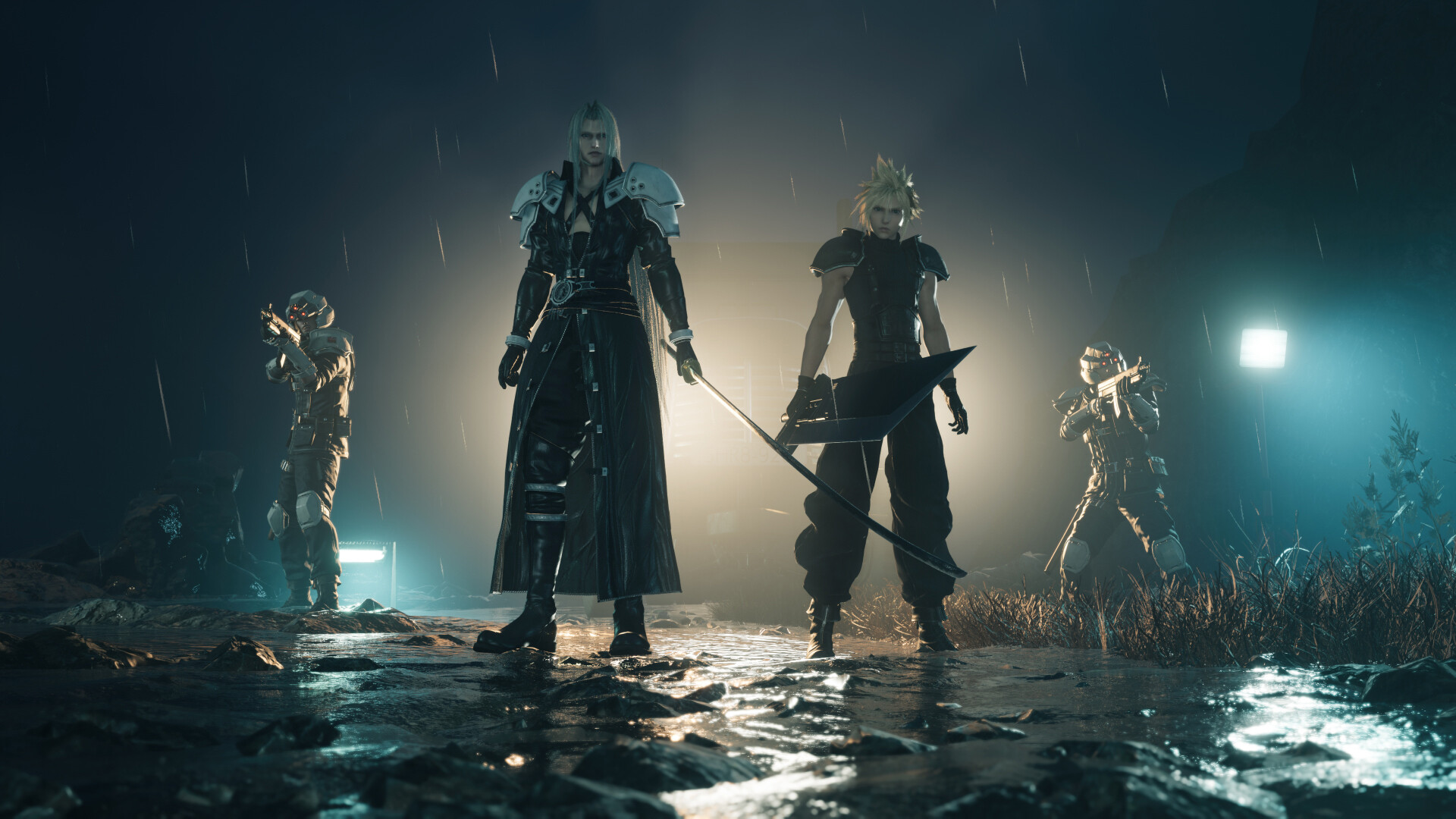
The remake trilogy is one of the boldest projects in modern games: three full-scale releases that reinterpret a beloved story rather than repeat it. Each part has redefined the scope of the next, from Remake's single city to Rebirth's open regions to Revelation's entire planet. The move to every platform at once is a commercial decision, but it also means more people than ever will reach the ending together. Whatever Revelation does with the story's most famous moments, it will be the first time in more than a decade that this version of Final Fantasy VII is complete, and the first time the whole story can be played from start to finish on a single machine of almost any kind.
What to play next
If you are new, start with Remake Intergrade, now on every major platform, and use Streamlined Progression if you only want the story. Then play Rebirth before April. If you prefer a darker, standalone Final Fantasy, our Final Fantasy XVI story explains why it is worth a look in 2026.