Inside CD Projekt Red: 500 Developers, Ciri's Witcher 4 and a 2028 Target
The Polish studio behind The Witcher 3 and Cyberpunk 2077 is running its biggest slate ever. Here is everything it has confirmed about The Witcher 4, what the rest of the team is doing, and why the next two years matter so much.
In the spring of 1994, two young Warsaw game traders, Marcin Iwinski and Michal Kicinski, started a company with roughly $2,000 and a friend's flat that they could use as an office for free. Their plan was modest: import foreign games and sell them in Poland. Thirty-two years later, that company employs more than a thousand people, and over 500 of them are building a single game.
That game is The Witcher 4. At gamescom in August 2026, CD Projekt confirmed a 2028 release window for it, with Ciri as the hero. It is the start of a new Witcher trilogy, the studio's first game on Unreal Engine 5, and probably the most closely watched role-playing game in development anywhere.
What CD Projekt has confirmed
Most of what we know comes from CD Projekt itself, through trailers, earnings calls and its own announcements. Here are the confirmed facts, as of November 2026:
- Platforms: PC, PlayStation 5 and Xbox Series X|S. The studio has said it is taking a "console-first" approach this time, a notable shift after Cyberpunk 2077's troubled console launch in 2020.
- Release window: 2028, announced by joint CEO Michal Nowakowski in August 2026. No date or price yet.
- Hero: Ciri, Geralt's adopted daughter, voiced by Ciara Berkeley. Geralt appears too, with Doug Cockle returning to the role.
- Director: Sebastian Kalemba is game director.
- Team: 513 developers as of April 30, 2026, up from 499 in February.
- Trilogy plan: the company has said it will "most likely not" release expansions for the new trilogy, because it wants to ship all three games within a six-year span.
The game has been a long time coming, and it has gone by several names. CD Projekt announced a new Witcher saga in March 2022, and later that year revealed the codename Polaris as the start of a new trilogy. Pre-production ran from 2022 to late 2024, and full production began in November 2024, a few weeks before the trailer.
Since then, the public has seen two things. The first was that trailer: Ciri, now a witcher in her own right, fighting a monster in a frightened village. The second was a tech demo at Epic's State of Unreal event in June 2025, running on a standard PS5. CD Projekt stressed that it was a demonstration of technology rather than a slice of the game, but it showed crowds, a busy market town and the studio's target of 60 frames per second on console.

Why Unreal Engine 5
For more than a decade, CD Projekt built its games on its own technology, REDengine, which debuted with The Witcher 2 in 2011 and went on to power The Witcher 3 and Cyberpunk 2077. Switching to Unreal Engine 5 was one of the biggest decisions in the company's history.
The reasoning is practical. A custom engine has to be maintained, documented and taught to every new hire, and that cost rises as teams grow. With Unreal, new developers arrive already knowing the tools, and CD Projekt can spend its effort on the parts that make an open world feel alive. The studio did not simply license the engine, though: it signed a long-term partnership with Epic Games to improve Unreal's open-world features, work that Epic can fold back into the engine for everyone else using it. The game also uses Nvidia's RTX Mega Geometry technology and hardware-accelerated ray tracing.
One studio, many games
The Witcher 4 is the biggest project, but it is not alone. CD Projekt publishes team sizes in its earnings reports, which gives a rare view inside a major studio. As of April 30, 2026:
- The Witcher 4 (codename Polaris): 513 developers.
- Cyberpunk 2 (codename Orion): 163 developers, in pre-production, led from the studio's Boston office with help from Vancouver and Poland.
- Project Sirius, a Witcher game with multiplayer: 83 developers.
- Project Hadar, the studio's first wholly original universe: 24 developers.
- The Witcher Remake, a remake of the 2007 original, built by Fool's Theory in Unreal Engine 5.
The company's offices have spread as well. Warsaw is the headquarters, with studios in Krakow (opened 2013), Wroclaw (2018), Vancouver (acquired 2021) and Boston (founded 2023). In June 2026, the company announced it would rename itself CD Projekt RED S.A., putting the studio's name front and centre.
Keeping the lights on
With The Witcher 4 still two years away, CD Projekt has leaned on its back catalogue, and it is working. In the first half of 2026, the group reported revenue of 435 million zloty, up 23% year on year, and a net profit of 249 million zloty. The Witcher 3 has now sold over 65 million copies, the series over 90 million, Cyberpunk 2077 over 40 million, and its expansion Phantom Liberty 15 million in under three years.
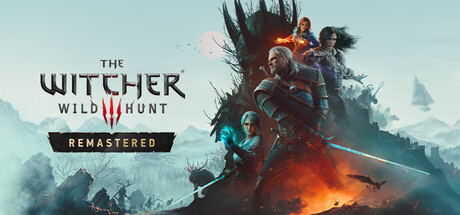
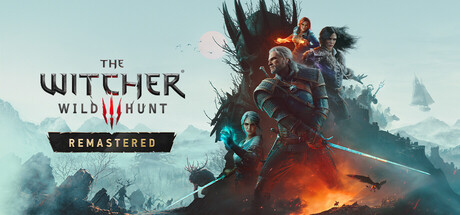
Two Witcher 3 projects carry the load until 2028. The Witcher 3: Wild Hunt - Remastered, co-developed with Yigsoft, launched on September 29, 2026 as a free upgrade for existing owners, with a native Nintendo Switch 2 version. It scores 91 on OpenCritic. And Songs of the Past, a paid third expansion built mostly by Fool's Theory with about 190 developers, arrives in 2027. It takes Geralt to Letten, the homeland of his bard friend Dandelion.
Why it matters
CD Projekt has had one of the most dramatic decades in games: a triumph with The Witcher 3 in 2015, a near-disaster with Cyberpunk 2077's console launch in 2020, and a slow, careful comeback that ended with Phantom Liberty and a game most players now love. The Witcher 4 is the test of whether the lessons stuck.
The early signs are encouraging. The studio is talking about consoles first, it is publishing team sizes, and it has set a window two years out instead of promising something sooner. A 2028 date also means The Witcher 4 will land in a very different market from today's, possibly alongside new console hardware.
By the numbers
- 513: developers on The Witcher 4 (April 2026)
- 163: developers on Cyberpunk 2
- 65 million+: copies of The Witcher 3 sold
- 90 million+: copies of the Witcher series sold
- 435 million zloty: group revenue in the first half of 2026
- 1994: the year Iwinski and Kicinski started the company
What to watch
The next milestones are clear. Songs of the Past arrives in 2027 on PC, PS5, Xbox Series X|S and Switch 2. CD Projekt's earnings calls will keep updating team sizes, the best public signal of each project's health. And at some point before 2028, the studio will need to show The Witcher 4 running as a real game, not a trailer or a tech demo.
Until then, the best way to get ready is the game that started it: The Witcher 3: Wild Hunt - Remastered, now better looking than ever, and with an ending in which Ciri can set out to become a witcher herself.