Black Desert at Ten in the West: How Pearl Abyss Built an Empire One Weekly Patch at a Time
A Korean studio founded in 2010 made an MMO with four classes and its own engine. It became a 55-million-player franchise and the launchpad for Crimson Desert. The story of Black Desert, and the unusual habit that keeps it alive.
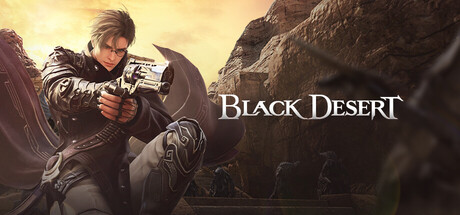
Most MMOs patch once a month, or once every few weeks if the team is ambitious. In its first year in North America, Black Desert patched two or three times a week. Its developers describe that frantic period as the most important turning point of the game's Western life. Ten years later, the team still ships an update every single week, and the habit has built one of Korea's biggest game exports.
In July 2026, Pearl Abyss marked ten years of Black Desert in North America and Europe with a Heidel Ball in Irvine, California, where it revealed the game's 32nd class and the finale of its first great storyline. Four months earlier, its spin-off Crimson Desert had become the best-selling Korean single-player game ever. Here is how a studio founded in 2010 got there.
Four classes and a home-made engine
Pearl Abyss was founded in 2010. Its first game, Black Desert, launched in Korea on December 17, 2014, with just four classes and a starting village called Olvia. From the start, the studio built everything on its own engine, a decision it still holds to: every Pearl Abyss game runs on in-house technology.
The game stood out for its looks, its character creator and its action combat, which played more like a brawler than a traditional tab-target MMO. Its sandbox life skills, from horse breeding to trade and fishing, gave it a second audience who barely fought at all.
Going global, region by region
Black Desert travelled in stages: first Japan, then Russian-speaking regions, then North America and Europe, followed over the years by Taiwan, Türkiye, the Middle East and North Africa, Thailand and Southeast Asia.
The team did not treat every region the same. According to Black Desert's live-service leads, the early Western version was tuned differently from Korea's. North American players, for example, got darker nights where a lantern was needed to see. And that first year of near-constant patching set the tone: problems got fixed fast, in public.
The game later reached consoles, with Black Desert Console marking its fifth anniversary in 2024 and cross-play between Xbox and PlayStation following. Today console content has mostly caught up with PC.
The weekly patch machine
Black Desert's signature is not a feature but a rhythm. The team updates every week. It once tried switching to every other week and went back. "Improving quickly is our fundamental service philosophy," the head of live service told Inven Global in 2026. Another developer joked that the team are now "people who have no choice but to work in this way."
That rhythm made long-term overhauls possible. Remaster updates brought back players who had left, the Olvia Academy was added in 2025 to guide newcomers, and in 2026 HYPERBOOST began walking new and returning players up to an attack-and-defence score of 730, which unlocks most of the game (the 2026 Heidel Ball). Along the way, players collect materials for all three Sovereign weapons, six PEN Kharazad accessories, four pieces of Slumbering Origin armour and two Inverted Hearts of Garmoth: years of grinding, condensed into a guided path.
Black Desert has also leaned on its home country. Its Land of the Morning Light expansion, drawn from Korean history and folklore, is one of its most praised updates, and fans regularly ask for more. In 2026, the team said it had no concrete plans yet for content based on other Asian regions, such as the ancient kingdom of Baekje.
Ten years in numbers
By February 2024, the Black Desert franchise had passed 55 million registered players across PC, console and mobile and more than €2 billion in revenue since its Korean launch. By May 2024, Pearl Abyss counted more than 38 million Adventurers in 256 countries and regions on Black Desert itself.
The class list grew from 4 to 27 by the tenth anniversary and reached 32 with the Agent, a secret-operative gunslinger, in July 2026. Edania Part 2, completed in stages between August and October 2026, closed the first major saga of the game's story and raised the level cap to 75.
The 2026 Heidel Ball also tackled long-standing complaints. Family Dispatch sends alternate characters off to gather, process and fish for extra income. Instant Character Swap removes the loading screen between characters. Marni's Combat Analyzer shows damage dealt, damage taken and DPS, and the team stressed it is optional and not meant for ranking players. DirectX 12, AMD FSR 3.1 and NVIDIA DLSS support followed in August and September. Pearl Abyss also set a cadence for new classes: after the Agent, each class's Succession arrives in summer and its Awakening in winter.
Crimson Desert: the spin-off that broke out
Pearl Abyss spent years developing Crimson Desert, originally connected to Black Desert's world before becoming a standalone single-player action adventure. It launched on March 19, 2026, on PlayStation 5, Xbox Series X|S, Steam, the Epic Games Store and Mac, and its numbers were extraordinary:
- 2 million copies sold on launch day.
- 5 million in under a month.
- 6 million in 83 days, which Pearl Abyss called an unprecedented milestone for a Korean-developed single-player game.
- No. 2 in US year-to-date video game sales for 2026 at the time, according to Circana data cited by Pearl Abyss.
Pearl Abyss followed the launch with a run of updates from June to September 2026, including story refinements, new combat content and cross-save across PC, PlayStation and Xbox, and confirmed that downloadable content is in development. Under CEO Heo Jin-young, the company has made no secret that overseas growth is the goal, and Crimson Desert's Western success gave it the strongest proof yet.
The studio is now developing DokeV and PLAN 8 on its next-generation BlackSpace Engine. Black Desert, the MMO that funded all of it, keeps patching every week.
By the numbers
- 4 to 32: Black Desert's class count, from 2014 launch to July 2026.
- 55 million+: registered players across the franchise (February 2024).
- €2 billion+: lifetime revenue since 2014 (February 2024).
- 256: countries and regions with Black Desert players (May 2024).
- 75: the new level cap, reached on October 7, 2026.
- 6 million: Crimson Desert copies sold in 83 days.
What to play next
- Black Desert costs $9.99 on Steam for the base game, and HYPERBOOST makes this the easiest time in years to catch up.
- Black Desert Mobile is the franchise's phone version, still updated with its own Heidel Ball events.
- Crimson Desert is the place to see where Pearl Abyss's engine and combat design have gone next. Play it after a week in Black Desert and you will spot the shared DNA in its horses, its landscapes and its weighty combat.
WGC's take: Black Desert's lesson for the industry is unglamorous and powerful. Pick a rhythm, keep it for a decade, and fix things in front of your players. Plenty of MMOs launched bigger. Very few have improved as steadily, and that steady improvement paid for one of the biggest Korean game launches ever.