Why Card Games Are the Last Safe Bet in Blockchain Gaming
Shooters stall, metaverses empty out, MMOs slip. Yet in late 2026 the blockchain games still shipping steady updates are mostly card games. Here is why the genre fits, where it fails, and what to play.
Look at the blockchain games from 2018 that still ship updates in 2026, and you will notice something. Gods Unchained published a patch-heavy newsletter in January 2026. Splinterlands launched a new collector feature on 27 October 2026. Both are card games. In the same year, Parallel finally reached Steam and phones, Yuga Labs launched Mudwater, and a lost World War II card game announced its return with optional web3.
Shooters have struggled to hold players, metaverse worlds have emptied, and big MMOs keep slipping. Trading card games, meanwhile, keep coming. This is WGC's look at why the oldest genre in blockchain gaming is also its most durable, and why it still has problems that no chain can fix.
The perfect fit, on paper
A blockchain item is, in essence, a scarce and tradeable record that says who owns what. A trading card is the same idea in cardboard. Players of physical card games have bought, sold, traded and graded cards for decades, and rarity, print runs and collector value are already part of the culture. That is why card games mapped onto NFTs more naturally than any other genre.
Card games also have small, self-contained matches, which suit browsers and phones; a steady release rhythm of sets and expansions, which gives economies a natural supply schedule; and competitive ladders that reward the time players invest.
Five survivors, five strategies
Gods Unchained: the steady live game. Immutable's fantasy TCG is free on PC, Mac and, since 29 February 2024, iOS and Android. Its 2026 work is unglamorous: battle passes, monthly balance passes, bug fixes and a system called Divine Tithings to keep the card population healthy. Its survival comes from behaving like an ordinary live card game (our profile).
Splinterlands: the community veteran. Born as Steem Monsters in May 2018, it moved to the Hive blockchain in 2020 and still ships near-weekly changes in its browser auto-battler, from bloodline merges to new rulesets (our profile).
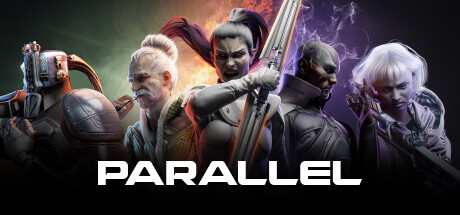
Parallel: the big-budget bet. Its sci-fi card art traded for more than $125 million before the game was finished, and Paradigm led a $50 million Series A at a $500 million valuation in 2021. It launched globally on mobile in April 2026 and on Steam on 29 April 2026, where early reviews are mixed (our profile).
Mudwater: the brand play. Yuga Labs' Bored Ape card game on Solana uses a quick 3x3 board, a fixed print of 2.4 million cards and physical redemptions, plus a free Exhibition mode for non-collectors (our report).
Sorare: the card game in disguise. It is not a TCG in the classic sense, but Sorare's fantasy sports games are built on the same idea. Managers field five-card teams of real footballers, basketball and baseball players, and score points from real matches. Official licences, including the Premier League and the NBA, gave it credibility no other blockchain sports project matched, and in October 2025 its cards moved to Solana (our profile).
The newest trick: game first, cards later
The most interesting card game news of late 2026 is a revival. World War II: TCG, a 2014 Kickstarter game that went offline in September 2022 when its server provider shut down, returns with an open beta on 28 November 2026 on iOS and Android. Its new publisher, Games for a Living, will add tradeable collectible cards through a marketplace only after the beta, and says web3 will be optional (our report).
Parallel's Steam page takes the same approach from the other direction. It describes factions, 40-card decks and skill, and does not mention blockchain at all. The cards may be NFTs elsewhere; on Steam they are simply cards.
Where the genre fails
Card games are a natural fit, but that fit has a dark side.
Pay-to-win. When cards are scarce and valuable, the strongest decks cost real money. Analysts at games consultancy Naavik described Splinterlands in 2022 as prone to feeling "pay-to-win", with progression gates demanding more time and money, and a zero-sum ladder where one player's gains are another's losses.
Balance versus ownership. In an ordinary digital card game, a broken card can be changed overnight. Gods Unchained's cards are tied to the chain and cannot simply be updated, so balance has to work around what players own. Projects use other tools instead: Parallel paired its Deception expansion in 2025 with a 90% burn of the supply of earlier card sets.
Gambling. Packs of random, tradeable cards look a lot like loot boxes, and regulators have noticed. In December 2023, the ESRB rated Gods Unchained "Adults Only" over its crypto features, and the Epic Games Store briefly removed it. In September 2024, the UK Gambling Commission charged Sorare, whose fantasy football game is built on digital player cards. Mudwater's collectible mode, in which the winner keeps both wagered cards, pushes the same question further.
The token problem
Card games survive better than their tokens do. On 12 November 2026, CoinGecko listed Parallel's PRIME at $0.157, about 99.4% below its $28 all-time high, with roughly 65.3 million of a 111.1 million maximum supply circulating. Neither Gods Unchained's GODS nor Splinterlands' SPS ranked among CoinGecko's 40 largest gaming tokens that day, and SPS traded at a fraction of a cent in late October. Token prices are volatile, and these are dated snapshots, not forecasts.
Newer designs try to tie trading back to the ecosystem instead. Every Mudwater trade carries a 2.5% royalty plus a separate 2.5% fee that buys ApeCoin for Mudwater holders, an attempt to make card trading feed the wider economy rather than drain it.
The lesson is that the game and the token have separate fates. A card game can keep a loyal community long after the speculative money has gone, as long as the matches stay fun.
By the numbers
- 2018: the year both Gods Unchained and Splinterlands (as Steem Monsters) began.
- ~$350 million: Gods Unchained NFT sales by February 2024.
- $125 million+: secondary trading in Parallel cards before the game launched.
- 2.4 million: cards in Mudwater's first collection, Swamp Origins.
- $4.3 billion: Sorare's valuation after its $680 million raise in 2021.
- 28 Nov 2026: World War II: TCG's open beta.
WGC's take
Card games are blockchain gaming's safest bet because they were already a market for owned, scarce, tradeable things long before NFTs. The genre's survivors are the ones that behave like normal card games: regular sets, honest balance work and free ways to play. Its failures come from the same source: when every card is a financial asset, pay-to-win and gambling are never far away.
What to play next
- Gods Unchained if you want a polished, Hearthstone-like fantasy TCG on PC or mobile.
- Parallel on Steam, iOS or Android if you prefer deep, competitive sci-fi decks.
- Mudwater's Exhibition mode in a browser for a five-minute board battle with nothing at stake.
- World War II: TCG's open beta from 28 November if you like history and tactics, but remember progress will be reset.