Korea's Indie Breakout: Why 2026 Changed the Country's Games for Good
A 1.5-million-copy roguelite, a 157,000-player Steam record, a gamescom Best Game and a Japanese anime giant's first signing. WGC's editorial on the year Korean indies stopped being a side story, and what has to happen next.

For most of its history, Korea's games industry exported one thing extremely well: big online games. MMORPGs, mobile RPGs, shooters run as services for a decade. Indies existed, but they were a footnote. In 2026, the footnote became a chapter.
The global numbers set the stage. Market intelligence firm Sensor Tower counted games across PlayStation, Steam and Xbox that sold more than 500,000 paid copies in their first 30 days. Between September 2025 and August 2026, 33 of those hits were indie games, up from 13 the year before. Indies went from 24% to 43% of all hits, and their combined first-month sales more than doubled to 69.9 million copies. Korean developers were part of that wave, not spectators. This is WGC's editorial on what happened, why, and what comes next.
The evidence
Put the year's Korean indie headlines side by side and the pattern is hard to miss:
- Shape of Dreams (Lizard Smoothie) passed 1 million copies four months after its September 2025 launch, then 1.5 million, and arrived on PS5, Xbox and Switch 2 in September 2026 (full story).
- Limbus Company (Project Moon) hit 157,444 concurrent Steam players in July 2026, with more than 310,000 across PC and mobile.
- Sephiria (Team Horay) left early access on 31 July 2026 with an Overwhelmingly Positive Steam rating of 96%.
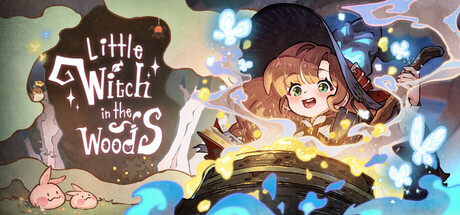
- Little Witch in the Woods (Sunny Side Up) reached version 1.0 in September 2025 and passed 500,000 copies on Steam.
- Goodbye Seoul: Itaewon (JINO Games) won Best Game at gamescom's Indie Arena Booth awards after taking BIC 2024's Grand Prix.
- KILLA, from a four-person team of university friends, became one of the first three titles signed by Japan's new Toei Games label.
- MONOWAVE, a former Sogang University student project, launched on Steam and Switch and was shown at Tokyo Game Show by Japanese publisher Phoenixx.
What an outsider sees
Few people have watched more indie scenes up close than Shuhei Yoshida, the former head of PlayStation's indie initiative who now advises developers through his company, Yosp. At BIC 2026 in August, his verdict was direct: the Korean indie scene is "growing noticeably every year."
He described a clear change. The industry, he said, used to be dominated by MMORPGs and mobile games, but as the number of indie developers rises, more of them are trying new kinds of games. He also spotted a national taste: Korean indies, in his view, particularly favour 2D action and rhythm games, while Japanese indie developers often work alone on anime-style adventures and Chinese teams often grow to 50 people or more.
Why now?
No single cause explains a breakout. We see four, working together.
1. A real support pipeline. Almost every Korean indie hit of the past two years passed through a grant, competition or festival. Shape of Dreams won Smilegate's Indigo and three BIC awards before it had a publisher. KILLA won GIGDC. MONOWAVE won the Gyeonggi Game Audition. Our guide to Korean indie support maps the system.
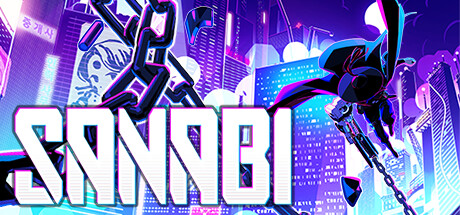
2. Korean publishers who back small teams. Neowiz, buoyed by Lies of P, built a genuine indie label with SANABI, Shape of Dreams and Goodbye Seoul. Others joined in, from CFK with DeerFarm's Shikhondo: Blue Pieta to Shinsegae I&C, the IT arm of the Shinsegae group, with Studio Doodal's Solarteria.
3. Genres that travel. Korean teams aimed at the genres the world was buying: roguelites (Shape of Dreams, Sephiria), co-op (VOID DIVER), cozy life games (Little Witch in the Woods) and story-rich adventures (Goodbye Seoul, KILLA). These are genres where a small team can compete with anyone. They also suit Steam's audience, which rewards games that are easy to explain in a clip and fun to stream with friends. Korean teams have always been strong at tight action and polished art; in 2026 they paired those strengths with formats that global players were already searching for.
4. Steam as a global shop window. BIC's partnership with Steam pushed its event to more than 8 million impressions. A Steam demo can now reach players around the world on the day it goes live, which is exactly how VOID DIVER collected more than 130,000 wishlists from a demo alone.
By the numbers
- 13 to 33: indie games selling 500,000+ copies in their first 30 days (Sensor Tower, year to August 2026).
- 43%: indie share of all such hits, up from 24%.
- 1.5 million+: Shape of Dreams sales by September 2026.
- 157,444: Limbus Company's Steam peak.
- 96%: Sephiria's positive English Steam reviews.
- 500,000+: Little Witch in the Woods' Steam sales.

What still holds Korean indies back
Success brings sharper questions. Three problems stood out in our reporting.
Language. Yoshida's sharpest advice came in Seoul on 9 November: he found a Korean action game at BIC he liked but could not properly enjoy because its demo was Korean only. Support English from the demo stage, he said, add Chinese and Japanese, and write multilingual Steam pages. It sounds obvious, but many small teams still treat localisation as something for launch day. A demo is often a publisher's first impression of a game, and an English-speaking scout who cannot read the menus will simply move on to the next booth.
Controllers and consoles. Yoshida also called controller support essential for Steam Next Fest and showcase demos. The teams that went furthest this year, from Lizard Smoothie to Studio BBB, built for pads early and reached consoles quickly.
Legal hygiene. The Dark and Darker case, settled by the Supreme Court in April, drew a line every ex-big-studio developer should know: genres and ideas are free, but code and confidential project data are not (our explainer).
WGC's take
The breakout is real, and it is not a fluke. It rests on a support system that finds teams early, publishers willing to take risks, and developers who picked genres the world wants. The weak point is the middle of a studio's life: the gap between a successful first game and a sustainable second one. That is where Korea's next round of support, and its publishers' patience, will be tested.
We also think the scene's best asset is its range. In one year Korean indies delivered a roguelite, a cozy witch game, a literary horror RPG, a post-apocalyptic puzzle adventure, an emotional platformer and a steampunk murder mystery. That variety is exactly what a healthy indie scene looks like.
What to watch
- G-STAR 2026 (19-22 November, Busan): the indie hall, the Game Culture Festival and new Korean demos. Start with our Korean indie guide.
- VOID DIVER (January 2027), KILLA, NAMMO and Goodbye Seoul: four Korean indies with dates still to land.
- Steam Next Fest (February 2027): the next big global stage for Korean demos. Watch which teams arrive with English, Chinese and controller support from day one.