Who Pays for Korean Indies? A Guide to Grants, Camps and Prize Money
Behind Korea's indie boom is a dense web of public grants, city festivals, competitions and corporate programmes. How the system works, which hits came through it, and where it still falls short.
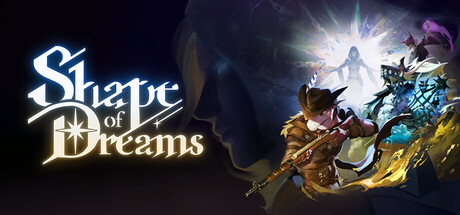
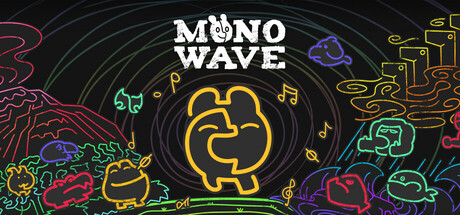
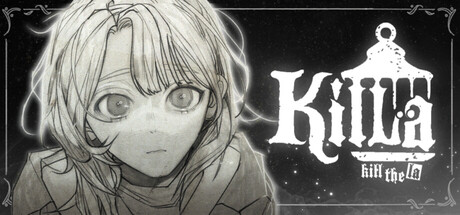
Ask the teams behind Korea's recent indie hits how they got started and you hear the same words again and again: award, grant, camp, showcase. Shape of Dreams won the grand prize at a corporate indie programme before it sold 1.5 million copies. KILLA won a national competition before a Japanese anime giant signed it. MONOWAVE won a provincial audition before it launched on Switch. None of these games was made by the government, but every one of them passed through a support system that has quietly become one of the busiest in Asia.
With G-STAR 2026 opening in Busan on 19 November and a government-backed Game Culture Festival running inside it, it is a good moment to map that system. Here is how Korea funds, trains and shows off its indie developers, in plain English.
Layer one: national grants
The biggest single player is the Korea Creative Content Agency (KOCCA), the public body under the Ministry of Culture, Sports and Tourism that supports games, music, animation and other content.
KOCCA's 2025 indie game support programme, announced on 31 January 2025, split support into four categories, with each project receiving between ₩10 million and ₩250 million. In practice that means anything from a small grant to polish a prototype to serious money for a team heading to launch. For a two- or three-person team, even the lower end can cover months of rent and software licences, and the larger awards can fund a full year of development. The catch is paperwork: applications, milestones and reports take real time away from making the game, and writing a strong proposal is a skill in its own right.
KOCCA also runs a game design support programme and the Korea Indie Game Dev Camp, which offers development grants, professional mentoring and partnerships with established companies. In the 2026 camp, Pearl Abyss, the studio behind Crimson Desert, was a lead partner, and six camp developers showed their games at its booth at BIC.
Layer two: cities and provinces
Local governments are just as active, and often closer to the developers:
- Busan funds BIC, the Busan Indie Connect festival, through the city and the Busan IT Industry Promotion Agency. BIC 2026 drew 856 entries from 57 countries and a record 42,249 visitors (our BIC recap). Busan also runs BIGEM, a global expansion programme that unveiled 12 titles for its fifth group this summer.
- Seoul and the Seoul Business Agency held a 2026 game development challenge in which teams built a prototype in three days without sleep, designed to lead on to release and investment.
- Gyeonggi Province runs the Gyeonggi Game Audition. MONOWAVE, a puzzle adventure from Studio BBB that started as a student project at Sogang University, won the 20th audition in 2025 and launched on Steam and Switch in September 2026.
Layer three: competitions and showcases
Competitions give small teams two things money cannot always buy: credibility and contacts.
- The national GIGDC competition gave its Grand Prize to KILLA, a mystery adventure by the four-person team Gumgyuldan. A separate win at Bandai Namco's GYAAR Studio Awards then led to a publishing deal with Toei Games.
- At BIC, KOCCA's Korea Indie Game Showcase pavilion showed five games from its design support programme. KOCCA reports that average visitors per company rose from 132 to 229, and business meetings per company from 2.7 to 4.8.
- This week, the 2026 Game Culture Festival, hosted by the culture ministry and organised by KOCCA, runs for its sixth year at BEXCO's Hall 2 from 19 to 22 November, alongside G-STAR. Neowiz is using it to show SANABI: A Haunted Day and Goodbye Seoul: Itaewon.
Layer four: the private sector
Not all of the help is public. Some of the most important backers are companies:
- Smilegate's Future Lab runs Indigo. Lizard Smoothie won its grand prize in 2024 with Shape of Dreams, then signed with Neowiz; the game went on to sell more than 1.5 million copies (read the story).
- Neowiz has become Korea's best-known indie publisher, with SANABI, Shape of Dreams and Goodbye Seoul on its list.
- RED BRICK HOUSE chose emerging Korean developers to show playable games at G-STAR 2026, and co-publishes VOID DIVER with LoadComplete and Boltray Games.
- KRAFTON and Nexon both invest in indie developers, and Devsisters' venture arm put about ₩2 billion into Project Moon in 2021.
- G-STAR Investment Connect, new this year, puts indie and start-up teams on a pitch stage in front of Korean and overseas venture capital firms, corporate venture funds and global publishers.
By the numbers
- ₩10 million to ₩250 million: KOCCA indie support per project (2025 programme, four categories).
- 6th: year of the Game Culture Festival, running 19-22 November 2026.
- 12: titles in Busan's fifth BIGEM group.
- 132 to 229: average visitors per company at KOCCA's BIC pavilion.
- 106: developers in G-STAR 2026's indie showcase, across 250 booths.
Where the system falls short
The system is generous at the start of a game's life and thinner at the end. KOCCA's own trend report this summer suggested three improvements: test whether a short video can explain a game's rules, use short-term support to turn existing code and user-generated content experience into commercial products, and fund a month of post-launch server, security and community management. That last point matters. Many small teams can make a demo; far fewer can survive the first month after launch, when bugs, servers and angry reviews all arrive at once.
Shuhei Yoshida, the former PlayStation executive who spoke in Seoul on 9 November, put his finger on another gap: language. At BIC he found a Korean action game he liked but could not fully play because its demo was only in Korean. His advice was simple: add English from the demo stage, offer English, Chinese and Japanese options, and support controllers, because publishers and global players expect them.
Why it matters
Korea used to export a single kind of game: big online titles from big companies. The support system is a deliberate attempt to widen that. WGC's take: the evidence says it is working. Look at almost any Korean indie success of the past two years and you will find a grant, a competition or a festival somewhere in its history.
The next step is to follow teams further. Funding a prototype is cheap; keeping a studio alive between its first and second game is where most indies fail. Post-launch support, localisation money and more foreign publishers at Korean events would turn today's promising demos into tomorrow's sustainable studios. For the bigger picture of Korea's indie year, read our editorial.
What to watch
- G-STAR 2026 (19-22 November): the indie showcase, the Game Culture Festival and the new Investment Connect stage all run together in Busan. See our Korean indie guide.
- KOCCA's 2027 programme: watch for whether post-launch support appears in the next round.
- BIC 2027: this year's winners return with free booths next summer.